- Category:
- Military operations
- Front:
- Western Front
- Date:
- 15 September 1940
- Author:
- Natalia
- Battle:
- Battle of Britain
- Tags:
- United Kingdom, Luftwaffe, RAF, Poland
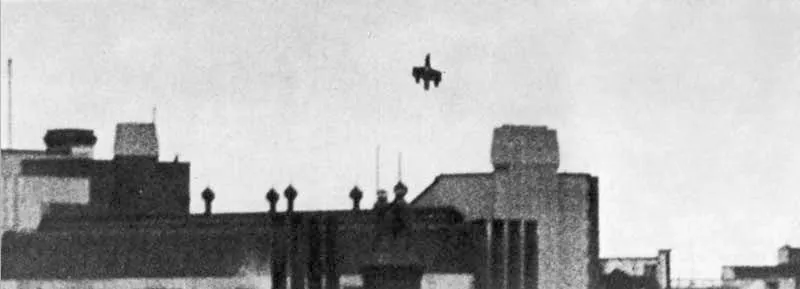
On Sunday 15 September 1940, for the only time in the whole Battle of Britain, the Luftwaffe sent two great daylight raids against London on a single day: one in the late morning and one in the early afternoon. Before take-off the German airmen were told that the British fighter force was exhausted and down to its last few dozen machines. Each time, over Kent and London, they were met by hundreds of Spitfires and Hurricanes, which attacked the bomber formations all the way from the coast to the capital and back. That evening the British announced that 185 German aircraft had been shot down. In reality the figure was roughly a third of that, but the meaning of the day was beyond doubt: Fighter Command had not been beaten, and the Luftwaffe had not won the command of the air without which an invasion was out of the question. Two days later Adolf Hitler postponed the landing in Britain until further notice. Since 1943 the British have marked 15 September as Battle of Britain Day.
Popular chronologies record that on this day “massed German bomber raids” were directed against English cities and that “most of them were driven off”. This needs two qualifications. Both great raids were aimed at London; the only smaller strikes fell on the naval base at Portland and on aircraft works near Southampton. Nor were most of the German bombers turned back: according to British calculations, about a hundred in the first raid and more than seventy in the second reached London and dropped their bombs. Scattered by fighters and cloud, however, they did so with little accuracy, and they suffered heavy losses on the way home.
A week after the turn to London
During the last week of August and the first week of September the Luftwaffe had been attacking the sector airfields of No. 11 Group, which defended London and south-east England, and had pushed the British fighter force to the limit of its endurance. On 7 September, however, Reichsmarschall Hermann Göring turned his bombers against London itself. The first great raid on the port and docks caused enormous destruction and hundreds of civilian casualties, but for Fighter Command it meant a breathing space: the airfields were repaired and the squadrons made good their losses. The long flight to the capital also gave the radar stations and control rooms more time to prepare interceptions. Over the following days, with the weather getting in the way, the Germans sent smaller raids over England by day and bombed London by night.
On 14 September Hitler conferred with his commanders on the invasion, Operation Sea Lion, in preparation since July. He did not share the optimism of the Luftwaffe Chief of Staff, General Hans Jeschonnek, who argued that the RAF was at the end of its strength. He concluded that the Luftwaffe did not yet have command of the air and put off the decision on the landing until 17 September. Until then the air force was to go on striking at London. The forecast for 15 September was fine. The staff of Field Marshal Albert Kesselring’s Luftflotte 2, headquartered in Brussels, prepared two attacks: one in the late morning on the railway junctions in Battersea on the south bank of the Thames, and a larger one later in the day on the docks and warehouses on both sides of the river.
German intelligence estimated that the RAF had only a few hundred fighters left. In fact, on the evening of 14 September Fighter Command had, according to British returns, about 270 serviceable Spitfires and more than 530 Hurricanes; Air Vice-Marshal Keith Park’s No. 11 Group had about 310 of them, and the neighbouring No. 12 Group of Air Vice-Marshal Trafford Leigh-Mallory, covering the Midlands and eastern England, nearly two hundred. The real problem was men: experienced pilots and leaders were in short supply, and many new airmen went into action after a dozen or so hours on operational types. To deal with this, the head of Fighter Command, Air Chief Marshal Hugh Dowding, had divided his squadrons into categories: the best fought in the south-east, others supported them, and still others trained the novices.
Churchill at Uxbridge
In the late morning Prime Minister Winston Churchill arrived at No. 11 Group’s operations room at Uxbridge, having driven over from nearby Chequers. He had been there before, among other times on 16 August, after which visit he coined his famous phrase about how so much was owed by so many to so few. From the gallery of the underground operations room he looked down on the great table on which women of the Women’s Auxiliary Air Force (WAAF) moved the markers for incoming raids, and at the board showing the state of the squadrons, on which bulbs lit up to show units at readiness, airborne and in action.
Shortly after eleven the Chain Home radar stations detected formations assembling over Calais and Cap Gris-Nez. Park had to decide whether these were bombers or merely fighters sent as bait, and to scramble his squadrons so that they had time to gain height without burning their fuel before meeting the enemy. Between 11.05 and 11.20 a.m. eleven squadrons of No. 11 Group took off, followed by more; No. 10 Group to the west and No. 12 Group to the north were also asked for help.
The morning: Battersea and Victoria station
The first raid was small but strongly escorted. Some 25 Dornier Do 17 bombers of Kampfgeschwader 76 (KG 76), led by the experienced Major Alois Lindmayr, were covered, by various estimates, by between 120 and more than 150 Bf 109 fighters. A strong headwind slowed the Dorniers, and the escorting fighters, forced to match their speed, burned up their fuel. The British squadrons attacked in pairs the whole way: first, over Canterbury, Spitfires from Biggin Hill broke up the top cover, then further squadrons struck at the bombers and tied up the escort over Kent. Among them was the Polish No. 303 Squadron from Northolt, led that morning by the Canadian Flight Lieutenant John Kent. When the Messerschmitts, at the limit of their range, began turning back for France over the outskirts of London, the bombers were left on their own.
Over London they were awaited by No. 12 Group’s “Big Wing”, five squadrons from Duxford near Cambridge led by Squadron Leader Douglas Bader: the British Nos. 19, 242 and 611, the Polish No. 302 (City of Poznań) and the Czechoslovak No. 310, some 55 fighters in all. It fell on the Dorniers just as they were approaching their target. The bombers dropped their loads on the railway lines at Battersea, cutting several lines and bringing down a viaduct; rail traffic was halted but restored after three days. Some of the bombs fell on dense housing. One Dornier, which had dropped out of formation with engine trouble, was attacked by a dozen or so fighters at once. The last of them, Ray Holmes of No. 504 Squadron, out of ammunition, struck the bomber’s tail with the wing of his Hurricane. The Dornier broke up in the air and fell beside Victoria station in central London, in full view of the crowds; Holmes baled out. That morning bombs also fell in the grounds of Buckingham Palace, the royal residence being hit yet again in those days.
Of the roughly 25 Dorniers, six were shot down over England and two more, badly damaged, crashed on landing in France; almost all the rest returned riddled with holes. The German fighters lost a dozen or so machines, the RAF about thirteen. British pilots, however, claimed as many as 81 victories, 26 of them by Bader’s wing. The figure shows clearly how, in the chaos of combat, several pilots would credit themselves with the same aircraft: for the Dornier that fell beside Victoria station alone, nine separate claims were submitted.
The afternoon: “There are none”
As Kesselring’s airmen were landing in France, the second raid was already taking off, and it was much larger: 114 Do 17 and He 111 bombers from four Kampfgeschwader, escorted by several hundred fighters. This time there were four fighters for every bomber, and some of them, including Major Adolf Galland’s JG 26, swept the sky ahead of the formation. According to post-war calculations the whole force numbered about 475 aircraft, although British radar put it at far fewer. The formations crossed the coast between Dungeness and Dover at about 2.15 p.m. Park scrambled every squadron he had, in three waves; the Duxford wing came again too, this time made up of Nos. 19, 242, 302, 310 and 611 Squadrons. No. 303 Squadron took off from Northolt once more.
It was at this moment that Churchill, seeing that almost every bulb on the board showed squadrons in action, asked Park what reserves were left. In his memoirs he recorded the exchange: “What other reserves have we?” – “There are none.” Park meant the reserves of his own group; squadrons from the neighbouring groups were held back, but too far away to arrive in time if the Germans sent another raid. Churchill noted that he looked grave at that moment, and with reason. After a few minutes, however, arrows began to appear on the table showing that the Germans were turning for home.
The fighting took place over Kent and the eastern districts of the capital. Squadrons from North Weald, Debden and Hornchurch fell on the Dorniers of KG 3, which lost several machines in the very first attack, while other units went for the Heinkels of KG 53. Bader’s wing, emerging from the clouds beneath Galland’s Messerschmitts, was this time itself attacked and failed to reach the bombers, but it tied up part of the escort. No. 303 Squadron clashed with the Dorniers of KG 2 and their escort. Cloud cover stretching from a few hundred metres up to almost four kilometres made it hard to vector the fighters, but also hampered the German bomb-aimers: most of the docks were obscured, so the bombers released their loads mainly over West Ham, where they hit, among other things, the gasworks at Bromley-by-Bow, an Underground station and an electricity substation. According to the borough authorities’ records, 17 people were killed there and more than 90 seriously injured. Some of the formations never found their target at all and scattered their bombs over a wide area. On the way home the dispersed and damaged bombers, now escorted only by fighters on their last drops of fuel, fell one after another to fresh squadrons.
The second raid cost the Germans more than twenty bombers and a dozen or so fighters, and the British about fifteen fighters. At about 3 p.m. more than twenty unescorted Heinkels bombed the naval base at Portland, doing little damage, and towards evening aircraft of the experimental fighter-bomber unit Erprobungsgruppe 210 attacked the Supermarine Spitfire factory at Woolston near Southampton. They missed, but nine people in the surrounding houses were killed. That night German bombers again struck London, as well as Liverpool and other cities.
The Poles on 15 September
For the Polish airmen it was one of the hardest days of the battle. In the course of the day No. 303 Squadron – whose Polish half had been led by Flight Lieutenant Witold Urbanowicz since Squadron Leader Zdzisław Krasnodębski was badly wounded on 6 September – claimed 15 victories: nine in the morning and six in the afternoon. Sergeant Michał Brzezowski (PL) was killed and his body never found; Sergeant Tadeusz Andruszków (PL) baled out of his stricken Hurricane over Dartford, and Pilot Officer Witold Łokuciewski returned wounded in the leg. No. 302 Squadron, fighting in Bader’s wing, and Polish pilots serving in British squadrons also claimed victories that day. Like all the figures for that day, the Polish claims were inflated, but the contribution of both squadrons to the defence of London was widely noticed. 15 September later became one of the most important dates in Polish memory of the Battle of Britain.
185 or 56?
In the evening the Air Ministry announced that between 175 and 185 German aircraft had been shot down; the higher figure went round the world. When Churchill woke from his afternoon nap at Chequers at about eight in the evening, his secretary, as the Prime Minister described in his memoirs, reported bad news from the Atlantic but added that “all is redeemed by the air”: 183 enemy machines shot down for losses of under forty. On 16 September the news of a “record bag” of 185 aircraft spread through the American press, and the German embassy in Washington tried in vain to correct it. German propaganda for its part claimed that the Luftwaffe had shot down 79 British aircraft for the loss of 43.
Both sides were badly wrong. According to post-war research the Luftwaffe lost 56 aircraft on 15 September – about sixty according to some tallies that also include machines wrecked on landing and written off. Fighter Command lost 28 or 29 fighters, and twelve pilots were killed. The result was thus favourable to the British in a ratio of roughly two to one, but it was not a record: on “the Hardest Day”, 18 August, and on 15 August the Germans had lost more aircraft. Park, who knew about the inflation of claims, was more critical than the press. He considered that too many bombers had reached their target, that some squadrons had acted in a disjointed way, and that the Duxford wing, which claimed about a third of all the victories, had attacked mainly machines already broken up and heading home. The dispute over the “big wings” between him and Leigh-Mallory flared up again after 15 September.
Why this day?
15 September brought neither the Luftwaffe’s heaviest losses nor the end of the battle, which by British reckoning lasted until 31 October. It became a symbol of victory for other reasons. It was the day on which the Luftwaffe threw everything it could at London, convinced that it was delivering the final blow, and on which it found that the RAF not only still existed but could put up hundreds of fighters twice in the space of a few hours. Many German airmen, who had been told for weeks that the British were down to their “last fifty Spitfires”, later remembered it as the hardest day of the whole campaign; the sight of several dozen fighters of the Duxford wing approaching in close formation made, as historians agree, a deep impression on them. At a conference at Carinhall on 16 September, however, Göring was still insisting that the RAF had thrown in its last reserves and that four or five more days of attacks would be enough.
For historians such as Stephen Bungay, the day was a confirmation rather than a turning point. Park directed the battle masterfully, but also in conditions that suited him: large, slow formations heading for a single target and detected well in advance allowed him to prepare interceptions far better than in August, when the Germans had attacked several airfields at once. Fighter Command used less than half its strength that day and could have fought a similar battle the next. The Luftwaffe simply had no way of destroying the British fighter force by these means. Churchill himself, in his post-war memoirs, called 15 September one of the decisive battles of the war and added that, like the Battle of Waterloo, it had been fought on a Sunday.
Its place in the war
On 17 September Hitler postponed Operation Sea Lion until further notice, and in October deferred it to the spring of 1941, in practice abandoning it. The Luftwaffe kept up daylight raids on London until the end of September, suffering further heavy losses on 27 and 30 September, and in October sent mainly fighters and high-flying fighter-bombers over England. The weight of the German offensive shifted to the night: the Blitz on British cities lasted until May 1941 and cost the lives of tens of thousands of civilians, but it did not force Britain to make peace. The survival of the island as a base was of decisive importance for the rest of the war, from the Battle of the Atlantic to the Normandy landings in 1944.
The victors of 15 September met a paradoxical fate. The dispute over tactics and criticism of the helplessness against the night raids led to Dowding’s removal in November 1940, and in December Park handed No. 11 Group over to his rival Leigh-Mallory. The memory of the day, however, survived regardless of these disputes. Since 1943 services of thanksgiving have been held in Britain on the Sunday nearest to 15 September, and in 1947 a stained-glass window commemorating the airmen killed in the battle was unveiled in Westminster Abbey. In Canada Battle of Britain Day is observed on the third Sunday of September, and in Poland the anniversary is an occasion to recall the part played by Polish airmen, with No. 303 Squadron at their head, in the defence of Britain in 1940.
Sources
Meanwhile
(04)Elsewhere, within a week.
- 16 September 1940 · MediterraneanThe Italians halt at Sidi BarraniOn 16 September 1940 the Italians took Sidi Barrani, some 95 km from the border, and stopped, building a chain of camps to wait for a road and water.
- 18 September 1940 · SocietyRadio BelgiqueIn September 1940 the BBC launched Radio Belgique and Radio België, broadcasts for occupied Belgium. Belgian sources date the first one to 28 September.
- 19 September 1940 · PolandWitold Pilecki arrives at AuschwitzOn 19 September 1940 Witold Pilecki let himself be caught in a Żoliborz roundup to enter Auschwitz. As prisoner no. 4859 he built a camp resistance network.
- 9 September 1940 · Middle EastThe Italian air raid on Tel AvivOn 9 September 1940 Italian bombers from the Dodecanese hit residential Tel Aviv. Between 107 and 137 died – the deadliest single air raid on Palestine.
Related events
(04)The same battle, people or subject.
- 31 August 1940 · Western FrontAttacks on RAF airfieldsOn 30 and 31 August 1940 the Luftwaffe struck No. 11 Group's sector airfields. On 31 August Fighter Command suffered its heaviest daily losses of the battle.
- 7 September 1940 · Western FrontThe Blitz beginsOn 7 September 1940 the Luftwaffe struck London's docks instead of RAF airfields. More than 400 people were dead by morning. So began the Blitz.
- 10 July 1940 · Western FrontThe Battle of Britain beginsOn 10 July 1940 some hundred aircraft clashed over a convoy in the Strait of Dover. The British came to see the day as the start of the Battle of Britain.
- 15 August 1940 · Western FrontBlack ThursdayOn 15 August 1940 the Luftwaffe struck England from France, Belgium and Norway. It lost some 75 aircraft, and the raid from Norway ended in disaster.