Hungary
Ferenc Szálasi
Officer of the Hungarian General Staff (1925–1935), leader of the Arrow Cross Party (from 1938/1939), Prime Minister and “Leader of the Nation” (Nemzetvezető) of Hungary (1944–1945)
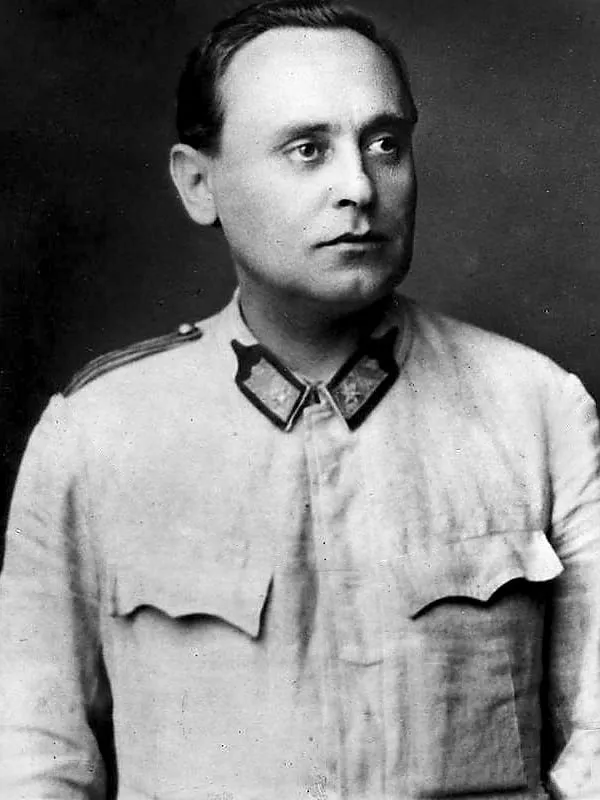
- Born:
- 6 January 1897, Kassa (Košice; Kingdom of Hungary, now Slovakia)
- Died:
- 12 March 1946, Budapest
- Author:
- Łukasz
- Photo:
- Wydawnictwo Prasowe Kraków-Warszawa, domena publiczna, Wikimedia Commons

Ferenc Szálasi was a career officer who abandoned the army for politics and created Hungary’s most radical far-right movement – the Arrow Cross. For years he remained on the margins of power, was arrested and imprisoned several times, and the Regent, Miklós Horthy, regarded him as a man not to be taken seriously. Power came to him only through the German coup of 15–16 October 1944, when Horthy tried to take the country out of the war. Szálasi’s rule lasted less than six months, but it coincided with the darkest period in Hungarian history: the siege of Budapest, the death marches of Budapest’s Jews and the mass killings on the banks of the Danube. In 1946 the People’s Tribunal sentenced him to death.
Kassa and the army
He was born on 6 January 1897 in Kassa (now Košice), then in the Kingdom of Hungary and today in Slovakia. His father was a soldier, and the family’s ancestors included Armenians who had settled in Transylvania (his great-grandfather is said to have been called Salossian), Germans, Slovaks and Ruthenians – which is all the more significant given that the man would later preach the idea of a historic Hungarian mission. His mother, a Greek Catholic, brought her sons up in the faith; Szálasi lived with her until 1944.
He followed in his father’s footsteps. He attended cadet schools and in 1915 graduated from the Theresian Military Academy in Wiener Neustadt, going to the front as a second lieutenant. During the First World War he served in the Austro-Hungarian army, mainly on the Italian front in a regiment of Tyrolean rifles; he spent about three years in the front line and was awarded the Order of the Iron Crown, Third Class.
After the collapse of the monarchy, the revolution of autumn 1918 and the brief rule of Béla Kun, he remained in the army of the restored Kingdom of Hungary. In 1923 he began the general staff officers’ course at the Ludovika Academy, in 1924 he was promoted early to captain, and in 1925 he joined the General Staff. His superiors valued his knowledge and tactical ability, although some of his colleagues considered him a pedant and a loner. By 1933 he was a major and chief of staff of a brigade in Budapest.
Hungarism
In the early 1930s the hitherto apolitical officer became fascinated by politics, especially during the premiership of Gyula Gömbös. He worked out his own doctrine, later called Hungarism: a mixture of extreme nationalism, revisionism towards the Treaty of Trianon, antisemitism, mysticism and social slogans, in which the Hungarians were to lead the peoples of the Carpathian Basin. In 1933 he circulated to politicians a pamphlet, “Plan for the Building of the Hungarian State” (A magyar állam felépítésének terve). Officers were forbidden to engage in politics, so a military court sentenced him to detention, and Szálasi had to leave the General Staff.
On 1 March 1935 he left the army with the rank of major and founded the Party of National Will. The authorities dissolved it in 1937, as they did its successor, the Hungarian National Socialist Party. Yet the movement was winning supporters among workers, minor officials, some officers and the poor, whom the electoral system of the day largely kept from voting. The conservative elites saw Szálasi as a demagogue who threatened the established order, and Horthy, after two meetings with him, spoke of him with the utmost contempt.
Prison and the Arrow Cross
After the Anschluss of Austria in 1938 Szálasi’s followers became more radical, and the country saw bomb attacks and riots. Szálasi was arrested and in 1938 sentenced to three years in prison. Behind bars his standing only grew: the united groups of the far right recognised him as their leader, and in 1939 the movement took the name Arrow Cross Party – Hungarist Movement (Nyilaskeresztes Párt – Hungarista Mozgalom). Its symbol was a cross whose arms ended in arrowheads.
In the elections of May 1939 the Arrow Cross, even though its leader was in prison, won some 30 seats and became the second force in parliament, far behind the ruling Party of Hungarian Life. Prime Minister Pál Teleki tried to win their voters away, among other things with the Second Anti-Jewish Law of May 1939, while at the same time curbing the movement’s activities by police measures. Szálasi was released in September 1940 under an amnesty declared after the Second Vienna Award, which gave northern Transylvania to Hungary.
For a long time Germany’s attitude towards him was cool. Hungarism placed Hungarian territorial claims above the interests of the Reich, and Szálasi refused when the Germans wanted to merge his movement with the party of the former prime minister Béla Imrédy and make him Imrédy’s deputy. After Hungary declared war on the Soviet Union in June 1941, the party weakened and split, and some of its activists, according to historians, began to doubt their leader’s mental stability. The Hungarian historian Zoltán Paksy writes of a serious neurotic disorder, a sense of having been chosen by God and a growing loss of touch with reality. The diary Szálasi kept from 1940 was full of increasingly brutal remarks about Jews.
Occupation and coup
On 19 March 1944 Germany occupied Hungary. Between May and July the government of Döme Sztójay, with the participation of the Hungarian gendarmerie and Adolf Eichmann’s commando, deported some 437,000 Jews from the provinces, the overwhelming majority of them to Auschwitz-Birkenau. Szálasi was not part of that government, but his party was legalised and allowed to expand. At the beginning of July Horthy halted the deportations, and at the end of August, after Romania went over to the Allies, he dismissed Sztójay; Szálasi once again became an opponent of the authorities.
In the autumn of 1944 the Red Army entered Hungarian territory and the Regent sought a way out of the war. By early October a Hungarian delegation was already in Moscow, and on 11 October it accepted preliminary armistice terms. The Germans knew of these efforts and prepared a counter-move; their natural ally was Szálasi, who placed himself at the disposal of the Reich’s ambassador and plenipotentiary, Edmund Veesenmayer.
On 15 October 1944 Horthy announced on the radio that Hungary was asking for an armistice. That same day Otto Skorzeny’s commando kidnapped his son Miklós, and German troops and Arrow Cross militias seized Budapest in the Arrow Cross coup. Under pressure, with his son’s life under threat, on 16 October Horthy signed a document revoking his proclamation, renouncing power and entrusting Szálasi with the premiership. In his memoirs he later wrote that a signature extracted at gunpoint could have no legal force. Horthy was taken to Germany.
“Leader of the Nation”
A rump parliament – only some of the deputies attended the session – approved the new order, and at the beginning of November (on 4 November, according to most accounts) Szálasi took the oath before the Holy Crown in Buda Castle as “Leader of the Nation” (Nemzetvezető), combining the functions of head of government and head of state. Formally, Hungary remained a kingdom. The Government of National Unity, half of whose sixteen ministers were Arrow Cross men, was entirely dependent on Germany. Veesenmayer later described Szálasi to the British historian C. A. Macartney as a buffoon who alternately strutted and grovelled.
The new regime proclaimed total mobilisation, introduced summary courts and called up even teenagers and older men, although in the east the fighting was already going badly for the Axis, for example at Debrecen. Machinery, livestock, rolling stock and raw materials were shipped off to the Reich. At the same time Szálasi announced plans for a radical reconstruction of society along Hungarist lines, which in wartime conditions never left the paper.
The Jews of Budapest
The most tragic consequence of the Arrow Cross seizure of power was the fate of the roughly 200,000 Jews still living in Budapest in the autumn of 1944. In October Eichmann returned to the city. From 8 November Szálasi’s government handed Jews over to the Germans for forced labour on fortifications along the border with the Reich; as there were not enough trains, they were driven on foot towards Hegyeshalom, in the cold and without food. Tens of thousands of people took part in these death marches (estimates usually range from about 50,000 to more than 70,000), and thousands died or were killed along the way. In late November and in December the authorities shut most of the remaining Jews in a ghetto in the Seventh District, alongside which there was the so-called international ghetto for holders of protective passes issued by neutral states. Szálasi’s government, which depended on recognition by those states, partly honoured documents issued by, among others, the Swedish diplomat Raoul Wallenberg and the Swiss consul Carl Lutz.
During the siege of the city Arrow Cross militiamen murdered Jews, often taking them to the bank of the Danube and shooting them at the water’s edge; their victims also included deserters, people hiding Jews and people killed for robbery. Historians most often estimate the number of people killed by the Arrow Cross in Budapest at 10,000–15,000, while according to some researchers, including Krisztián Ungváry, it was higher. Szálasi was away from the capital at the time and gave no direct orders for the killings, but historians stress that his authority in the movement was great enough for him to have stopped them. In December 1944, according to accounts that are often cited, he rejected an offer of help from the International Red Cross because it was also to cover the inhabitants of the ghetto.
Flight, trial and execution
As Soviet and Romanian troops approached Budapest, Szálasi and his government moved to the west of the country, to the area of Szombathely and Kőszeg; according to the most commonly given date, he left the capital on 9 December 1944. Budapest held out until 13 February 1945. At the end of March 1945 Szálasi fled to Austria and then to Bavaria; the Holy Crown was also taken west, and the Crown Guard later handed it over to the Americans. On 29 April he married his long-time partner, Gizella Lutz. On 6 May 1945 the Americans detained him at Mattsee near Salzburg, and the government-in-exile ceased to exist on 7 May.
At the beginning of October 1945 the Americans handed him over to Hungary. His trial before the People’s Tribunal in Budapest took place in February 1946; Szálasi presented himself as an idealist acting on a divine mission and showed no remorse. He was sentenced to death for war crimes and high treason. On 12 March 1946 he was hanged in Budapest together with the former ministers Gábor Vajna and Károly Beregfy and the party ideologue József Gera. Before his execution he received the last rites.
Place in the history of the war
Szálasi was not the architect of the Holocaust of the Hungarian Jews – the largest deportations, from the provinces, were carried out in the spring and summer of 1944, before he came to power. His rule, however, added a last and particularly cruel chapter to it: the death marches, the ghetto and the killings in Budapest itself. He was also an example of a leader whose power rested entirely on German force: the Germans, who had long dismissed him, turned to him only when they needed someone who would keep Hungary in the war to the end. The price of that decision was the ruin of Budapest and tens of thousands of victims. The Arrow Cross Party was banned after the war, and its symbol is prohibited by law in Hungary.
Sources
Mentioned in battles
(03)Often appears with
People who appear in the same events.
On the timeline
(09)1944
1945
February
March
- 29
- The Deutsch Schützen massacreOn 29 March 1945 at Deutsch Schützen in Burgenland the SS shot at least 57 Hungarian Jews – forced labourers building fortifications.
- The Red Army enters AustriaOn 29 March 1945 tanks of the 3rd Ukrainian Front crossed Austria's old border at Klostermarienberg in Burgenland. The road to Vienna lay open.