Hungary
Pál Teleki
Prime Minister of Hungary (1920–1921, 1939–1941), Foreign Minister (1920) and Minister of Education (1938–1939), geographer
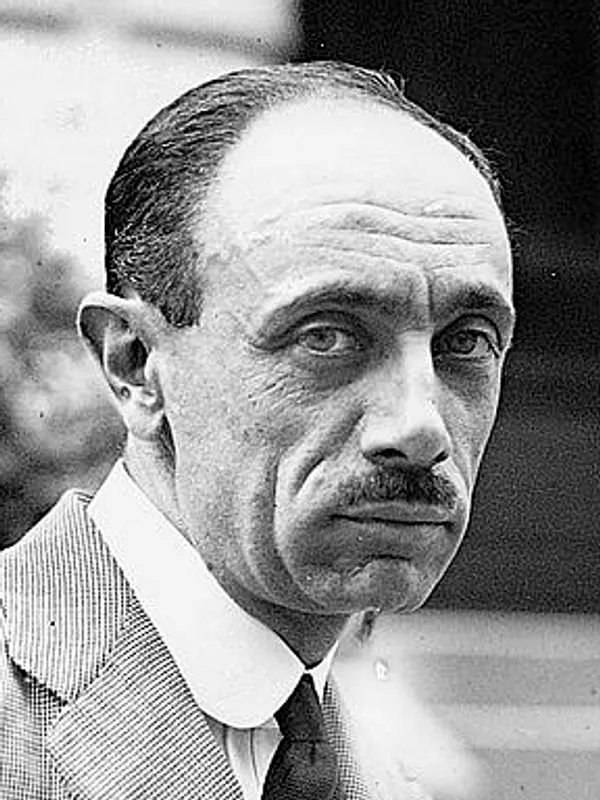
- Born:
- 1 November 1879, Budapest (Austria-Hungary)
- Died:
- 3 April 1941, Budapest
- Author:
- Łukasz
- Photo:
- Unattributed, domena publiczna, Wikimedia Commons

Count Pál Teleki was one of the most respected geographers of his generation and one of the most ambiguous politicians of interwar Hungary. He twice headed the government: in 1920–1921, as the country recovered from its revolutions and the Treaty of Trianon, and from February 1939 to April 1941, as Hungary, thanks to Hitler, regained part of its lost territory. He was regarded as an Anglophile and an opponent of dragging the country into war. In September 1939 his government refused to let German troops cross Hungary to attack Poland, and it then took in tens of thousands of Polish refugees, for which he is remembered with gratitude in Poland. At the same time he was the author and an ardent advocate of anti-Jewish laws, and the policy of revision that he served bound Hungary ever more tightly to the Third Reich. When, in April 1941, Hungary was about to join the attack on Yugoslavia, with which he had concluded a treaty of eternal friendship a few months earlier, he took his own life.
Aristocrat and scholar
He was born on 1 November 1879 in Budapest into the Catholic branch of the family of the Counts Teleki of Szék, an old Transylvanian line. His father, Géza, was a politician and briefly Minister of the Interior; his mother, Irén Muráty, came from a wealthy family of Greek merchants settled in Pest. He studied law and political science in Budapest while also attending lectures in geography, and took his doctorate in 1903. He worked in the department of geography, was an official of Szatmár county, and in 1905–1910 sat in parliament for a constituency in that county.
He made his scholarly name with an atlas of the history of the cartography of the Japanese islands, published in 1909 and awarded a prize in France. From 1910 to 1923 he was secretary-general of the Hungarian Geographical Society, and in 1913 he became a corresponding member of the Hungarian Academy of Sciences. During the First World War he went to the front as a volunteer and served as an officer on the Serbian and Italian fronts, and from 1917 he headed the office for the care of war victims. At the end of the war, together with the geologist Franz Nopcsa, he drew up the famous ethnographic “red map” of Hungary, on which the areas inhabited by Hungarians were marked in red and population density was taken into account so as to show the real weight of each nationality. At the Paris Peace Conference Teleki was one of the experts of the Hungarian delegation.
First government and Trianon
In the autumn of 1918, after the Aster Revolution, he withdrew from public life; during the Hungarian Soviet Republic he joined the counter-revolutionary camp and was responsible for foreign affairs in the governments formed in Szeged. In the 1920 elections he won a seat in Szeged, and in April of that year he became Foreign Minister. In that capacity he travelled to Versailles for the signing of the Treaty of Trianon, although the document itself was signed by two other members of the delegation. Hungary lost two-thirds of its territory, and his family’s lands in Transylvania ended up in Romania. In July 1920 the Regent, Miklós Horthy, appointed him prime minister.
Teleki’s first government lasted less than nine months. In September 1920, on the motion of his government’s Minister of Education, parliament passed the numerus clausus law, which restricted admission to higher education according to the proportions of the “nationalities” and treated Jews as a separate nationality. It is regarded as the first anti-Jewish law in post-war Europe. That same summer his government helped Poland, which was fighting for its survival in the war with the Bolsheviks. Hungary handed over, free of charge, rifle and artillery ammunition as well as rifles, and since Czechoslovakia was blocking transit, the consignments went through Romania. On 12 August 1920, on the eve of the Battle of Warsaw, a train carrying millions of cartridges from the Manfréd Weiss works on Csepel reached Skierniewice. After the first attempt by King Charles IV to regain the throne at Easter 1921, Teleki resigned on 14 April 1921.
Professor, scout and advocate of revision
For the next seventeen years Teleki was above all a scholar. He taught economic geography at the faculty of economics of the University of Budapest and was its dean, and in 1937–1938 he was rector of the Technical University, into which the faculty had been incorporated. In 1924–1925 he was a member of the League of Nations commission that investigated on the spot the dispute over Mosul between Turkey and British-mandated Iraq. From 1927 to 1938 he sat in the upper house of parliament as a representative of the universities. He argued that the Carpathian Basin was a natural geographical and economic whole. He considered revision of the treaty a necessity, but unlike many of his countrymen he saw its ultimate goal in some form of Danubian federation rather than a simple return to the pre-1918 borders.
He played a major role in the scouting movement. In 1922 Horthy appointed him Chief Scout of Hungary, and when he resigned a year later on grounds of health he was given the title of honorary Chief Scout. He was a friend of Robert Baden-Powell, sat on the International Scout Committee from 1929 to 1939, and in 1933 was camp chief of the 4th World Jamboree at Gödöllő, where some 25,000 scouts from all over the world camped.
As late as 1919 he was arguing in Paris that Hungary’s Jews had assimilated and were Hungarians. After Trianon and the rule of Béla Kun, however, he came to regard the “Jewish question” as a matter of life and death for the nation, and from then on he was one of the most uncompromising advocates of solving it by legislation.
Return to power
In 1938 Teleki returned to active politics. In May he took over the Ministry of Religion and Public Education in the government of Béla Imrédy, and in the autumn he was one of the leaders of the Hungarian delegation in the talks that ended in the First Vienna Award: on 2 November 1938 Germany and Italy awarded Hungary a southern strip of Slovakia and Subcarpathian Ruthenia. When in February 1939 Imrédy, himself a preacher of antisemitism, had to step down after the Jewish origin of one of his ancestors was revealed, Horthy entrusted the formation of a government to Teleki, who became prime minister for the second time on 16 February 1939.
The first months of his government brought the revisionists success and new concessions to Germany. On 24 February Hungary joined the Anti-Comintern Pact; in March, as Hitler was dismembering Czechoslovakia, Hungarian troops occupied Carpatho-Ukraine (Carpathian Ruthenia); and in April Teleki announced in Rome Hungary’s withdrawal from the League of Nations. For him personally, however, another consequence of the occupation of Ruthenia mattered most: for the first time since the Partitions, Hungary had a common border with Poland, and an alliance with Warsaw was to serve as a counterweight to German domination. In May 1939 the Second Anti-Jewish Law came into force; it had been prepared under Imrédy but was pushed through by Teleki, who personally wrote its explanatory memorandum. It defined Jews according to racial criteria, deprived most of them of the vote and restricted their participation in the professions and the economy. In the same year his government introduced compulsory labour service for “unreliable” conscripts, above all Jews. In the elections of May 1939 the governing Party of Hungarian Life won a decisive majority, but the Arrow Cross also scored a great success.
“National honour” and Poland
In the summer of 1939, as the Danzig crisis moved towards war, Teleki tried to separate loyalty to the Axis from participation in an attack on Poland. On 24 July 1939 he sent letters to Hitler and Mussolini assuring them that Hungary would align its policy with that of the Axis, but stipulating that for moral reasons it could not take armed action against Poland. Hitler received this with fury, and his Foreign Minister, Joachim von Ribbentrop, gave the Hungarian Foreign Minister, István Csáky, to understand that Germany could take away Hungary’s gains of 1938–1939. Csáky asked for the letter to be treated as never having been sent, and the Germans suspended arms deliveries for a time.
After the German invasion of Poland Berlin demanded permission to move troops and supplies along the Hungarian section of the railway near Košice (Kassa). Teleki’s government refused. The words that the Hungarians would sooner blow up their own bridges and tracks than take part in an attack on Poland are usually attributed to Horthy, and in Polish tradition also to Teleki; either way, they expressed the position of the entire Hungarian leadership of the time. After the defeat of September 1939 Hungary opened its border to the Poles. According to various estimates more than a hundred thousand soldiers and civilians crossed it, many of them Jews. The soldiers were formally interned, but the authorities turned a blind eye to their escapes to join the Polish Army in France. Polish schools, including the secondary school at Balatonboglár, and Polish organisations functioned in Hungary right up to the German occupation in 1944, and their organisers, such as Henryk Sławik, worked with József Antall (PL) on behalf of the Hungarian Ministry of the Interior. In the winter of 1939–1940 Teleki’s government also secretly sent weapons and volunteers to Finland, then fighting the USSR.
Transylvania and its price
The fall of France left Hungary alone with Germany, and the Soviet ultimatum to Romania of June 1940 reopened the question of Transylvania. Teleki was among the politicians who preferred an agreement with Bucharest to war, but the pressure of public opinion and the generals was immense, and the army had been mobilised. On 10 July, together with Csáky, he tried in Munich to persuade Hitler to back Hungary’s demands. When the talks at Turnu Severin broke down, on 30 August 1940 Germany and Italy awarded northern Transylvania, the land of Teleki’s ancestors, to Hungary in the Second Vienna Award. The prime minister was in Vienna at the time, but did not share the general euphoria. The price was high: on the same day Hungary granted wide-ranging rights to its German minority; soon afterwards the Arrow Cross leader Ferenc Szálasi was released from prison; in the autumn units of the German military mission travelled through Hungary to Romania; and on 20 November 1940 Hungary became the first country after the founders to join the Tripartite Pact.
Teleki was visibly losing control over his own state. Northern Transylvania was under military administration until the end of November, and massacres of the Romanian population took place as the troops marched in. The Chief of the General Staff, General Henrik Werth, kept up his own contacts with the German high command, and in September 1940 Teleki tried to resign, writing to the Regent that Hungary had two governments, a legal one and a military one. Horthy kept him in office. Seeking a counterweight to Germany, on 12 December 1940 Teleki concluded a treaty of eternal friendship with Yugoslavia in Belgrade. At the same time his government was preparing the Third Anti-Jewish Law, which banned marriages between Jews and non-Jews and was passed after his death.
April 1941
In January 1941 Csáky died, and László Bárdossy became Foreign Minister. On 27 March officers in Belgrade overthrew the government, which two days earlier had joined the Tripartite Pact, and Hitler decided to destroy Yugoslavia. He offered Hungary a share in the attack in exchange for the lands it had lost to Yugoslavia at Trianon. Horthy was ready to accept the offer; Teleki was opposed. The government adopted a middle position: Hungary would march in only once Yugoslavia had disintegrated or the Hungarian population was in danger. Werth, meanwhile, agreed with the Germans on the passage of their troops through Hungary. On 2 April a telegram arrived from Barcza, the Hungarian envoy in London: the Foreign Secretary, Anthony Eden, warned that Britain would break off relations if Hungary let the Germans through, and declare war if it attacked Yugoslavia.
During the night of 2–3 April 1941, after receiving news that German troops were entering Hungary, Teleki shot himself in his apartment in the Sándor Palace in Buda. In the morning a letter to the Regent was found: “We have broken our word – out of cowardice […]. We have allied ourselves with scoundrels […]. We shall become body-snatchers! The basest of nations. I did not hold you back. I am guilty.” He was buried in the cemetery at Máriabesnyő near Gödöllő. His death stopped nothing: on 6 April Germany attacked Yugoslavia (the Balkan campaign), on 7 April Britain broke off relations with Hungary, and on 11 April Hungarian troops entered the Bácska. Winston Churchill later wrote that Teleki’s suicide was a sacrifice by which he sought to absolve himself and his people of guilt for taking part in the German attack.
Memory
Teleki remains a contested figure. In Hungary many see him as a tragic patriot who defended his country’s independence and honour in a hopeless position, and as a scholar who recovered for Hungary part of the lands lost at Trianon. His critics recall that his governments’ anti-Jewish laws prepared the ground for the exclusion of Hungary’s Jews, which ended in 1944 with deportations to Auschwitz, and that the policy of revision led straight to the alliance with Hitler. When in 2004 there were plans to put up a statue of him on Castle Hill in Budapest, protests led to the sculpture being erected at Balatonboglár instead.
In Poland his memory is unequivocally warm. He is remembered as the prime minister who in 1920 sent ammunition to embattled Warsaw and who in 1939 kept Hungary out of the attack on Poland and opened the border to refugees. In 2001 he was posthumously awarded the Commander’s Cross with Star of the Order of Merit of the Republic of Poland; streets in Warsaw and Kraków bear his name, and monuments to him stand in Skierniewice, by the station at which the Hungarian ammunition train arrived in August 1920, and in Kraków.
Sources
Mentioned in battles
(01)Often appears with
People who appear in the same events.