France
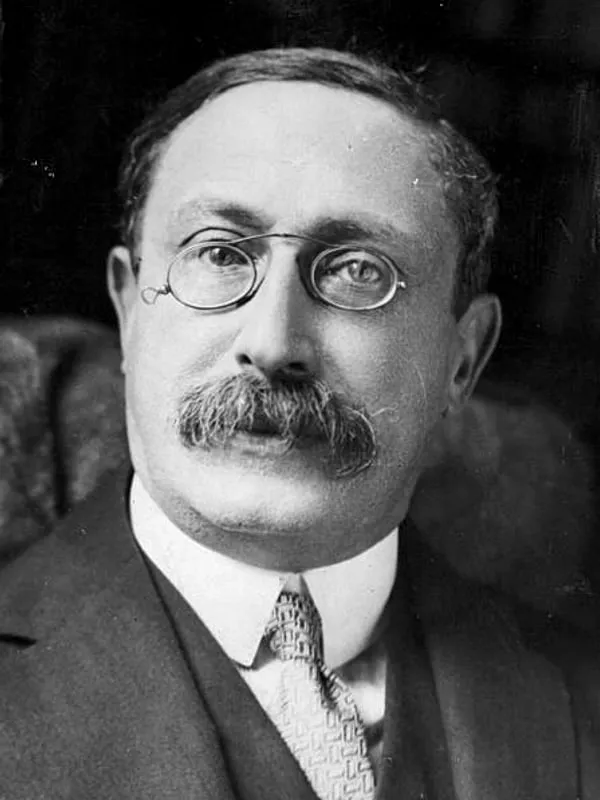
Léon Blum
Prime Minister of France (1936–1937, 1938), head of the Provisional Government (1946–1947), leader of the SFIO
- Born:
- 9 April 1872, Paris (France)
- Died:
- 30 March 1950, Jouy-en-Josas (France)
- Author:
- Łukasz
- Photo:
- Topical Press Photographic Agency, domena publiczna, Wikimedia Commons

Léon Blum was the first Socialist and the first Jew to head a French government. In 1936–1937 he led the Popular Front cabinet, which gave the French the 40-hour working week and paid holidays, but which also had to contend with the civil war in Spain, the flight of capital and Hitler’s rearmament. He was a tragic figure: a democrat and anti-fascist who, fearing a rift within France and the loss of Britain as an ally, agreed to non-intervention in Spain; a man persecuted by the far right with a hatred the Third Republic had not seen since the Dreyfus affair; and, after the defeat of 1940, a defendant before Vichy’s judges and a prisoner of the Germans at Buchenwald.
Youth, literature and the Dreyfus affair
He was born on 9 April 1872 in Paris into a prosperous Jewish family. His father, who came from Alsace, ran a wholesale business in ribbons and silk. Blum was an outstanding pupil: at the Lycée Henri-IV he met André Gide, and at seventeen he was publishing poems. In 1890 he was admitted to the École normale supérieure, but left after a year, having failed his examinations. He took a law degree and in 1895 became an auditor at the Council of State, France’s highest administrative court, where he worked, with interruptions, for almost a quarter of a century. At the same time he was a respected literary and theatre critic, wrote for La Revue blanche, was a friend of Marcel Proust and frequented the Paris salons. His 1907 book Du mariage (On Marriage), which argued for sexual freedom before marriage, caused a scandal that the right kept throwing back at him for the next thirty years.
It was the Dreyfus affair that drew him into politics. At first he did not believe in the innocence of the convicted officer, but he was persuaded by Lucien Herr, the librarian of the École normale. As an official of the Council of State he could not speak out in public, so he advised the defenders of Alfred Dreyfus and Émile Zola behind the scenes. In 1897 he met Jean Jaurès, the leader of the French Socialists, who became his mentor. When Jaurès founded the daily L’Humanité in 1904, Blum ran its literary section, and in 1905 he joined the united Socialist party, the SFIO.
Keeper of the “old house”
Jaurès was killed by a nationalist on 31 July 1914, on the eve of the war. Blum, whose short sight made him unfit for military service, became chief of staff to the Socialist Marcel Sembat, Minister of Public Works in the government of national unity, and supported the war effort until the end. In 1919 he was elected to the Chamber of Deputies for Paris and left the Council of State.
A year later he faced his party’s hardest test. At the Congress of Tours in December 1920 the majority of delegates voted to join the Communist International and to accept the conditions dictated from Moscow. In a great speech Blum rejected the Bolshevik conception of the party and of dictatorship, and told the minority that while the majority went off in search of adventure, someone had to stay behind and keep watch over the “old house”. The majority formed the French Communist Party, and for the next two decades Blum rebuilt the SFIO as leader of its parliamentary group and editor of the daily Le Populaire.
In the 1920s the Socialists supported Radical governments but did not join them. Blum worked out a distinction between the “conquest of power”, meaning the revolutionary transformation of society, and the “exercise of power” within capitalism, which the Socialists could accept if they were the strongest party of the left. In 1928 he lost his Paris seat to a Communist; a year later he returned to the Chamber as deputy for Narbonne.
The road to power
After the riots of 6 February 1934, when far-right leagues tried to storm parliament, Blum agreed to an alliance with the Communists, who on Moscow’s orders had abandoned their hostility towards the Socialists. The Popular Front was born of the unity-of-action pact of July 1934 and a later agreement with the Radicals. The right answered with a campaign of hatred. In 1935 Charles Maurras, the ideologue of Action Française, described Blum as a man who ought to be shot, “but in the back”. On 13 February 1936 Action Française activists gathered at the funeral of one of its writers recognised Blum in a passing car, dragged him out and beat him until he bled. The government dissolved the Action Française organisations, and several hundred thousand people demonstrated in Paris in Blum’s defence.
The Popular Front won the elections in the spring of 1936, and for the first time the SFIO came ahead of the Radicals. On 4 June 1936 Blum became head of a government of Socialists and Radicals, supported from outside by the Communists. On the day he presented his cabinet to the Chamber, the far-right deputy Xavier Vallat declared from the rostrum that for the first time “this old Gallo-Roman country” would be governed by a Jew.
Prime Minister of the Popular Front
In its first weeks the government brought a great wave of sit-down strikes to an end. The Matignon Agreements, concluded at the Hôtel Matignon on the night of 7–8 June, brought wage rises and collective agreements, and parliament passed the 40-hour week and two weeks of paid holiday. The government dissolved the right-wing paramilitary leagues, nationalised the armaments industry and in the autumn of 1936 adopted the largest rearmament programme in years. Blum also tried to reach an understanding with Germany: he discussed colonies and economic cooperation in exchange for limits on armaments with the President of the Reichsbank, Hjalmar Schacht, but nothing came of it.
He took his hardest decision in the summer of 1936. When civil war broke out in Spain, the government of the Republic asked France for aircraft and arms. Blum wanted to help, but he was opposed by the Radicals, the right, President Albert Lebrun and the British government of Stanley Baldwin. In August France proposed a general ban on arms deliveries to Spain, from which grew the Non-Intervention Committee in London. Germany and Italy broke it from the first day, and the burden of the embargo fell on the Republic. Blum allowed limited, covert aid, but the Communists and the left wing of his own party never forgave him, and he himself described the decision as the most painful of his life.
The economy gave him no respite. Capital fled abroad, prices rose, the franc had to be devalued in the autumn of 1936, and in February 1937 Blum announced a “pause” in the reforms. In June 1937 the Senate refused him emergency financial powers and Blum resigned. He joined the government of the Radical Camille Chautemps as Deputy Prime Minister. Meanwhile the Popular Front was losing its footing: the rift with the Communists was growing, and for part of the right the slogan became “Better Hitler than Blum”.
The Anschluss and Munich
When Chautemps stepped down in March 1938 and Germany carried out the Anschluss of Austria, Blum formed his second government on 13 March. He proposed a cabinet of national unity stretching from the Communists to the moderate right, but the right refused. His government drew up a plan to finance rearmament through taxes on capital and exchange controls; the Senate again refused him emergency powers, and on 8 April 1938 Blum resigned. Power passed to Édouard Daladier.
In the Czechoslovak crisis Blum was torn, like France as a whole. In September 1938 he wrote that, with war averted, he felt “divided between cowardly relief and shame”. The pacifist wing of the SFIO supported the Munich Agreement, but Blum soon placed himself at the head of the Socialists who demanded a firm stand against Hitler and faster rearmament.
War, Vichy and Buchenwald
After the fall of France, at Vichy on 10 July 1940, Blum was one of the eighty parliamentarians who voted against granting full powers to Marshal Philippe Pétain. A few weeks later the Vichy authorities, in which Pierre Laval was gaining influence, had him arrested. In February 1942 he went on trial together with Daladier and General Maurice Gamelin at the Riom trial, which was meant to lay the blame for the defeat on the Popular Front. Blum showed that rearmament had begun in earnest precisely under his government and turned the trial into an indictment of the regime. At the demand of the Germans, who were unhappy with its course, the trial was suspended in April 1942.
In the spring of 1943 Vichy handed Blum over to the Germans. He was held as a hostage in a house on the edge of the Buchenwald concentration camp, in conditions not comparable with those of the camp’s prisoners, but in complete isolation. Jeanne Levylier joined him there of her own free will, and he married her there in October 1943. His brother René Blum, the creator of the ballet at Monte Carlo, was arrested in France and murdered at Auschwitz in 1942. In April 1945 the SS took Blum, together with a group of more than a hundred and forty “prominent” prisoners, to South Tyrol, where they were freed at Niederdorf by Wehrmacht soldiers and taken over by the Americans at the beginning of May.
Last years
In post-war France Blum was the moral authority of the left. In À l’échelle humaine (On a Human Scale), written in prison and published in 1945, he urged the Socialists to abandon doctrinaire thinking and to defend democracy. In November 1945 he presided over the founding conference of UNESCO, and in the spring of 1946 he negotiated an agreement with the Americans writing off part of France’s war debts and granting new credits. From 16 December 1946 to January 1947, by then an ailing man of seventy-four, he headed a short-lived, purely Socialist government – the last provisional government before the constitution of the Fourth Republic came into force. It coincided with the start of the war in Indochina, and his government opened the talks with the British that led to the Treaty of Dunkirk. In November 1947 the National Assembly refused him its confidence as candidate for Prime Minister. He died of a heart attack on 30 March 1950 at Jouy-en-Josas near Paris.
Significance
Blum has gone down in French history above all as the author of the Popular Front’s social reforms, which became part of the French model of the state. In the story of the road to the Second World War his place is more ambiguous. He began the great rearmament France needed, but could not reconcile it with his reforms or with the confidence of those who held capital. He chose non-intervention in Spain so as not to split France and lose Britain, and watched Hitler and Mussolini exploit that policy. The hatred he aroused as a Socialist and a Jew showed how deeply divided was the society that within a few years would go to war with Germany. Yet his conduct at Riom and in captivity made him one of the symbols of the France that refused to accept Vichy. Kibbutz Kfar Blum in Galilee, founded in 1943, was named after him, a friend of the Zionist movement.
Sources
Mentioned in battles
(01)Often appears with
People who appear in the same events.