Germany
Ulrich von Brockdorff-Rantzau
Minister in Copenhagen (1912–1918), Reich Foreign Minister (1919), head of the peace delegation at Versailles (1919), ambassador in Moscow (1922–1928)
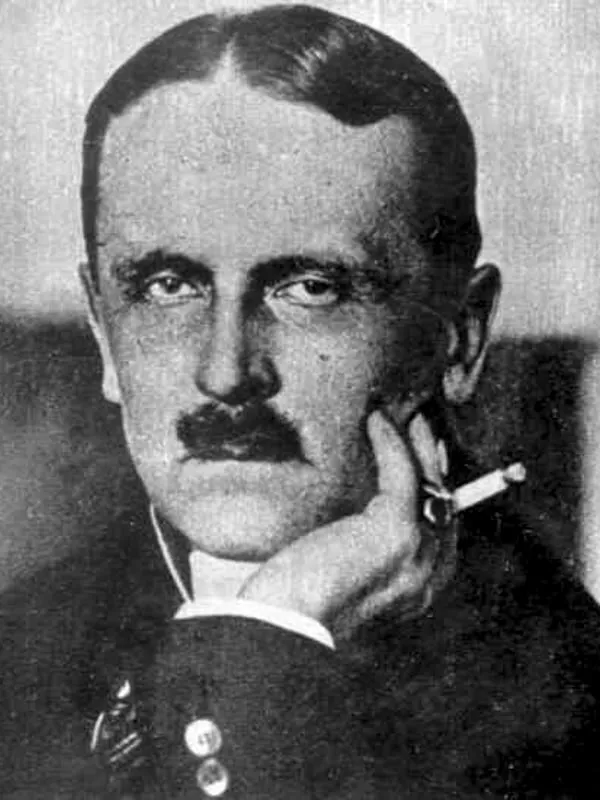
- Born:
- 29 May 1869, Schleswig (Prussia)
- Died:
- 8 September 1928, Berlin
- Author:
- Natalia
- Photo:
- autor nieznany, domena publiczna, Wikimedia Commons

Ulrich, Count von Brockdorff-Rantzau, an aristocrat from Schleswig-Holstein with the manners of the old imperial diplomacy, was the first foreign minister of the Weimar Republic. In the spring of 1919 he led the German delegation that came to Versailles to receive the peace terms. His speech of 7 May 1919, delivered seated before Clemenceau, Wilson and Lloyd George, in which he called a German admission of sole guilt for the war a lie, became a symbol of German resistance to the “Diktat”. He preferred to resign rather than sign the Treaty of Versailles. He then spent six years as ambassador in Moscow and helped to shape a policy in which Germany and Soviet Russia, the two outcasts of the Versailles order, looked to each other for support.
An aristocrat from Schleswig
He was born on 29 May 1869 in Schleswig (PL), the son of Count Hermann zu Rantzau. He had a twin brother, Ernst, to whom he remained very close throughout his life. Their father died when the boys were three, and in 1873 Ulrich was adopted by a relative on his mother’s side, Baron Ludwig von Brockdorff. Hence the double surname and the Annettenhöh estate near Schleswig, which he later inherited. Both families belonged to the old Holstein nobility, which for centuries had also been tied to Denmark.
From 1888 he studied law in Neuchâtel, Freiburg im Breisgau, Berlin and Leipzig, and obtained a doctorate. From 1891 to 1893 he served in the 1st Foot Guards Regiment in Potsdam. After an injury he left the army with the rank of lieutenant.
In the imperial diplomatic service
In 1894 he entered the diplomatic service. He worked in Brussels, from 1897 as secretary of legation in St Petersburg and from 1901 at the embassy in Vienna. From 1909 to 1912 he was consul general in Budapest. In 1912, with the backing of the influential Statthalter of Alsace-Lorraine, Count Karl von Wedel, he became minister in Copenhagen.
The Danish post turned out to be one of the most important during the war. Brockdorff-Rantzau worked to preserve Denmark’s neutrality, which mattered to Germany because of access to the Baltic and trade. At the same time he was one of the diplomats who favoured a “revolutionary policy” towards Russia, that is, supporting forces that might take it out of the war. He kept in touch with the Russian socialist Alexander Parvus, who was trying to convince Berlin that revolution in Russia would bring Germany peace in the east, and he argued for letting Vladimir Lenin travel through Germany from Switzerland to Russia in the spring of 1917. Six months later the Bolsheviks seized power and did indeed make peace with Germany. In diplomatic circles Brockdorff-Rantzau was also regarded as an advocate of a negotiated peace in the west and of domestic reform.
Minister of the republic
After the fall of the monarchy, the government of Friedrich Ebert needed a man in foreign policy who would be acceptable both to the old elites and to the new authorities. Brockdorff-Rantzau, an aristocrat of moderately democratic views, became State Secretary at the Foreign Office at the turn of 1918 and 1919, and in February 1919, in the government of Philipp Scheidemann, he became the first Foreign Minister of the Reich. He set one condition: Germany would agree only to a peace based on the Fourteen Points of Woodrow Wilson, on the basis of which it had asked for an armistice in the autumn of 1918.
The Germans were not invited to the peace conference, which had been sitting in Paris since January. Only in April were they summoned to receive the terms. Brockdorff-Rantzau arrived at Versailles at the end of April at the head of a large delegation, with experts who included the sociologist Max Weber. The delegates were lodged in hotels fenced off from their surroundings and were not admitted to any negotiations.
7 May 1919
On 7 May, at the Trianon Palace Hotel, the French Prime Minister Georges Clemenceau handed the Germans the text of the terms. Brockdorff-Rantzau replied with a speech he had prepared in advance. He delivered it without rising from his seat. To this day it is not known whether this was a calculated gesture or, as his defenders claimed, the result of nerves. He said he felt “the full force of the hatred” that confronted the Germans, and that they were being required to admit that they alone were guilty of the war. Such a confession in his mouth, he said, would be a lie. He acknowledged that Germany had committed wrongs, particularly against Belgium, but recalled the hundreds of thousands of German civilians who had died of hunger after 11 November because the victors had maintained the blockade. They had been killed, he said, “with cold deliberation”.
The speech was well received in Germany, but it irritated the victors. Wilson and Lloyd George found it arrogant, and historians still argue over whether the count damaged the cause he was defending. Over the following weeks he waged a war of notes. On 29 May the delegation handed over extensive counter-proposals in which Germany agreed to disarmament and heavy reparations but demanded plebiscites, admission to the League of Nations and the removal of the clauses on guilt. Little was obtained, chiefly a plebiscite in Upper Silesia. On 16 June the Allies issued an ultimatum.
Brockdorff-Rantzau returned to Weimar and advised the government to reject the treaty. He reckoned that the victors would not risk a new war and that time was on Germany’s side. He was opposed by Matthias Erzberger, who argued that refusal would end in occupation and the break-up of the Reich. When the cabinet failed to agree on a position, Brockdorff-Rantzau resigned together with Scheidemann on 20 June 1919. The treaty was signed on 28 June by Hermann Müller and Johannes Bell on behalf of the government of Gustav Bauer.
Ambassador in Moscow
For three years he held no office, but he did not drop out of politics. In April 1922 Germany and Soviet Russia concluded the Treaty of Rapallo, which restored diplomatic relations and ended mutual claims. Brockdorff-Rantzau regarded it with suspicion. In a memorandum for President Ebert in the summer of 1922 he warned that binding Germany too closely to Moscow, especially in military matters, would alienate the Western powers, on whom revision of the treaty depended. The answer to these reservations was the famous memorandum of September 1922 by General Hans von Seeckt, in which the head of the Reichswehr wrote that Poland’s existence was intolerable for Germany, that Poland “must disappear”, and that an understanding with Russia should make this possible.
Despite this dispute, in November 1922 Brockdorff-Rantzau became Germany’s first ambassador in Moscow. According to his biographers, he insisted on the right of direct access to the President, bypassing the ministry, and on a large degree of freedom in choosing his staff. He quickly grew close to the People’s Commissar for Foreign Affairs, Georgy Chicherin, with whom he shared an aristocratic background. He became an advocate of good relations with Moscow, although throughout he tried to ensure that Germany did not become dependent on it and that the secret cooperation between the Reichswehr and the Red Army did not slip out of the control of the diplomats. That cooperation, run by Seeckt’s men, was a constant source of conflict between the ambassador and the military.
The most important fruit of his mission was the treaty of friendship and neutrality between Germany and the Soviet Union, signed in Berlin on 24 April 1926. Each side undertook to remain neutral if the other was attacked by a third state. For Stresemann, who a few months earlier had signed the Locarno agreements with the West, it was a way of keeping a balance between West and East. For Poland it meant that its two largest neighbours remained on close terms, while Germany refused to guarantee its western border.
Last years
The final months of his mission brought a crisis. In 1928 the Soviet authorities put on trial engineers from the Shakhty coalfield accused of sabotage, and German citizens were among the defendants. The Shakhty trial, one of the first Stalinist show trials, shook relations between the two countries. By then the ambassador was already ill. In the summer of 1928 he left for Germany and never returned to Moscow. He died in Berlin on 8 September 1928. He was buried at the family seat of Annettenhöh near Schleswig.
Significance
Brockdorff-Rantzau belonged to the generation of imperial diplomats who after 1918 came to terms with the republic but not with defeat. His appearance at Versailles expressed the conviction of almost all Germans that the treaty was unjust and that the war guilt article was a lie. That view, reinforced by the Foreign Office’s campaign against the “war guilt lie”, became the foundation of German revisionism and later made Adolf Hitler’s propaganda easier. Historians also note that his tactics of resistance and of hoping for a split among the victors gained Germany nothing, and that the tone of the speech of 7 May hardened the Allies’ position.
As ambassador in Moscow he helped to build the German–Soviet rapprochement of the 1920s. He himself wanted it to be an instrument of pressure on the West rather than an alliance aimed at Poland, but the shared hostility of Berlin and Moscow towards the Versailles order, and above all towards the Polish state, outlived him. In August 1939 it led to the Molotov–Ribbentrop Pact, in which the two former outcasts divided Central and Eastern Europe between them.
Sources
Often appears with
People who appear in the same events.