Germany
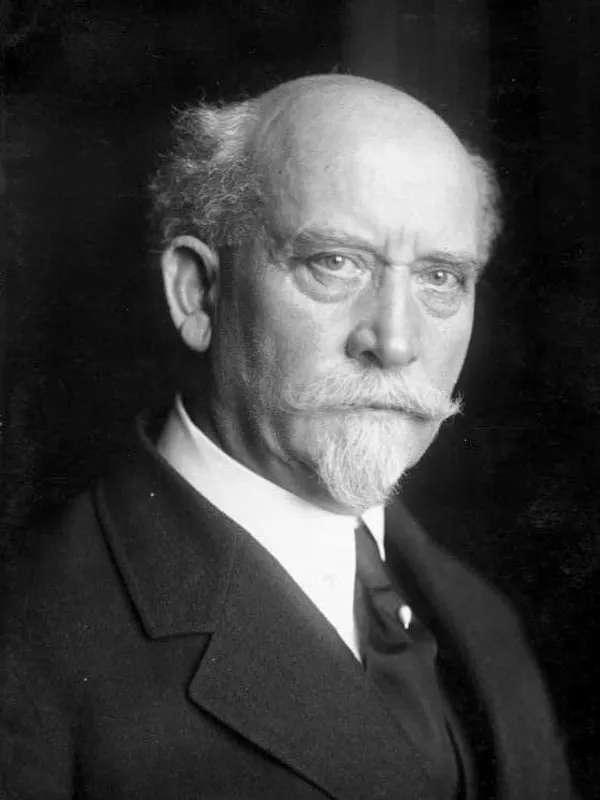
Philipp Scheidemann
Chairman of the SPD group in the Reichstag (from 1913), Secretary of State (1918), member of the Council of People's Deputies (1918–1919), Minister-President of the Reich (1919), Lord Mayor of Kassel (1919–1925)
- Born:
- 26 July 1865, Kassel (Prussia)
- Died:
- 29 November 1939, Copenhagen
- Author:
- Natalia
- Photo:
- autor nieznany, domena publiczna, Wikimedia Commons

Philipp Scheidemann, a compositor and printer from Kassel, became one of the finest speakers in the German parliament and, alongside Friedrich Ebert, the most important leader of the Social Democratic Party of Germany during the First World War. His call for a peace without annexations became so widespread that Germans spoke of a “Scheidemann peace”. In October 1918 he was one of the first two Social Democrats to enter the Reich government, and on 9 November, without consulting Ebert, he proclaimed the republic from the Reichstag building. A few months later, as the first head of a government formed by the National Assembly, he preferred to resign rather than sign the Treaty of Versailles. To the far right he became the embodiment of the “November criminals”: he survived an assassination attempt, and after Hitler came to power he had to flee the country. He died in Copenhagen three months after the outbreak of the Second World War.
The printer from Kassel
He was born on 26 July 1865 in Kassel, the son of a master upholsterer. In 1879–1883 he trained as a compositor and printer, and for years afterwards he worked in a printing house in his home town. In 1883, while Bismarck’s Anti-Socialist Laws were still in force, he joined the then banned Social Democrats and the printers’ union. He was self-taught; in Marburg he is said to have attended lectures by the philosopher Hermann Cohen. In 1889 he married Johanna Dibbern. They had three daughters.
From 1895 he earned his living as a journalist. He edited Social Democratic newspapers in Giessen, Nuremberg, Offenbach and, from 1905, Kassel, where under a pen name he also wrote humorous columns in the local dialect. Contemporaries emphasised his sense of humour, his bourgeois manners and his gift for addressing mass rallies of thousands and small halls alike. In 1903 he won a Reichstag seat for the Solingen constituency, and in 1911 he joined the party executive and moved to Berlin.
Before the war
In 1912 the Social Democrats became the largest group in the Reichstag, and Scheidemann was elected one of the vice-presidents of the chamber. He refused, however, to pay the customary visit to the Emperor, and so in practice never took up the office. That same year he made a fierce attack on the Hohenzollern dynasty in the Reichstag, and the Chancellor, Theobald von Bethmann Hollweg, and the members of the Federal Council (Bundesrat) walked out of the chamber in protest. In Paris he spoke at a rally against war, and the right saw a distorted version of his words as proof of treason. After the death of August Bebel in 1913 he became one of the chairmen of the Social Democratic group, alongside Hugo Haase. Within the party he was regarded as a man of the centre who avoided hopeless quarrels.
Peace without annexations
In August 1914 Scheidemann supported the war credits and the policy of the Burgfrieden, the domestic political truce. He believed that the Social Democrats could not abandon the fatherland in its hour of danger. At the same time he became the party’s loudest advocate of a negotiated peace. His formula, “what is French should stay French, what is Belgian Belgian, and what is German German”, infuriated the annexationists, and activists of the nationalist German Fatherland Party threatened to hang him. The right, and later the far left as well, began to call the Social Democrats who supported the government “Scheidemänner”.
He could not prevent a split in the party. From 1916 he led the parliamentary group together with Friedrich Ebert, and in April 1917 the expelled oppositionists founded the Independent Social Democratic Party of Germany. Even the party organisation in his own Solingen constituency went over to it. In the spring of 1917, after the February Revolution in Russia, Scheidemann held talks with the liberals and with Gustav Stresemann on forming a parliamentary majority, and gave assurances that a government responsible to the Reichstag could be reconciled with the monarchy. In June he led the Social Democratic delegation in Stockholm, where socialists from neutral countries were vainly trying to convene an international peace conference. On 19 July 1917 the new majority – the Social Democrats, the Centre and the Progressives – passed the Peace Resolution. In October Scheidemann became party chairman alongside Ebert. In January 1918 he and Ebert joined the committee of the great strike in Berlin’s armaments industry in order to bring it to an end as quickly as possible. The right regarded this as treason.
In Prince Max von Baden’s government
In the autumn of 1918, when the Supreme Command demanded an armistice, Scheidemann at first opposed the Social Democrats entering the government “at the moment of the worst situation” and under the leadership of a prince. Ebert, however, won over the parliamentary group, and Scheidemann, together with Gustav Bauer, became a Secretary of State in the government of Prince Max von Baden. They were the first Social Democrats in a Reich government. Against the opposition of the War Ministry and the doubts of the Chancellor he pushed through an amnesty for political prisoners, which set Karl Liebknecht free. At the same time he feared revolution. On 5 November he said that Bolshevism was more dangerous than the external enemy. After the sailors’ mutiny, however, he concluded that only the Emperor’s abdication could hold back the far left. On 6 November he told his comrades: “We must now place ourselves at the head of the movement, or else there will be anarchy in the Reich.”
9 November 1918
On the morning of 9 November a general strike engulfed Berlin. Scheidemann resigned as Secretary of State, and at noon the Chancellor handed over his office to Ebert. In the early afternoon, as Scheidemann was having lunch in the Reichstag restaurant, he was told that the Spartacist leader Karl Liebknecht intended to proclaim a soviet republic. Unwilling to surrender the initiative, at around 2 p.m. he stepped out onto a balcony of the Reichstag building and addressed the crowd. He announced that the old order had collapsed, that the Emperor had abdicated and that Ebert was Chancellor, and he ended with the cry: “Long live the German Republic!” The best-known version of this speech, with its words about the “rotten and decayed” old order and the end of militarism, is a later reconstruction that Scheidemann recorded on a gramophone disc. Ebert, who had wanted to leave the decision on the form of the state to a national assembly, was outraged. Some two hours later Liebknecht proclaimed a “free socialist republic” at the Berlin Palace, but it was Scheidemann’s words that decided the shape of the new state.
From 10 November Scheidemann sat on the Council of People’s Deputies, where he was mainly responsible for finance. In December he supported Ebert’s decision to use troops against the mutinous sailors in Berlin. At the funeral of the sailors who had been killed, banners were carried accusing Ebert, Otto Landsberg and Scheidemann of murder.
Head of government and Versailles
In February 1919, after Ebert’s election as President, Scheidemann became head of a coalition government of the Social Democrats, the Centre and the liberal German Democratic Party, the so-called Weimar Coalition. His formal title was Minister-President of the Reich (Reichsministerpräsident). His government grappled with a wave of strikes, with demands for the socialisation of the mines and with communist uprisings. In March 1919 in Berlin the government used the army and the Freikorps against them, with Gustav Noske as Defence Minister.
The most important issue, however, became the peace terms. When the draft treaty became known in May 1919, Scheidemann asked in the National Assembly: “What hand would not wither that binds itself and us in these fetters?” The words were repeated throughout Germany. Erzberger, Noske and Ebert himself argued, however, that rejecting the treaty would mean the occupation of the country, and the army judged resistance hopeless. The coalition could not agree on a common position, and on 20 June 1919 Scheidemann resigned. The treaty was signed by the government of his party colleague Gustav Bauer. Scheidemann saved his own name but did not change his country’s fate, and later nationalist propaganda lumped him together with the “politicians of fulfilment” all the same.
Lord Mayor, deputy, target of assassins
In December 1919 he was elected Lord Mayor of Kassel. He held the office until 1925, amid constant disputes with the bourgeois parties, which accused the upholsterer’s son of lacking qualifications. He remained a member of the Reichstag until 1933. He increasingly criticised his own party for its concessions to the right. After the Kapp Putsch of 1920 he attacked Noske for failing to purge the army of officers hostile to the republic, which contributed to the minister’s dismissal. He was one of the most highly regarded speakers of the Reichsbanner, the republican defence organisation.
On 4 June 1922, Whit Sunday, while he was out walking with his daughter, assassins from the circle of the far-right Organisation Consul squirted prussic acid into his face. The wind dispersed the poison and Scheidemann survived. The same organisation had earlier murdered Matthias Erzberger, and a few weeks later it murdered the Foreign Minister, Walther Rathenau. In December 1926 Scheidemann revealed in the Reichstag the secret cooperation between the Reichswehr and the Red Army, including the production of weapons and the training of German soldiers on Soviet territory in circumvention of the bans of the Treaty of Versailles. The speech brought down Wilhelm Marx’s government, and the right again branded him a traitor. In 1928 he published his two-volume memoirs, Memoiren eines Sozialdemokraten.
Exile and death
Once Adolf Hitler had come to power, Scheidemann was in mortal danger. A few days after the Reichstag fire, at the beginning of March 1933, he fled to Salzburg. His papers, including 26 volumes of a diary from 1914–1919, were confiscated by the political police and have been lost. In August 1933 he was on the first list of people stripped of their citizenship by the Reich. His eldest daughter, Lina, and her husband, persecuted by the Nazis, took their own lives in 1933. By way of Czechoslovakia, Switzerland, France and the United States, Scheidemann reached Denmark in 1935. Under a pen name he wrote for the Danish labour press and followed events in Germany to the end. He died in Copenhagen on 29 November 1939, by which time Germany had already conquered Poland. In 1953 his ashes were moved to Kassel.
Assessment
Historians see Scheidemann as a pragmatic politician and a brilliant speaker, popular beyond his own party, but a less able organiser and tactician than Ebert. During the war he tried to reconcile the defence of the country with the pursuit of a peace without annexations, and although he did not save the unity of the party, his slogan became the programme of the Reichstag majority. The proclamation of 9 November was a spontaneous act, but in the view of many historians it took the initiative away from the far left and ensured that Germany would become a parliamentary republic rather than a soviet republic.
His fate shows clearly how the far right built the myth of the “November criminals”. In its eyes the man who had proclaimed the republic was to blame for the defeat, although it was the Supreme Command that had lost the war. The man who had refused to sign the Treaty of Versailles was nonetheless regarded as a “politician of fulfilment”. The assassination attempt of 1922, exile in 1933 and death abroad in the first months of a new war complete a path trodden by many of the Weimar Republic’s democrats.
Sources
Often appears with
People who appear in the same events.