Netherlands
Wilhelmina of the Netherlands
Queen of the Netherlands (1890–1948)
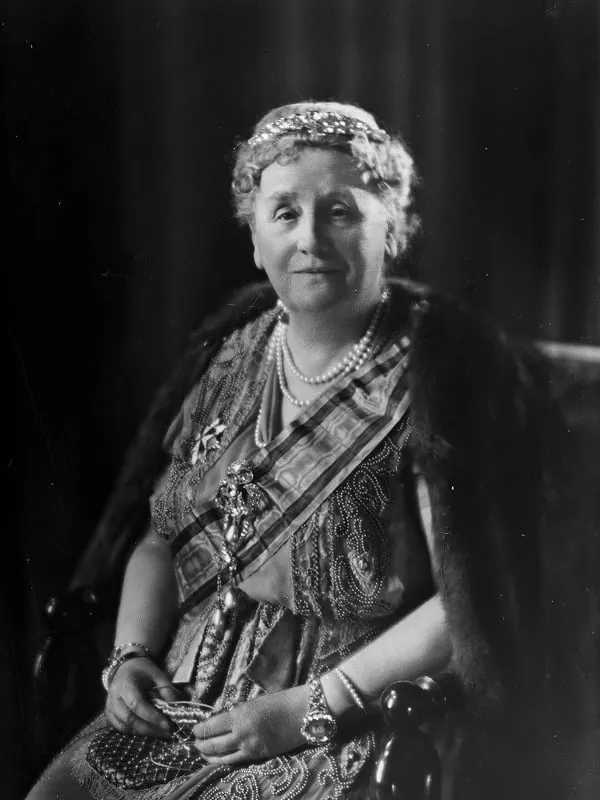
- Born:
- 31 August 1880, The Hague
- Died:
- 28 November 1962, Het Loo Palace (Apeldoorn)
- Author:
- Łukasz
- Photo:
- Studio of Jacob Merkelbach, domena publiczna, Wikimedia Commons

Wilhelmina was Queen of the Netherlands for longer than anyone before or since: from 1890, when she inherited the throne as a ten-year-old girl, until her abdication in 1948. For most of that time she remained a constitutional monarch who chafed at the limits of her power, disliked politicians and stubbornly demanded a strong army for a country that had lived in neutrality for a hundred years. She kept the Netherlands out of the fighting in the First World War and after 1918 gave refuge to the former German Emperor, Wilhelm II. Her finest hour, however, came in May 1940, when Germany attacked the Netherlands without a declaration of war. Wilhelmina left for London, kept her country’s colonies and fleet on the Allied side, removed a prime minister who wanted an accommodation with Germany, and for five years spoke over the radio to her occupied country. Winston Churchill is said to have called her the only real man among the governments-in-exile.
The last of the Oranges
She was born on 31 August 1880 at the Noordeinde Palace in The Hague, the only child of the sixty-three-year-old King William III and his second wife, Emma of Waldeck and Pyrmont, who was forty-one years younger than her husband. When she was born she was not the heir to the throne: her half-brother Alexander, from her father’s first marriage, was still alive. He died in 1884, however, and since the king had no more sons, the crown was to pass to his daughter. William III died on 23 November 1890 and the ten-year-old Wilhelmina became queen. Until she came of age her mother ruled in her name as regent.
Emma brought her daughter up strictly, with a sense of duty and the conviction that the House of Orange was the heart of the Dutch nation. Wilhelmina grew up in the loneliness of the court, surrounded by governesses and tutors. On 6 September 1898, a few days after her eighteenth birthday, she took the oath in the Nieuwe Kerk in Amsterdam and began to reign in her own right.
The young queen’s first high-profile gesture concerned the Boers. In the Netherlands there was widespread sympathy for the Boers, descendants of Dutch settlers, who were fighting the British Empire in the Boer War. In 1900 the Dutch cruiser Gelderland carried the President of the Transvaal, Paul Kruger, from Portuguese Mozambique to Europe. The idea came from the foreign minister, but Europe attributed it to the queen, and her popularity soared.
Marriage and an heir
On 7 February 1901 Wilhelmina married Duke Henry of Mecklenburg (known in the Netherlands as Hendrik). The marriage proved unhappy. The prince could not find a place for himself in the Dutch system, ran up debts and had affairs, and from the end of the First World War the couple in effect lived apart. For eight years the queen was unable to carry a pregnancy to term, which caused anxiety in the country: had she died childless, the throne would have passed to a German prince. On 30 April 1909 a daughter, Juliana, was at last born, to immense relief across the Netherlands. The queen had no further children.
Wilhelmina used her powers as widely as the constitution allowed, and sometimes more widely. She loathed party squabbles, tried to influence the choice of prime minister and ministers whenever a new government was formed, and above all demanded spending on defence, over which she constantly clashed with thrifty cabinets.
The First World War
In 1914 the Netherlands declared its neutrality and maintained it until the end of the war. It was not an easy neutrality. The country lay between belligerent Germany and occupied Belgium, took in hundreds of thousands of Belgian refugees, and its shipping suffered both from German submarines and from the British blockade. In 1918 the Allies requisitioned Dutch ships lying in their ports. In the first years of the war the queen, like most of her compatriots, was more sympathetic to the Germans, to whom she was bound by family ties, than to the British, whom she had disliked since the Boer War. When the army commander, General Cornelis Snijders, came into conflict with the government, she took his side.
The end of the war brought two shocks. On 10 November 1918 Wilhelm II, who had just lost his throne, arrived at the Dutch border and asked for asylum. The government granted it and in the following years refused to hand him over, despite the demands of the victorious powers, which wanted to put the Emperor on trial. According to the findings of the historian Beatrice de Graaf, published in 2018, the queen played a greater part in bringing him to the Netherlands than she admitted. She herself, however, never met him and believed that he had abandoned his people. A few days later the Social Democratic leader Pieter Jelles Troelstra, swept up by the revolution in Germany, announced that the workers would take power in the Netherlands too. No revolution followed, and Troelstra soon admitted his “mistake”. On 18 November a great demonstration of loyalty to the monarchy took place on the Malieveld in The Hague. The queen drove through the crowd with her daughter in an open carriage; people unharnessed the horses and pulled it themselves.
The interwar years
In the 1920s and 1930s the Netherlands was a country divided into “pillars” – Catholic, Protestant, socialist and liberal – and cabinets emerged from lengthy negotiations between the parties. The queen, who disliked this fragmentation, enjoyed great authority and more than once acted as arbiter in government crises. The Great Depression hit the country hard, and on the far right Anton Mussert’s National Socialist Movement (NSB) grew up, winning almost 8 per cent of the vote in the provincial elections of 1935. Wilhelmina regarded Nazism with aversion from the start.
The year 1934 was particularly hard for her: her mother died in March and her husband in July. The royal family now consisted of just two people, and the queen considered abdicating. She preferred, however, to wait until the heir to the throne had married. In January 1937 Juliana married a German prince, Bernhard of Lippe-Biesterfeld, and their daughters Beatrix and Irene were born in 1938 and 1939.
As tension rose in Europe, Wilhelmina tried, together with King Leopold III of the Belgians, to save the peace. On 28 August 1939 the two of them offered their good offices to the belligerents. On 7 November, amid fears of a German attack in the west, they renewed the offer in a telegram to King George VI, the President of France and Adolf Hitler. London and Paris made the restoration of freedom to Poland and Czechoslovakia a condition of peace, while Berlin declared the matter closed. At the same time Germany was already preparing its offensive through the Netherlands and Belgium. From this period also dates a decision for which historians reproach the queen: in 1939 she objected to the building of a camp for Jewish refugees from Germany near her summer residence of Het Loo, and the camp was set up instead at Westerbork, in remote Drenthe. After the German invasion the occupiers turned it into a transit camp, from which more than a hundred thousand Dutch Jews were deported to the extermination camps.
May 1940
On 10 May 1940 Germany invaded the Netherlands. Wilhelmina immediately issued a proclamation making a “flaming protest” against the violation of Dutch neutrality. A German airborne landing near The Hague was meant to capture her and the government, but the Battle for The Hague ended in failure for the attackers. When the front began to crumble on 13 May, however, and the Commander-in-Chief, General Henri Winkelman, judged that the capital was no longer safe, the queen boarded the British destroyer HMS Hereward. She wanted to sail to Zeeland and stay there with the troops still fighting, but because of Luftwaffe air raids she headed for England. The government left for London the same day, and Winkelman took over authority in the country. On 14 May the Germans bombed Rotterdam, and on 15 May the Dutch army capitulated.
Her departure was the subject of bitter dispute at the time and remained so after the war. Critics, led by the former prime minister Hendrikus Colijn, accused the queen of violating the constitution and abandoning the nation. Her defenders pointed out that in London the queen and the government could continue to command the Dutch East Indies, Suriname, the Antilles, the merchant fleet and the navy and place them at the Allies’ disposal, whereas a captive queen would have become a tool of the occupier.
In London
In exile Wilhelmina gained a power she had never had at home. There was no parliament, and every government decree required her signature, which in practice gave her a veto. She soon fell out with the prime minister, Dirk Jan de Geer, who after the fall of France concluded that Britain would lose and wanted to seek an understanding with Germany. At the end of August 1940 the queen forced his resignation and entrusted the government to Pieter Gerbrandy, a resolute advocate of fighting on. In 1941 de Geer returned, with German consent, to the occupied Netherlands, and after the war he was convicted. The decision of August 1940 meant that the Netherlands, unlike Vichy France, stayed in the Allied camp, and its colonies were not handed over to Japan without a fight.
From 28 July 1940 Wilhelmina addressed her compatriots through Radio Oranje, a station broadcasting from London under the wing of the BBC. She called Hitler “the arch-enemy of mankind” and portrayed the Germans as criminals with whom there could be no collaboration. Listening to her broadcasts was forbidden in the occupied country, but the underground press reprinted them, and the queen’s portrait became a sign of resistance. In 1941 the Reich Commissioner, Arthur Seyss-Inquart, confiscated her property in the Netherlands. The queen personally received almost every “Engelandvaarder” – a Dutchman who had managed to get through to England, often across the North Sea in a small boat. From her conversations with them she formed her picture of the country and her hopes for its post-war “renewal”.
She spoke rarely about the fate of the Dutch Jews. In a broadcast of 17 October 1942 she expressed her outrage and grief at the “systematic extermination” of fellow countrymen “who for centuries have lived with us”. Some historians, notably Nanda van der Zee, reproach her for having remained silent too often in the face of the Holocaust, which claimed about three-quarters of the Dutch Jews. Her biographer Cees Fasseur rejected these charges. In 2020 her great-grandson, King Willem-Alexander, acknowledged publicly that many of the persecuted had felt abandoned at the time, including by his great-grandmother.
In 1942 she visited the United States. On 5 August she became the first queen to address Congress, and she was on good terms with President Franklin Delano Roosevelt. Under American pressure, in December 1942 she announced on the radio a new partnership arrangement for the colonies after the war. She went on quarrelling with her ministers. After liberation she wanted a government of men from the resistance, above the parties, and a stronger position for the Crown, and in the end she found herself unable to talk to Prime Minister Gerbrandy at all. In 1944 she narrowly escaped death when a German bomb fell next to her house at South Mimms near London, killing two guards. On 13 March 1945 she set foot on Dutch soil for the first time in five years, in the already liberated southern provinces, and at the beginning of May she returned home for good.
Abdication and last years
After the war she lived in an ordinary villa in The Hague and travelled around the devastated country, sometimes by bicycle. Her dreams of “renewal” were soon dashed: the 1946 elections brought back the old parties and the old divisions. On top of this came the war in Indonesia, where the Dutch were trying to regain a colony that had declared independence. Exhausted and ill, she twice handed over her duties to her daughter as regent, and on 4 September 1948, after almost 58 years on the throne, she abdicated in favour of Juliana and took the title of princess.
She spent her last years at Het Loo Palace near Apeldoorn. She appeared in public once more during the catastrophic flood of 1953. In 1959 she published her memoirs, “Lonely but Not Alone” (“Eenzaam maar niet alleen”), full of religious reflection. She died at Het Loo on 28 November 1962, aged 82. On 8 December she was buried in the House of Orange crypt in the Nieuwe Kerk in Delft. In accordance with her wishes, white rather than funereal black dominated the funeral.
Significance
Wilhelmina belonged to a generation of monarchs who before 1914 still believed in the personal power of the Crown, and for most of her reign this was her weakness: she could not come to terms with parliamentary democracy, and after the war she lost her dispute with it over the shape of the state. In 1940 that same intransigence proved her greatest strength. Like Haakon VII in Norway, she refused to accept defeat, and her departure for London, though seen by many as flight, ensured that the Netherlands, with its colonies, ships and oil, stayed in the war on the Allied side. The removal of de Geer in the summer of 1940, at a time when many politicians in occupied Europe were seeking a place in Hitler’s “New Order”, was her most important political decision. The question of whether she did everything she could for the Dutch Jews remains the most serious charge against her wartime role. For the Dutch, however, she remained above all the “mother of the nation” of the Radio Oranje broadcasts, the queen who for five years would not let an occupied country forget that the war was not yet over.
Sources
Mentioned in battles
(02)Often appears with
People who appear in the same events.
On the timeline
(19)1939
1940
May
- 10
- Key eventGermany attacks in the WestOn 10 May 1940 the Wehrmacht struck the Netherlands, Belgium and Luxembourg. The Allies advanced into Belgium as Kleist's tanks entered the Ardennes.
- The Battle for The HagueOn 10 May 1940 German airborne troops landed near The Hague to seize the Dutch Queen and government. By nightfall the Dutch had retaken three airfields.