Greece
Eleftherios Venizelos
Prime Minister of Greece (1910–1915, 1917–1920, 1924, 1928–1932, 1932, 1933), head of the provisional government in Salonica (1916–1917), leader of the Liberal Party
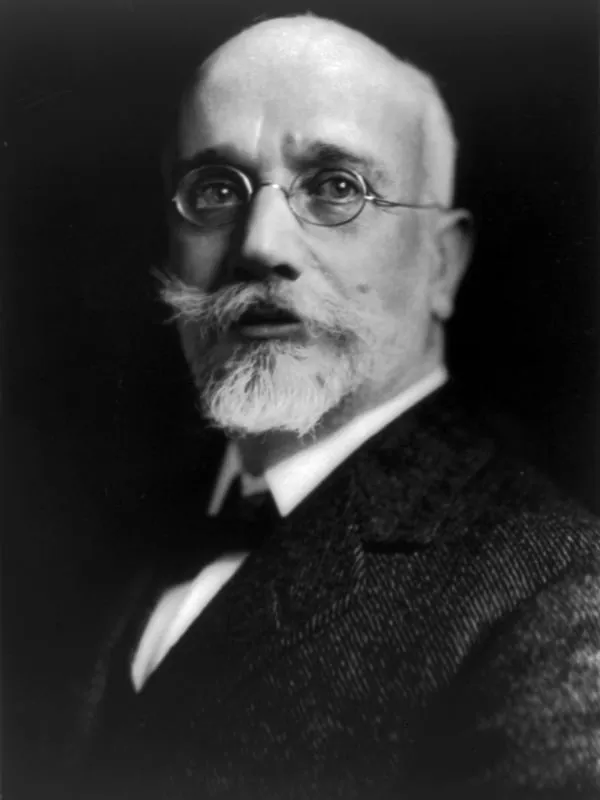
- Born:
- 23 August 1864, Mournies, near Chania (Crete, Ottoman Empire)
- Died:
- 18 March 1936, Paris
- Author:
- Łukasz
- Photo:
- Harris & Ewing, domena publiczna, Wikimedia Commons

Eleftherios Venizelos was the most outstanding Greek politician of the first half of the twentieth century and one of the most skilful diplomats at the Paris Peace Conference. A Cretan lawyer and insurgent, he came to Athens in 1910 as an outsider and within a few years modernised the state, led it through the victorious Balkan Wars and almost doubled its territory. During the Great War, against the king’s will, he brought Greece into the Entente camp, and in 1919 he obtained the powers’ consent to the landing at Smyrna, which was meant to fulfil the dream of a “Greater Greece” on two continents. The landing began a war with Turkey that ended in catastrophe, but it was Venizelos who later concluded peace and friendship with its victor, Mustafa Kemal. The conflict between his supporters and the monarchists, the so-called National Schism, divided Greece throughout the interwar years and paved the way for the dictatorship under which the country entered the Second World War.
Crete
He was born on 23 August 1864 (11 August in the Julian calendar) in Mournies, near Chania, on Crete, which still belonged to the Ottoman Empire. His father, Kyriakos, was a merchant and a participant in the anti-Turkish uprisings, for which the family had to flee for several years to the island of Syros. Eleftherios finished secondary school on Syros and studied law at the University of Athens. On returning to Crete he opened a law practice in Chania, wrote for local newspapers and in 1889 was elected to the Cretan assembly. In 1891 he married Maria Katelouzou. She bore him two sons, Kyriakos and Sofoklis, but died in 1894, shortly after the birth of the younger. Venizelos took a long time to recover from the loss.
In 1897 another uprising broke out on Crete, and Venizelos led the insurgents on the Akrotiri peninsula near Chania. Greece entered the struggle for the island and lost a short war of 1897 against Turkey, but the great powers imposed autonomy for Crete on the Sultan. The Cretan State was created under formal Ottoman suzerainty, with Prince George of Greece, the king’s son, as High Commissioner. Venizelos became his minister of justice but soon came into conflict with the prince, who ruled autocratically and kept postponing the question of union with Greece. In 1901 he lost his post. In March 1905 he gathered his supporters in the mountain village of Therisso and there proclaimed the political union of Crete with Greece. The Therisso revolt did not bring union, but it forced Prince George to step down in 1906, and Venizelos became the island’s most powerful politician.
Athens and the Balkan Wars
In August 1909 a group of officers organised in the Military League staged a coup at the Goudi barracks in Athens. They demanded reform of the army and the state, humiliated by the defeat of 1897 and by their impotence in the face of Turkey. Having no political programme of their own, however, they invited Venizelos as an adviser, and he won them over and persuaded them to hand power to an elected assembly. In 1910 he became a deputy, founded the Liberal Party and in October became head of government; the December election gave the Liberals a huge majority.
The first years of his government were a period of accelerated modernisation for Greece. He revised the constitution, strengthened the independence of the courts and the civil service, carried out land reform in Thessaly and introduced the first laws protecting workers. The army was reorganised by a French mission and the navy by a British one. At the same time Venizelos came to terms with Greece’s neighbours against Turkey: in 1912 Greece concluded an alliance with Bulgaria and became part of the Balkan League. In the First Balkan War the Greek army took Salonica, just ahead of the Bulgarians, and then Ioannina in Epirus, while the navy seized the Aegean islands. In March 1913 King George I was assassinated in Salonica, and the throne passed to his son Constantine I, popular as a victorious commander. The dispute over Macedonia led to the Second Balkan War, in which Greece and Serbia defeated Bulgaria. The Peace of Bucharest of August 1913 confirmed Greece’s gains: southern Macedonia with Salonica and Kavala, southern Epirus, Crete and most of the Aegean islands. The state’s territory and population almost doubled.
The National Schism
When the Great War broke out in 1914, Venizelos was convinced that Greece’s future lay with the Entente, which ruled the seas and could give Greece land in Asia Minor. King Constantine, brother-in-law of Kaiser Wilhelm II and a product of Prussian military training, believed that Germany would win and wanted to remain neutral. In early 1915 Venizelos wanted to send Greek troops to take part in the Entente’s Dardanelles operation. The king and the general staff refused, and the prime minister resigned. He won the election that summer and returned to power, and when in the autumn Bulgaria entered the war on the side of the Central Powers, he agreed to the landing of Allied troops at Salonica. Constantine dismissed him again.
The conflict between prime minister and king split the country into two camps; Greeks call it the National Schism. In August 1916 pro-Entente officers rebelled in Salonica, and Venizelos came there from Crete and formed a Provisional Government of National Defence, which declared war on Germany and Bulgaria and put its own troops into the line on the Salonica front. Greece had two governments: a royalist one in Athens and a Venizelist one in Salonica. In June 1917 France and Britain forced Constantine to leave the country without formally abdicating. His younger son Alexander became king, and Venizelos returned to Athens as prime minister of the whole state and formally brought Greece into the war. In the process he dealt with his opponents: royalists were purged from the army and the civil service, and some were sent into internal exile. The royalists did not forget these reprisals for a long time. In 1918 Greek divisions fought in Macedonia, and in September they took part in the offensive that knocked Bulgaria out of the war.
Paris and Smyrna
At the Paris Peace Conference Venizelos was one of the stars. Courteous, a linguist and a persuasive speaker, he won the confidence above all of David Lloyd George, but also of Woodrow Wilson and Georges Clemenceau. He put forward claims to Thrace, Northern Epirus, the Dodecanese and western Anatolia with Smyrna, invoking the Greeks’ right to self-determination. He was a champion of the Megali Idea, the vision of a state embracing all the lands inhabited by Greeks, with Constantinople as its symbolic centre.
On 6 May 1919 Lloyd George, Wilson and Clemenceau, taking advantage of the Italians’ absence, agreed to the dispatch of Greek troops to Smyrna. Venizelos assured them that he could send a division from Macedonia at once, and argued that the Greeks there were in danger. On 15 May Greek units landed in the port. The landing, in which several hundred Turks were killed from the very first day, sparked an outburst of resistance in Turkey and marked the beginning of the Greco-Turkish War. Venizelos entrusted the administration of the zone to a trusted fellow Cretan, Aristeidis Stergiadis, and defended him against attacks from Greek officers and clergy.
On paper Venizelos’s programme was fulfilled. The Treaty of Neuilly, signed with Bulgaria on 27 November 1919, took Western Thrace from Bulgaria, and the powers soon transferred it to Greece. On 10 August 1920 Venizelos signed the Treaty of Sèvres, which gave Greece Eastern Thrace almost up to Constantinople, the islands of Imbros and Tenedos, and the administration of the Smyrna district with the prospect of annexation after five years. The Greece “of the two continents and the five seas” seemed within reach. Two days later, on 12 August, two royalist Greek officers shot and wounded him at the Gare de Lyon in Paris. In Athens Venizelists retaliated by murdering a well-known opponent of the prime minister, the writer and politician Ion Dragoumis.
Defeat and Lausanne
In October 1920 King Alexander died unexpectedly after being bitten by a monkey in the palace garden. The November election became a plebiscite between Venizelos and Constantine. Weary of eight years of war and embittered by the reprisals, the Greeks chose the opposition. The Liberals lost, and Venizelos himself lost his seat. He left the country, and in December Constantine returned to the throne. France and Italy used the return of the king, whom they regarded as a Germanophile, to withdraw their support from Greece and come to terms with Mustafa Kemal. The royalist governments nevertheless continued the war in Anatolia that Venizelos had begun. In August 1922 the Greek army was routed, and in September the Turks took Smyrna, which was consumed by the Great Fire. In September 1921 Venizelos had remarried in London, to the wealthy Helena Schilizzi, and he lived in exile in Paris and Nice.
After the defeat, officers led by Nikolaos Plastiras forced Constantine to abdicate, and six politicians and generals, among them the former prime minister Dimitrios Gounaris, were shot as the culprits of the catastrophe. Venizelos had no part in that trial, but the new authorities entrusted him with representing Greece at the Lausanne Conference. His opponent there was İsmet Pasha, later İnönü. Venizelos agreed to cede Eastern Thrace to Turkey and to the compulsory population exchange, which moved more than a million Orthodox Christians from Anatolia to Greece and hundreds of thousands of Muslims to Turkey. He did, however, keep Western Thrace for Greece. When in May 1923 the talks threatened to break down, with a rebuilt Greek army standing ready to march on the Evros, he agreed to give Turkey Karaağaç, near Adrianople, in exchange for its renunciation of war reparations. The compromise averted the threat of a new war. The Treaty of Lausanne, signed on 24 July 1923, was bitter for Greece, but it ended ten years of war.
The republic and reconciliation with Turkey
In January 1924 he briefly returned to Athens and became head of government, but he could not reconcile the radical republicans with the moderates and after a few weeks left again. In March Greece became a republic. The 1920s brought coups and the dictatorship of General Theodoros Pangalos. In 1928 Venizelos returned to politics, and in the August election his Liberals won a decisive majority. He governed until 1932, longer than any other Greek prime minister of the interwar period. He built schools and roads, drained marshes in Macedonia and settled refugees from Asia Minor.
The most important achievement of those years was reconciliation with Turkey. In June 1930 the two sides settled the property disputes left by the population exchange, and in October Venizelos travelled to Ankara and signed a treaty of friendship, neutrality and arbitration with Atatürk and Prime Minister İnönü. The man who had sent troops to Smyrna in 1919 nominated Atatürk for the Nobel Peace Prize in 1934. The rapprochement with Turkey and the agreements with Benito Mussolini’s Italy and with Yugoslavia were meant to guarantee Greece’s security. Their culmination, after Venizelos had left office, was the Balkan Entente of 1934.
The Great Depression, however, wrecked the Greek economy. In 1932 the state stopped servicing its foreign debt, and the elections of that year and of March 1933 were won by the monarchists of the People’s Party. On the night after the 1933 election General Plastiras attempted a coup to keep them from power. The failed putsch was laid at Venizelos’s door, although his involvement was never proved. In June 1933 gunmen fired on his car near Athens. He himself was unhurt, but his wife was wounded.
The last putsch and death
On 1 March 1935 Venizelist officers made another attempt at a coup, aimed at the expected restoration of the monarchy. Venizelos backed them and led the revolt on Crete. Within a couple of weeks the government had crushed the rebellion, and Venizelos fled to the Italian-held Dodecanese and from there to France. A court sentenced him to death in absentia. The putsch gave the royalists a pretext for a purge of the army, and in November 1935 a dubious plebiscite restored the monarchy and George II returned to the throne. From Paris Venizelos called on his supporters to make their peace with the king, who had proclaimed an amnesty. He died in Paris on 18 March 1936. His body was taken to Crete and buried on a hill on the Akrotiri peninsula overlooking Chania.
Legacy
A few months after his death, on 4 August 1936, General Ioannis Metaxas, with the king’s consent, suspended the constitution and introduced a dictatorship known as the 4th of August Regime. The long feud between Venizelists and royalists, the purges in the army and the incessant putsches, in which the Venizelist camp had a large share, had weakened Greek democracy so much that it fell without resistance. It was under this dictatorship that Greece entered the Second World War. On 28 October 1940 Metaxas rejected the Italian ultimatum, and in the war with Italy the Greek army won the first victories over the Axis powers. In the spring of 1941 Greece was occupied by the Germans. Venizelos’s son Sofoklis was one of the prime ministers of the government-in-exile during the war. The reconciliation with Turkey that Venizelos had achieved in 1930 endured: Turkey did not exploit Greece’s defeat and remained neutral until 1945.
Greeks still argue about Venizelos. To some he is the founder of modern Greece, who gave it Salonica, Crete and Epirus. To others he is the politician who split the nation, dragged the country into war against the king’s will and sent the army into Asia Minor, from which it returned in defeat, followed by more than a million refugees. His career brings into sharp focus the dilemmas of the post-war order: the victors in Paris were happy to hand out land to weaker allies but were not prepared to defend it. Smyrna showed that a treaty not backed by force could be overturned, and Kemal’s victory became proof for the revisionists of the 1920s and 1930s that the post-war order was not inviolable.
Sources
Mentioned in battles
(01)Often appears with
People who appear in the same events.