- Category:
- Military operations
- Front:
- Balkans
- Date:
- 28 October 1940
- Author:
- Łukasz
- Battle:
- Greco-Italian War
- Tags:
- Greece, Italy, Benito Mussolini, Ioannis Metaxas
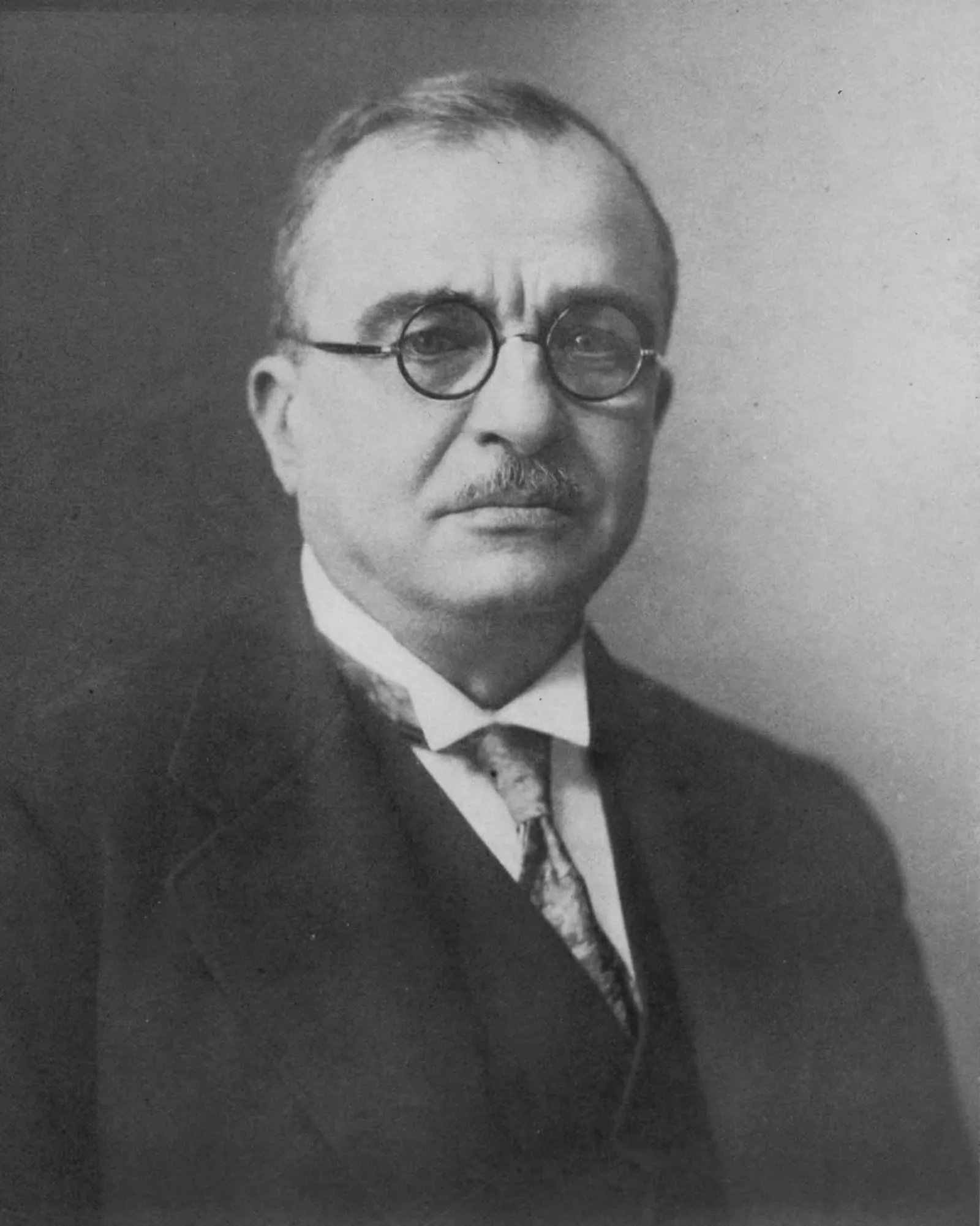
Shortly after three in the morning on 28 October 1940 a car from the Italian legation drew up outside the Greek prime minister’s villa in Kifisia, a suburb north of Athens. Out stepped the Italian minister, Emanuele Grazzi, who asked to speak to the master of the house at once. General Ioannis Metaxas, dictator of Greece for four years, roused from his sleep, received him in his dressing gown. Grazzi handed him a note from the Italian government. Metaxas read it, then looked at the Italian and said in French, the language of diplomacy: “Alors, c’est la guerre” – “So it is war.” Two and a half hours later the Italian troops stationed in Albania crossed the Greek border. So began a war that was meant to bring Benito Mussolini an easy victory and prove that Italy pursued its own policy independently of Germany, but which became the first great defeat of the Axis powers on land.
The road to the ultimatum
Greece had long been in Mussolini’s sights. In 1923, after the Corfu incident, he had been forced to withdraw from the island under pressure from the great powers, and, as his son-in-law and foreign minister Galeazzo Ciano noted in August 1940, he had never forgiven the Greeks that humiliation. Since April 1939, when Italy occupied Albania, Italian troops had stood on the border of Greek Epirus, while the Dodecanese archipelago, taken from the Turks in 1912, served as an Italian base off the Greek coast. Britain and France responded to the occupation of Albania on 13 April 1939 with guarantees of independence for Greece and Romania.
Metaxas tried to maintain neutrality, although economically and politically his country gravitated towards London. After Italy entered the war in June 1940 relations with Rome deteriorated rapidly. The Italian and Albanian press accused the Greeks of favouring the British fleet and of persecuting the Albanians of the border region of Chameria, Italian aircraft attacked Greek warships, and on 15 August an Italian submarine sank the cruiser Elli in the roadstead of the island of Tinos. Athens, although it knew who was responsible, spoke of a submarine “of unknown nationality”. At that point the attack was postponed: Berlin wanted no complications in the Balkans, and the Italians were preparing their offensive in Egypt.
In the autumn the situation changed. At the meeting at the Brenner Pass on 4 October Hitler did not mention to Mussolini that a German military mission was shortly to enter Romania to guard the Ploiești oilfields. The Duce learned of it after the event and regarded it as an intrusion into what he considered the Italian sphere. According to Ciano’s diary he said: “Hitler always faces me with a fait accompli. This time I am going to pay him back in his own coin. He will find out from the papers that I have occupied Greece.” On 15 October, at the Palazzo Venezia, Mussolini decided to attack Greece. The commander of the forces in Albania, General Sebastiano Visconti Prasca, assured him that the operation had been prepared “as perfectly as is humanly possible” and that the occupation of Epirus would take ten to fifteen days. The Chief of the General Staff, Marshal Pietro Badoglio, and the acting Chief of Staff of the Army, General Mario Roatta, had doubts but did not object. Badoglio secured only a postponement of the attack from 26 to 28 October. The coincidence with the eighteenth anniversary of the March on Rome was, it seems, not intended.
The plan rested on assumptions that soon collapsed. Tsar Boris III of Bulgaria refused to take part in the venture, so the Greeks did not have to keep most of their army on the Bulgarian border. It was assumed that the Greek people would not fight for their rulers and that officials in Epirus could be bribed. Nor was there any surprise: on 25 October the Greek minister in Rome warned Athens that the attack would come between 25 and 28 October. To make matters worse, even before the campaign Mussolini had agreed to send some of the reservists home for work in the fields.
The night at Kifisia
The ultimatum was drafted by Ciano on 20 October. It was deliberately given a form that made it impossible to accept. The Italian government accused Greece of breaching its neutrality by making its ports and waters available to the British, and cited border incidents of 25–27 October that had in fact been staged by the Italian side. It demanded consent for Italian troops to occupy “certain strategic points” on Greek territory for the duration of the war with Britain, without saying which. The Italian troops were to move off at six in the morning, and if they met resistance, they were to break it by force. The note gave no guarantee that Greece would keep her territorial integrity.
The man who delivered it was the worst-informed participant in the whole affair. A Florentine and a career diplomat, Emanuele Grazzi had headed the legation in Athens since April 1939. Many accounts call him the ambassador, but formally he was a minister, since Italy had a legation, not an embassy, in Athens. He sincerely sought good relations with Greece, and Rome had kept him in the dark throughout. Metaxas regarded him as a faithful executor of Rome’s instructions and did not himself know how much Grazzi knew.
Grazzi described the scene in his memoirs, published after the war, Il principio della fine (“The Beginning of the End”). When they had sat down, he said that he had an exceptionally urgent communication to deliver and handed over the text without a word. The hands of Metaxas as he read the note trembled slightly, and his eyes behind his spectacles filled with tears, as they always did when he was moved. When he had finished, he looked at the envoy and said in a sad but firm voice: “Alors, c’est la guerre.” Grazzi replied that the Italian government hoped the demands would be accepted and the troops, which would move off at six, allowed through unhindered. Metaxas asked how the envoy could imagine that, even if he wished to give way, he could obtain the King’s consent within three hours and order the troops on the border not to resist. He added that he did not even know which points the Italians wanted to occupy. Grazzi left, and the prime minister telephoned the British minister, Michael Palairet, and asked for immediate help, above all from the air force and the navy.
“Alors, c’est la guerre” rather than “Ochi”
That reply passed into history in another form. In Greek collective memory Metaxas said a single word to the Italian: “Ochi” (Greek όχι), meaning “no”. This version was later spread by, among others, his widow, Lela Metaxa, and 28 October is celebrated in Greece as Ochi Day. According to Grazzi’s own account and the findings of historians, however, the prime minister did not say “no”; he stated in French that it was war. The word “OCHI” first appeared on 30 October 1940 as the title of a leading article in the Athens daily Elliniko Mellon, and the whole press then took it up. It expressed what most Greeks felt, and in that sense the legend has its justification: the refusal of a dictator who had previously been unpopular made him a national hero overnight.
Metaxas took the decision alone, without consulting anyone. Soon afterwards he informed King George II, and appointed the Chief of the Army General Staff, General Alexandros Papagos, Commander-in-Chief, with orders to put the mobilisation plan into effect at once. The cabinet met at 4.30 a.m. The prime minister laid grim prospects before his ministers: the struggle would be hard and unequal, Germany might soon join in, and Greece might temporarily lose Macedonia, Epirus and perhaps even Athens. He was nevertheless convinced that Britain would ultimately win the war and that Greece would emerge from it on the side of the victors. He reportedly ended with the words: “We shall suffer terrible things, but thanks to the magnificent spirit of the nation and the unity of all Greeks, I believe in victory.”
The attack at dawn
According to Greek sources, the first Italian units crossed the border at 5.30 a.m., half an hour before the ultimatum expired. Italian reports speak of six o’clock. Early in the morning Athens radio broadcast a two-sentence communiqué from the General Staff: “Since 5.30 this morning the enemy has been attacking our advanced units on the Greek–Albanian frontier. Our forces are defending the fatherland.”
The front was some 150 kilometres long and ran through mountains with very few roads. The Pindus range divided it into two theatres of operations: Epirus in the west and western Macedonia in the east. Epirus was attacked by the Ciamuria Army Corps (the Ferrara and Siena Infantry Divisions, the Centauro Armoured Division and a coastal grouping), some 40,000 men in all. The coastal columns advanced along the shore towards Igoumenitsa and on to Preveza, while the main forces headed for the Greek positions at Kalpaki, behind which lay Ioannina, the capital of Epirus. In the east, around Korçë (Korytsa), a second corps was to remain on the defensive for the time being. Between them, in the Pindus mountains, the 3rd Alpine Division Julia set off in five columns towards Metsovo. Had the Alpini reached that pass, they would have cut off the Greek forces in Epirus from the rest of the army. The seizure of Corfu from the sea was planned for the following days.
The Italians’ advantage lay in numbers, tanks and aircraft: the Regia Aeronautica had some 380 aircraft at its disposal, the Greeks a few dozen combat aircraft, among them Polish PZL P.24 fighters. According to some accounts, at the start of the campaign Visconti Prasca had about 150,000 men in Albania against some 120,000 Greeks in the whole border region, but on the line of contact itself the superiority was much smaller than Rome had assumed. Greece, partly mobilised since August, had 14 infantry divisions and a cavalry division. Four divisions and two brigades stood on the Albanian border, among them General Charalambos Katsimitros’s 8th Infantry Division in Epirus. The Pindus was held by Colonel Konstantinos Davakis’s detachment: about two thousand reservists on a front nearly 40 kilometres wide.
The weather proved to be the Greeks’ most important ally. It had been pouring since 26 October, the rivers were in spate and the mountain tracks had turned to mud. The Italian columns advanced slowly, heavy equipment got bogged down on the roads, and rain and low cloud largely deprived the Italians of their air superiority. The Alpini later called the expedition “the campaign of mud”. On the first day the Greeks, as planned, withdrew their covering forces from the border to the main defence lines. In Epirus Katsimitros, contrary to the suggestions of the General Staff, which preferred to defend further south, decided to give battle on the line of Kalpaki and the river Kalamas, where marshes hampered the tanks. The landing on Corfu was called off because of a storm as early as 29 October.
Greece takes up arms
In the morning the government proclaimed general mobilisation. In his address to the nation Metaxas said: “The moment has come when we must fight for the independence of Greece, for her integrity and her honour.” The King also called the people to arms. The news of war brought crowds onto the streets of Athens and other cities. Volunteers went to the recruiting offices, reservists from all over the country reported to their units, and demonstrators cheered the army and the King. Many Greeks, including opponents of the dictatorship, remembered the sinking of Elli on the feast of the Virgin Mary and saw the attack as another blow that had to be answered. This upsurge surprised even the Greek high command, which had not itself counted on victory, but only on being able to defend itself with honour.
On the very first day the war struck the civilian population. Italian Fiat BR.20 bombers attacked Patras before noon – the country’s third largest city, a port and a communications hub through which troops were being moved west. The bombs fell on the town centre, on streets full of people. The first reports spoke of about 50 dead and 100 wounded, and according to a tally published in the local press in 1945, 193 people were killed, among them 25 children. Italian aircraft also attacked the port of Preveza, the Corinth Canal and the airfield at Tatoi near Athens.
London and Florence
Greece turned for help to Britain, which had guaranteed her independence in April 1939. That same day Winston Churchill assured Metaxas that the British would give the Greeks all the help in their power and would fight the common enemy. The means available, however, were modest. General Archibald Wavell’s troops faced the Italians in Egypt, and Admiral Andrew Cunningham’s fleet had its hands full. On 22 October, on the strength of intelligence about the impending attack, the air command in the Middle East had already been instructed to prepare squadrons for Greece, and at the beginning of November the first British Blenheim bombers landed at an airfield near Athens. With the consent of the Greek government, British ships and troops occupied Souda Bay on Crete within a few days, which allowed the Greeks to move the division stationed on the island to the mainland. For the British it was an important gain: a base on Crete brought their fleet and aircraft closer to the Italian sea lanes in the Mediterranean.
That same morning Adolf Hitler arrived by train in Florence. He was returning from his talks with Franco at Hendaye and Pétain at Montoire, and he regarded the meeting with the Duce, proposed after he had received Mussolini’s letter with vague allusions to Greece, as an opportunity to restrain his ally from an adventure in the Balkans. It was too late. According to Hitler’s interpreter, Paul Schmidt, Mussolini greeted his guest on the platform with the words: “Führer, we are on the march! Victorious Italian troops crossed the Greek–Albanian frontier at dawn today.” Hitler was furious but did not let it show. In the talks at the Palazzo Vecchio he assured Mussolini of Germany’s support and offered help, including parachute units to seize Crete before the British did. He expressed his opinion of the whole venture only in a letter to the Duce of 20 November, when its consequences were already apparent: the British had won bases from which their bombers could reach the Romanian oilfields, and the Balkans, which Germany wanted to keep quiet, had become a theatre of war. Mussolini, for his part, wanted nothing from Hitler. He meant to win this war on his own.
Place in the war
The offensive, which was supposed to last two weeks, collapsed sooner than anyone in Rome had expected. On the Kalamas line and at Kalpaki the 8th Division repulsed successive attacks at the beginning of November, and the Julia Division, which on 2 November reached the village of Vovousa, some 30 kilometres short of Metsovo, was surrounded in the mountains and fell back to its starting positions with heavy losses. After less than two weeks Mussolini relieved Visconti Prasca of supreme command in Albania and handed it to General Ubaldo Soddu. On 14 November the Greeks went over to the counter-offensive, and on 22 November they took Korçë, the first sizeable town wrested from the Axis since the beginning of the war. By January 1941 they had pushed the front several dozen kilometres into Albania, into the lands they called Northern Epirus. The defeat made Mussolini a laughing stock and undermined his position vis-à-vis Hitler: from then on Italy depended more and more on German help, and the Duce’s “parallel war” became a fiction.
Metaxas did not live to see the end of the war that his refusal had begun. He died on 29 January 1941. His successor agreed to the dispatch of a British expeditionary force to Greece, and on 6 April 1941 Germany, seeking to drive the British out of the Balkans and to rescue its ally, attacked Greece and Yugoslavia. The Greek army, whose main forces were still fighting the Italians in Albania, capitulated in the second half of April, and the country spent three and a half years under German, Italian and Bulgarian occupation. Historians still argue whether the Balkan campaign delayed Operation Barbarossa, or whether the date of the attack on the USSR was put back chiefly for other reasons. What is beyond dispute is that in the autumn of 1940, while Britain was fighting alone, a small Balkan country stopped the army of an Axis power and threw it back across the border.
The Greeks marked the anniversary of 28 October as early as the following year, under occupation: on 28 October 1941 students gathered for a commemoration at the University of Athens. After the war Ochi Day became a national holiday in Greece, and later in Cyprus as well. Every year a military parade is held in Thessaloniki, and school processions take place in Athens and other towns. By an irony of history, the national festival of freedom commemorates the words of a dictator who had suspended the constitution and imprisoned his political opponents, and his legend has survived in a form he never used himself.
Sources
Meanwhile
(04)Elsewhere, within a week.
- 24 October 1940 · PoliticsThe meeting at MontoireOn 24 October 1940 Pétain met Hitler at Montoire station. The handshake and his words on the “path of collaboration” opened Vichy’s co-operation with the Reich.
- 24 October 1940 · Western FrontThe Corpo Aereo Italiano over EnglandOn the night of 24–25 October 1940 Italian bombers attacked England for the first time. The raid on Harwich achieved nothing and cost several aircraft.
- 1 November 1940 · DiplomacyTurkey and the Greco-Italian WarOn 1 November 1940 İnönü assured parliament that Turkey would stay out of the war and was studying the situation after Italy’s attack on Greece with Britain.
- 23 October 1940 · DiplomacyThe meeting at HendayeOn 23 October 1940 Hitler and Franco discussed Spain’s entry into the war at Hendaye. Hitler did not promise him France’s colonies; a vague protocol followed.
Related events
(04)The same battle, people or subject.
- 22 November 1940 · BalkansThe Greeks take KorçëOn 22 November 1940 the Greek 9th Division entered Korçë in Albania – the first sizeable town taken from the Axis powers since the war began.
- 15 October 1940 · PoliticsMussolini decides to attack GreeceOn 15 October 1940 at the Palazzo Venezia Mussolini agreed a plan to invade Greece with his commanders, setting 26 October as the date despite their fears.
- 14 November 1940 · BalkansThe Greek counter-offensiveOn 14 November 1940 the Greek army launched a counter-offensive at Korçë and in Epirus. Within ten days it drove the Italians out of Greece and entered Albania.
- 8 December 1940 · BalkansThe Greeks take GjirokastërOn 8 December 1940 the Greeks entered Gjirokastër, the main town of southern Albania, having taken Delvinë and the port of Sarandë as the Italians fell back.