Croatia
Ante Pavelić
Leader of the Ustaše (1929–1945), Poglavnik of the Independent State of Croatia (1941–1945)
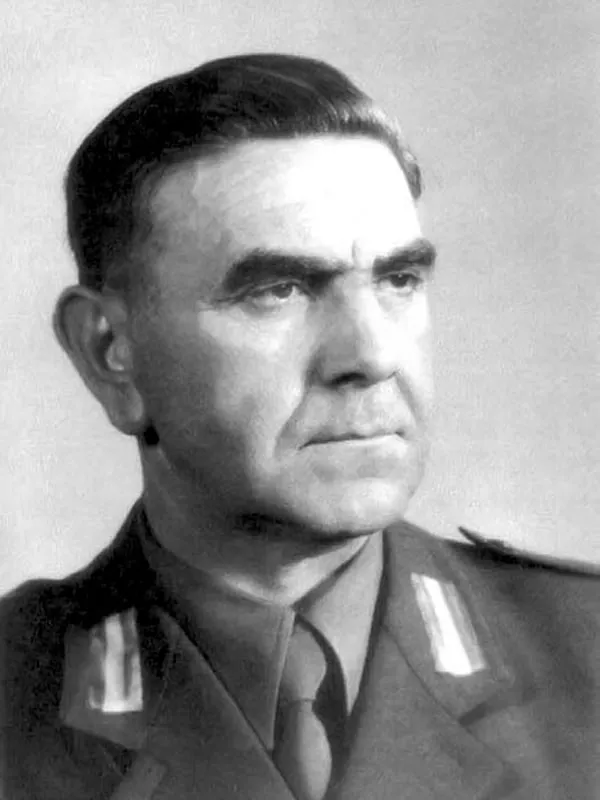
- Born:
- 14 July 1889, Bradina (Bosnia and Herzegovina under Austro-Hungarian administration)
- Died:
- 28 December 1959, Madrid
- Author:
- Łukasz
- Photo:
- Willy Pragher (?), domena publiczna, Wikimedia Commons

Ante Pavelić was a Croatian lawyer and politician who moved from legal opposition to Serbian dominance in the Kingdom of Yugoslavia to terrorism. In 1929, in exile, he founded the Ustaše organisation, and in 1934 his men, together with Macedonian revolutionaries, killed King Alexander I in Marseille. For more than a decade he lived in Italy as an instrument of Mussolini’s policy towards Yugoslavia. When in April 1941 Germany and its allies destroyed that state, the Axis needed someone in Zagreb willing to rule by its appointment. Pavelić became Poglavnik – leader – of the Independent State of Croatia, and for four years headed a regime that committed genocide against Serbs, Jews and Roma. After the war he fled through Austria and Italy to Argentina, and he died in Spain without ever having stood trial for his crimes.
Youth and the law
He was born on 14 July 1889 in Bradina, a village on the slopes of Mount Ivan in Herzegovina, not far from Konjic. Bosnia and Herzegovina still formally belonged to the Ottoman Empire at the time, but had been administered by Austria-Hungary since 1878. His parents came from Lika in Croatia and had moved to Bosnia to work on railway construction. The family moved from place to place, and the boy attended schools in Bosnia, then in Zagreb, Senj and Karlovac, often interrupting his education because of illness. While still at grammar school he joined the nationalists, followers of the ideas of Ante Starčević, the father of the Croatian “Party of Rights” movement, and of his successor Josip Frank. They proclaimed that Croatia had a historic right to its own state and that the Serbs living on its lands were in reality Croats of the Orthodox faith. Over time hostility towards the Serbs came increasingly to the fore in Frank’s movement, whose members were known as Frankists.
In 1910 Pavelić began studying law at the University of Zagreb. In 1912 he was briefly arrested in connection with an assassination attempt on the Ban of Croatia-Slavonia, Slavko Cuvaj. He took his degree in 1914 and his doctorate in 1915. During the First World War he worked in the law office of Aleksandar Horvat, chairman of the Party of Rights, and joined the party’s leadership. Later he opened his own legal practice in Zagreb. In 1922 he married Marija Lovrenčević, with whom he had three children.
A deputy against the Kingdom of Serbs, Croats and Slovenes
The Party of Rights did not recognise the union of Croatia with Serbia in the Kingdom of Serbs, Croats and Slovenes in December 1918 and demanded a Croatian republic. It was, however, a small party, overshadowed by the Croatian Peasant Party of Stjepan Radić. In 1921 Pavelić joined the Zagreb city council, and as a politician and lawyer he maintained contacts in Belgrade, including with the Prime Minister, Nikola Pašić. In 1927 he was elected to parliament on the list of the Croatian Bloc, together with Ante Trumbić. That same year, returning from a congress of European cities in Paris, he submitted a memorandum to the Italian Foreign Ministry in which, on behalf of his party, he offered Italy cooperation in breaking up Yugoslavia. In return for support he was willing to recognise Italy’s gains on the eastern Adriatic, to cede to Italy strategic points in Dalmatia and the Bay of Kotor, and not to build a Croatian navy. These promises were to resurface in 1941.
In the courts he defended opponents of the state, among them, in 1927, Macedonian students accused in Skopje of links with the Internal Macedonian Revolutionary Organisation (IMRO). In June 1928 he witnessed the shooting in parliament in which a Montenegrin deputy mortally wounded Radić. After this attack he became radicalised even faster. He published the journal Hrvatski domobran and founded an armed youth organisation, which the authorities soon banned.
The Ustaše and Marseille
On 6 January 1929 King Alexander I dissolved parliament and the political parties and introduced a dictatorship. Pavelić, under police surveillance, left for Austria on the night of 19–20 January. The beginning of the Ustaše organisation (from ustati, “to rise up”) is usually dated to 1929. It was conspiratorial and military in character, and its aim was an independent Croatia within its “historical and ethnic borders”, to be won by any means, including force. In April 1929 in Sofia Pavelić signed with the IMRO leader Ivan Mihailov a declaration on cooperation in detaching Croatia and Macedonia from Yugoslavia. A Yugoslav court sentenced him to death in absentia for treason. He was expelled from Vienna to Germany, from where he made his way to Italy on a false passport.
In Italy he lived under assumed names, most often as Antonio Serdar. Benito Mussolini did not officially associate himself with the Ustaše, but he let them operate and gave them money, seeing them as a tool for breaking up Yugoslavia and gaining control of the Adriatic. From 1931 the Ustaše had training camps in Italy, among others at Bovegno near Brescia, and also in Hungary, on the Janka Puszta estate. In 1932 Pavelić began publishing the journal Ustaša, in whose first issue he wrote that the dagger, the revolver, the machine gun and the time bomb were the bells that would herald the resurrection of an independent Croatian state. The Ustaše planted bombs on trains and killed opponents, and in September 1932 a group of about twenty attacked a gendarmerie post in the Velebit mountains. This failed “Velebit uprising” provoked harsh reprisals, which fell mainly on Croatian peasants.
In December 1933 a first attempt on the King’s life in Zagreb was uncovered in time. The second succeeded. On 9 October 1934 the Bulgarian Vlado Chernozemski, an instructor in the Ustaše camps, shot Alexander I in Marseille, and the French Foreign Minister, Louis Barthou, was mortally wounded in the shooting. Under French pressure the Italians arrested Pavelić in Turin on 17 October, but refused to hand him over to the French. In February 1936 the assize court in Aix-en-Provence sentenced him to death in absentia. Pavelić was released from Italian prison in March 1936 and remained under police surveillance, while his men were interned on islands and in camps.
Years in the shadows
The Marseille assassination was the Ustaše’s greatest success, but it did not bring about the collapse of Yugoslavia. The state survived, and Prince Paul became regent on behalf of the under-age Peter II. Disappointed with Italy, Pavelić sought contact with Germany. In 1936 he prepared for the German Foreign Ministry a memorandum on the “Croatian question”, in which he named as the Croats’ enemies the Serbian authorities, Freemasonry, communism and the Jews, whom he accused of having taken control of Croatian trade and the press. In Ustaše ideology, originally focused on the struggle against Belgrade, antisemitism and racial thinking grew in importance. In 1937 Italy reached an understanding with the Yugoslavia of Prime Minister Milan Stojadinović, disbanded the Ustaše units and placed Pavelić under house arrest in Siena. About half of the several hundred émigrés returned home, where the Ustaše operated underground, among students and in economic organisations. They nevertheless remained a fringe. The overwhelming majority of Croats followed Vladko Maček, Radić’s successor, who in 1939 obtained from the regent the autonomous Banovina of Croatia.
After Italy occupied Albania in 1939, the Foreign Minister, Galeazzo Ciano, again discussed with Pavelić a Croatian uprising and a state linked to Italy by a monetary, customs and personal union. In 1940 Rome even prepared an attack on Yugoslavia, but the plan was postponed because of the war with France and then blocked by Adolf Hitler, who wanted quiet in the Balkans. Pavelić was living at the time in a villa near Florence, still under police surveillance.
Poglavnik
Everything changed with the coup in Belgrade on 27 March 1941, two days after Yugoslavia joined the Tripartite Pact. Hitler decided to destroy Yugoslavia, and on 29 March Mussolini received Pavelić for the first time, at the Villa Torlonia in Rome. Pavelić confirmed his old promises concerning Dalmatia and was given a radio transmitter through which he called on the Croats to rise. When Germany attacked Yugoslavia on 6 April, Berlin would nevertheless have preferred Maček in Zagreb. Maček refused, and so on 10 April Pavelić’s deputy, Slavko Kvaternik, with German consent, proclaimed the Independent State of Croatia in his name. Pavelić travelled with several hundred Ustaše via Rijeka to Karlovac, and on 15 April, as Germany and Italy recognised the new state, to Zagreb. On 16 April he formed a government. In May in Rome he signed agreements handing most of central Dalmatia to Italy, and Prince Aimone of the House of Savoy was proclaimed King of Croatia as Tomislav II; he never came to the country. On 18 May 1941 Pope Pius XII received Pavelić in a private audience. The Vatican, however, did not recognise the NDH and maintained relations with the Yugoslav government-in-exile, although it sent its own representative to Zagreb.
Pavelić ruled as a dictator. The state had no functioning parliament – the Sabor convened in 1942 met for a few sessions and was never summoned again – and all laws were issued by the Poglavnik. As early as 17 April 1941 he signed a decree on the defence of the nation and the state that prescribed the death penalty for acts harming the interests of the NDH; on 25 April he banned the use of the Cyrillic script, and on 30 April he promulgated racial laws that stripped Jews of their civil rights. At the end of April the Ustaše carried out the first mass murders of Serbs, at Gudovac and then at Glina. The Italian journalist Alfio Russo recalled that when Pavelić was asked what he would do if all the Serbs rebelled, he replied: “We will kill them all.” On 6 June 1941 Hitler received him at the Berghof and advised him to pursue a policy of “national intolerance” for fifty years and to deport the Serbs to occupied Serbia. On 15 June the NDH joined the Tripartite Pact.
Genocide
The aim of Ustaše policy towards the almost two million Serbs was to remove them from the state: some were to be deported, some forced to convert to Catholicism, and the rest murdered. Orthodox churches were demolished and priests killed or expelled. By the autumn of 1941 the Ustaše had deported more than a hundred thousand people to Serbia, and over the course of the war some 240,000 Serbs converted to Catholicism, under compulsion or pressure. The regime condemned Jews and Roma to total extermination. In August 1941 the Jasenovac camp complex was established under Vjekoslav Luburić; according to estimates by the United States Holocaust Memorial Museum, between 77,000 and 99,000 people died there. Historians attribute the main responsibility for planning the crimes, besides Pavelić, to Kvaternik’s son, Dido Kvaternik, and to the Interior Minister, Andrija Artuković. Pavelić himself remained a practising Catholic throughout.
The scale of the crimes is hard to establish precisely, and estimates vary considerably. According to most historians, between about 170,000 and more than 300,000 Serbs died in the NDH at the hands of the Ustaše and their allies, as did some 30,000 of the nearly 40,000 Jews and almost all the Roma, as well as tens of thousands of Croats and Muslims who opposed the regime. Even the German allies were shocked. General Edmund Glaise-Horstenau, the German military plenipotentiary in Zagreb, reported in the summer of 1941 that the Ustaše had “gone berserk”, and in a report to Heinrich Himmler of February 1942 the Gestapo wrote that it was their atrocities that were driving the population to join the partisans. The terror had the opposite effect to the one intended: it provoked a Serbian uprising, out of which grew the Chetniks and the communist partisans of Josip Broz Tito. When disillusioned Croats began to turn away from the regime, Pavelić had Maček confined in Jasenovac in October 1941, and then placed under house arrest.
A state falling apart
By mid-1942 Pavelić’s authority in practice extended only to Zagreb, the larger towns and the areas around them where German and Croatian garrisons were stationed. In many regions the partisans, the Chetniks or the Italians were in control. The Germans criticised the Ustaše ever more openly. In September 1942 Hitler summoned Pavelić to his headquarters near Vinnytsia in Ukraine, after which the Poglavnik removed Slavko and Dido Kvaternik and blamed them for the terror and the defeats. He himself, however, remained in power. From 1943 Himmler sent his own forces into the NDH, including an SS division and a gendarmerie made up of local Germans, and a Waffen-SS division was formed from Croatian Muslims.
After Italy’s surrender in September 1943 Tomislav II renounced the crown, and Pavelić declared the Rome agreements void and annexed Dalmatia to the NDH. In reality the western territories were occupied by the Germans. Nikola Mandić became head of government, while Pavelić remained head of state as Poglavnik. When in 1944 the minister Mladen Lorković and General Ante Vokić prepared a plan to switch sides and come to terms with the Allies, Pavelić at first hesitated and then had them arrested. Both were murdered in the prison at Lepoglava in the spring of 1945. The Poglavnik stood by Hitler to the end.
Flight
On 6 May 1945 Pavelić left Zagreb. Tens of thousands of NDH soldiers and civilians followed him to Austria to surrender to the British, but the British turned them over to the Yugoslav partisans. Tens of thousands of people died in the Bleiburg massacre and on the marches that followed it. Pavelić himself broke away from the columns and reached the American zone of occupation in Austria, where he hid under a false name until 1946. Then, disguised as a priest, he made his way to Rome. He hid there in houses belonging to church institutions, with the help of the Croatian priest Krunoslav Draganović, who organised the escape of former Ustaše overseas. American counter-intelligence knew of his presence, but neither the Americans nor the British did anything to hand him over to Yugoslavia.
With a Red Cross passport in the name of Pál Aranyos, Pavelić sailed for Argentina and, according to most sources, reached Buenos Aires in November 1948 (some studies give 1947). Thanks to the goodwill of the government of Juan Perón, which took in many fugitives from defeated Europe, he settled there with his family, ran a building firm and did not give up political activity. In 1951 he announced a Croatian “state government” in exile, and in 1956 he founded the Croatian Liberation Movement. On 10 April 1957, the anniversary of the proclamation of the NDH, he was shot in the back in the suburb of El Palomar. In 1999 a Montenegrin émigré and former Chetnik, Blagoje Jovović, claimed responsibility for the attack. After Perón’s fall Yugoslavia again demanded his extradition, so Pavelić left for Chile and, at the end of 1957, for Madrid, where the government of General Francisco Franco granted him asylum on condition that he did not appear in public. He died on 28 December 1959 in the German Hospital in Madrid from complications of the wounds he had received in the assassination attempt. He was buried in the San Isidro cemetery.
Significance
Pavelić is one of those figures whose life traces the whole path from the national disputes after the First World War to genocide during the Second. The sense of injustice that the Croats had suffered in the centralised kingdom was real, but he turned it into a programme of terror and made himself dependent on Fascist Italy and then on Nazi Germany. The Marseille assassination, which he organised with IMRO, killed two politicians who were defending the system of alliances against Hitler and emboldened revisionists throughout Europe. The state he received from the Axis in 1941 was neither independent nor Croatian in the sense his compatriots had dreamt of: it gave Dalmatia away to Italy, survived on German bayonets, and in terms of the proportion of its citizens murdered its regime was among the bloodiest in Europe. The Ustaše crimes against the Serbs became one of the foundations of Tito’s mythology in post-war Yugoslavia, and in the 1990s, during the break-up of the federation, they returned as a weapon in the Serbo-Croatian war. Pavelić never answered for them before a court.
Sources
Mentioned in battles
(01)Often appears with
People who appear in the same events.