Yugoslavia
Peter II of Yugoslavia
King of Yugoslavia (1934–1945)
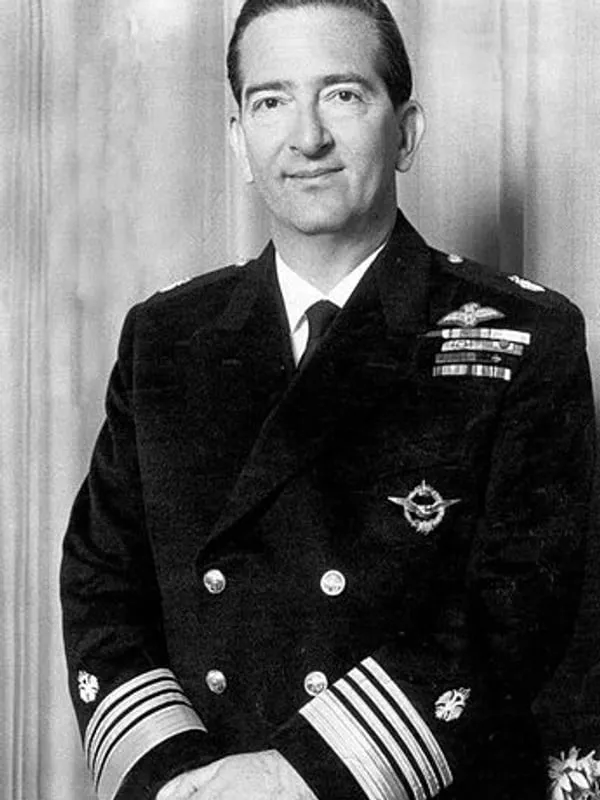
- Born:
- 6 September 1923, Belgrade (Kingdom of Serbs, Croats and Slovenes)
- Died:
- 3 November 1970, Denver (United States)
- Author:
- Łukasz
- Photo:
- Непознат, CC BY 3.0 RS, Wikimedia Commons

Peter II Karađorđević was the last King of Yugoslavia. He inherited the throne as an eleven-year-old boy when his father was assassinated in 1934, and for the next six years a regent, Prince Paul, ruled in his name. On 27 March 1941, two days after Yugoslavia joined the Tripartite Pact, the officers who overthrew the regency declared the seventeen-year-old Peter of age and made him a symbol of resistance to Hitler. Ten days later Germany and its allies invaded the country, and the king spent the rest of the war in exile in London, looking on helplessly as civil war raged at home and gradually losing the support of both his countrymen and the Allies. In 1945 Josip Broz Tito’s communists deprived him of the throne. He died in exile in the United States.
Childhood of the heir to the throne
He was born in Belgrade on 6 September 1923, the eldest son of King Alexander I of the Serbs, Croats and Slovenes and Queen Maria, a daughter of King Ferdinand I of Romania. His paternal grandfather was King Peter I of Serbia, and his uncle was the future King Carol II of Romania. One of his godparents was the British King George V, represented at the christening by his son, the Duke of York, later George VI. Peter had two younger brothers, Tomislav and Andrej.
He received his first lessons at the royal palace in Belgrade. His father, who had himself grown up in Russia and Switzerland, wanted his son to get to know England and sent him to Sandroyd, a boarding school in Surrey. It was there, in October 1934, that the boy learned his father had been killed in the Marseille assassination. At the age of eleven he became King of Yugoslavia as Peter II.
A king under a regency
Under the terms of Alexander’s will, power on behalf of the under-age king passed to a three-man regency council. It was headed by the late king’s cousin, Prince Paul Karađorđević; the other regents were Senator Radenko Stanković and Ivo Perović, a ban (provincial governor). Peter returned home and continued his education in Belgrade under private tutors. The regent saw it as his duty to hand the kingdom over to Peter in the state in which Alexander had left it, and did not want to change the constitutional order before the king came of age in September 1941. Even so, in August 1939 he allowed the Cvetković–Maček Agreement, which gave the Croats an autonomous banovina. Many Serbs believed that once Alexander’s son came to power he would restore his father’s centralist rule, and this too fed their hostility towards the regent.
The regency’s foreign policy grew ever more difficult. Yugoslavia was surrounded by Germany, Italy and their allies, and in the spring of 1941 Hitler forced the government of Dragiša Cvetković to sign Yugoslavia’s accession to the Tripartite Pact on 25 March. Peter, a seventeen-year-old schoolboy, had no influence over these decisions.
27 March 1941
During the night of 26–27 March 1941 air force officers led by Generals Dušan Simović and Borivoje Mirković carried out a coup d’état in Belgrade. They overthrew the government and the regency and declared the king of age. Peter had not been let into the secret. In the morning the radio broadcast a proclamation to the nation in his name – read, according to many accounts, by someone imitating his voice – and the king learned from the radio that he had come of age. In memoirs published after the war he described climbing down a drainpipe from the palace, which was surrounded by guardsmen loyal to the regent, to join the conspirators. Simović is said to have greeted him with the words: “Your Majesty, I salute you as King of Yugoslavia. From this moment you will exercise full royal power.”
Belgrade greeted the coup with enthusiasm. Crowds waving Yugoslav, British and French flags cheered the young king as he drove through the streets in a car without an escort. On 28 March Peter took the oath in the presence of Patriarch Gavrilo V. Contrary to later stories, he did not announce Yugoslavia’s withdrawal from the Tripartite Pact. Real power lay with Simović’s government of national unity, which tried to avoid war. Hitler, however, had already decided on 27 March to destroy Yugoslavia.
Defeat and flight
On 6 April 1941 Germany, followed by Italy and Hungary, attacked Yugoslavia, and the Luftwaffe bombed Belgrade. The king and the government left the capital and withdrew into the interior. The army disintegrated in less than two weeks; on 10 April the Independent State of Croatia was proclaimed in Zagreb, and on 17 April the capitulation was signed. Peter and his ministers flew from Nikšić in Montenegro to Greece. In Athens on 16 April he declared that he would fight on until victory. By way of Jerusalem and Cairo he reached London in June 1941. The country was carved up between Germany, Italy, Hungary, Bulgaria and the new Croatian state, and in Serbia the Germans installed a collaborationist government under General Milan Nedić.
In exile in London
In London the king and his government were received as heroes. The British press – and in the United States even comic books – portrayed the young monarch as the symbol of a country that had refused to submit to Hitler. Peter completed his education at the University of Cambridge and received a commission in the Royal Air Force. Yet the government-in-exile had little to offer the Allies: only a few hundred Yugoslav soldiers had made their way to Egypt, and attempts to raise an army from émigrés in America failed. The government was also deeply divided. News of the massacres committed by the Ustaše against Serbs in Croatia and Bosnia set the Serbian ministers against the Croatian ones, while Prime Minister Simović quarrelled with the politicians and lectured the king, who found it increasingly hard to bear. In January 1942 Peter dismissed him, and the historian Slobodan Jovanović became prime minister. The king maintained close contacts with the other governments-in-exile, especially with the Czechoslovak President Edvard Beneš, with whom he discussed a post-war alliance, and in January 1942 his government signed an agreement with the Greek government on a future Balkan union.
The king’s chief hope became the resistance at home. In the summer of 1941 word reached London that units under Colonel Draža Mihailović, known as Chetniks, were fighting the occupiers in the mountains of Serbia. In January 1942 Peter made Mihailović minister of war, and in June that year promoted him to general and chief of staff of the army in the homeland. In the summer of 1942 he visited the United States and Canada, where he held talks with President Franklin Delano Roosevelt and Prime Minister William Lyon Mackenzie King, and in New York he called on the aged Nikola Tesla. Yugoslavia gained access to Lend-Lease aid at that time, but the journey won no support for the monarchist cause.
In time it became clear that the Chetniks were avoiding combat with the Germans so as not to expose the population to bloody reprisals, and that some of their commanders were collaborating with the Italians and Germans against the communist Partisans of Josip Broz Tito. Many Chetniks committed atrocities against Croats and Muslims. To non-Serbs, the king’s uncritical support for Mihailović meant that after the war a state dominated by Serbian nationalists would return, and this drove them towards the Partisans, who promised equality between the nations. The British and Americans, interested above all in who was tying down the most Axis troops, backed Tito ever more openly from 1943. The historian Stevan K. Pavlowitch described Peter as an immature young man, easily manipulated by quarrelling ministers, who changed his mind depending on who had spoken to him last.
Marriage and the loss of the throne
The king’s position was also undermined by his private life. In 1943 he announced his engagement to Princess Alexandra of Greece, daughter of the late King Alexander of Greece, despite the opposition of his ministers, who reminded him that by Serbian tradition a ruler does not marry in a time of national calamity. He dismissed Prime Minister Jovanović, who had opposed announcing the engagement. The wedding took place on 20 March 1944 at the Yugoslav legation in London in the presence of four reigning monarchs: George VI, who was a witness, George II of Greece, Haakon VII and Wilhelmina. In occupied Yugoslavia, racked by terror, hunger and civil war, communist propaganda exploited the contrast without scruple. The couple’s only son, Alexander, was born on 17 July 1945.
Under heavy pressure from Winston Churchill, who wanted to reconcile the monarchy with the Partisans and keep Yugoslavia in the Western sphere of influence, on 1 June 1944 Peter appointed the Croatian politician Ivan Šubašić prime minister. On 16 June, on the island of Vis, Šubašić reached an agreement with Tito and recognised the Partisans as Yugoslavia’s only armed forces. On 29 August Mihailović was removed as chief of staff, and on 12 September 1944 Peter called on his countrymen over the BBC to join Tito’s army. Stalin, who wanted to reassure the West, told a reluctant Tito to agree to the king’s return, advising him to “stab him in the back” at the right moment. The return never took place. Under a further agreement a regency council took over power in the king’s name in March 1945, and the government in Belgrade came to be dominated by the communists. Peter protested that at twenty-one he did not need regents. After the elections to the Constituent Assembly on 11 November 1945, held amid intimidation of the opposition, the assembly abolished the monarchy on 29 November 1945 and proclaimed the Federal People’s Republic of Yugoslavia.
Exile and death
The former king settled in the United States, and in the 1950s also lived in France. To the end of his life he hoped to return to the throne and believed that Chetnik units were still waiting for him in central Serbia. The Serbian emigration, however, was divided and riven by quarrels, and the United States, which during the Cold War valued Tito’s independence from Moscow, had no intention of supporting the royalists. Peter lived beyond his means, fell into debt, and his marriage went through crises. He suffered from depression and alcoholism. In 1955 he published his memoirs, A King’s Heritage. He died in a hospital in Denver on 3 November 1970, after a failed liver transplant, at the age of 47. He was buried at the Serbian Orthodox Monastery of St Sava in Libertyville, near Chicago – the only European monarch to be buried in the United States. In 2013 his remains were brought to Serbia and on 26 May laid to rest in the dynasty’s mausoleum at Oplenac in Topola.
Significance
Peter II was king for eleven years, but he truly reigned for only a few days in the spring of 1941. His name served the conspirators of 27 March, who wanted to break with the policy of concessions to Germany, and the coup carried out in his name brought invasion, partition and occupation upon Yugoslavia. In exile the young, inexperienced monarch could neither control his feuding government nor grasp that his support for the Serbian Chetniks was alienating the state’s other nations and its Western allies. His fate shows how war, occupation and civil war sealed the downfall of the pre-war Yugoslav monarchy and the victory of Tito’s communists.
Sources
Mentioned in battles
(01)Often appears with
People who appear in the same events.