Japan
Kantarō Suzuki
Chief of the Navy General Staff (1925–1929), Grand Chamberlain (1929–1936), President of the Privy Council (1944–1945, 1945–1946), Prime Minister of Japan (1945)
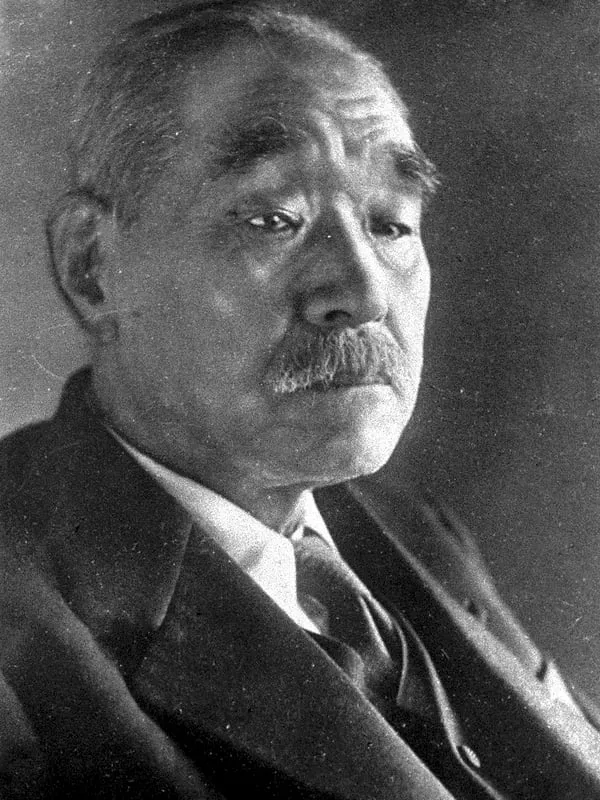
- Born:
- 18 January 1868, Fuseo, Izumi Province (now Sakai, Japan)
- Died:
- 17 April 1948, Sekiyado (now Noda, Chiba Prefecture, Japan)
- Author:
- Łukasz
- Photo:
- autor nieznany, domena publiczna, Wikimedia Commons

Kantarō Suzuki was a Japanese admiral, courtier and politician, the last prime minister of Japan during the Second World War. A veteran of the wars with China and Russia and a torpedo specialist, he was for seven years Grand Chamberlain to Emperor Hirohito and one of his closest confidants. In February 1936 rebel young officers branded him an “evil adviser to the throne” and shot him, gravely wounding him. Nine years later, in April 1945, the 77-year-old Suzuki reluctantly became head of a government charged with fighting a lost war. It was he who, in August 1945, twice asked the emperor to settle a dispute within the country’s leadership, and so opened the way to surrender. He remains an ambiguous figure: to some he was a patient advocate of peace who had to hide his intentions from the army; to others a vacillating old man whose word mokusatsu prolonged the war.
Childhood and early years in the navy (1868–1904)
He was born on 18 January 1868, in the last weeks of the shogunate, in the village of Fuseo in Izumi Province – today within the city of Sakai in Osaka Prefecture. The village was then an exclave of the Sekiyado domain, and his father, Yoshinori Suzuki, a samurai of that domain, administered it as an official (daikan). In 1871 the family moved to Sekiyado in Shimōsa Province (now the city of Noda in Chiba Prefecture), which Suzuki later regarded as his home town, and then to Maebashi. In 1884 he entered the Imperial Japanese Naval Academy at Etajima, graduating in 1887.
During the First Sino-Japanese War he commanded a torpedo boat and in February 1895 took part in the night attacks on the Chinese fleet bottled up in the harbour of Weihaiwei. According to Japanese accounts, his boat failed to fire its torpedoes on that occasion because of a launcher fault. After the war he graduated from the Naval War College (Kaigun Daigakkō) in 1898, and in 1901–1903 he was naval attaché in Germany. He earned a reputation as the navy’s foremost expert on torpedo tactics. In 1898 he married Toyo Ōnuma, the daughter of a former samurai from Aizu.
The war with Russia and an admiral’s career (1904–1929)
After the outbreak of the Russo-Japanese War, Suzuki, who had brought the armoured cruiser Kasuga to Japan from Italy, where she had been bought, became her executive officer and fought aboard her at the Battle of the Yellow Sea in August 1904. He then commanded destroyer divisions. He drilled his men so ruthlessly in close-range attack that he was nicknamed “Oni-Kan” – “Kantarō the Demon”. At the Battle of Tsushima in May 1905 his 4th Destroyer Division took part in the night attacks on the shattered Russian squadron; Japanese sources credit him with torpedo hits on, among others, the battleship Navarin, which sank. For his part in the war he received the Order of the Golden Kite.
After the war he lectured on torpedo tactics at the Naval War College and commanded a succession of ships, up to the battleship Shikishima. His first wife died in 1912. In 1913 he became a rear admiral, and in April 1914, after a bribery scandal over contracts with the Siemens company had brought down the government, he became vice-minister of the navy in the cabinet of Shigenobu Ōkuma and set the ministry’s affairs in order. In 1915 he married Taka Adachi, a kindergarten teacher who in 1905–1915 had looked after the young Prince Hirohito and his brothers. This marriage bound him permanently to the future emperor.
As a vice admiral he led a training squadron with cadets to San Francisco and South America in 1918; the memory of a speech he gave in California at that time was to resurface in 1945. He went on to be superintendent of the academy at Etajima, commander of the 2nd and 3rd Fleets and of the Kure naval district. In August 1923 he was promoted to admiral, in 1924 he took command of the Combined Fleet, and from April 1925 to January 1929 he was Chief of the Navy General Staff.
Grand Chamberlain (1929–1936)
In January 1929, at the wish of the emperor and the Empress Dowager Teimei, Suzuki transferred to the reserve and became Grand Chamberlain (jijūchō), and in February also a member of the Privy Council. He did not feel cut out for court life, but he accepted the post.
He soon found himself at the centre of a dispute that divided the navy. In the spring of 1930 the Chief of the Navy General Staff, Admiral Kanji Katō, opposed the compromise negotiated at the London Naval Conference and wanted to present his protest directly to the emperor. Suzuki, his former superior, persuaded him to postpone the audience. Although in doing so the chamberlain overstepped his powers, he saved the treaty for the government; but the right-wing press and the military accused him – together with the Lord Keeper of the Privy Seal, Nobuaki Makino – of cutting the emperor off from the armed forces. From then on nationalists and radical young officers counted him among the “treacherous advisers beside the throne”.
The February 26 Incident (1936)
On the evening of 25 February 1936 Suzuki and his wife dined with the United States ambassador, Joseph Grew. At around 5 a.m. on 26 February a detachment of soldiers of the 3rd Infantry Regiment under Captain Teruzō Andō burst into the chamberlain’s official residence – one of the groups that night attempting to seize power in Tokyo. Suzuki went out to the attackers unarmed and asked what they wanted. Andō’s soldiers opened fire (according to Taka Suzuki’s account it was the NCOs who fired; other descriptions attribute the shots to the captain himself); four bullets struck him – in the head, chest, shoulder and thigh. When one of the soldiers urged Andō to finish off the wounded man, Taka Suzuki cried out that if it had to be done, she would do it herself. Andō sheathed his sword, ordered his men to salute the chamberlain and left, convinced that Suzuki was dying.
Suzuki survived thanks to immediate medical help and blood transfusions; in hospital his heart briefly stopped. He carried a bullet that had lodged in his body for the rest of his life. He returned to work in the spring, but on 20 November 1936 he stepped down as Grand Chamberlain and was made a baron.
On the Privy Council (1936–1945)
For the following years he sat on the Privy Council, the emperor’s advisory body, which gave opinions on treaties and the most important legislation. He took no part in the decisions on war with China or on the attack on the United States; according to later accounts he was opposed to war with America, which he knew from his travels. In June 1940 he became vice-president, and on 10 August 1944, a few weeks after the fall of Hideki Tōjō’s government, President of the Privy Council. As president he belonged to the jūshin – former prime ministers and the highest dignitaries, who put forward candidates for the premiership to the emperor.
A reluctant prime minister (April–July 1945)
On 5 April 1945, a few days after the American landing on Okinawa, the government of General Kuniaki Koiso resigned. At a meeting of the jūshin, former prime ministers including Fumimaro Konoe, Keisuke Okada and Kiichirō Hiranuma named Suzuki. Hideki Tōjō proposed Field Marshal Shunroku Hata and warned that the army might “turn away” from a government it did not trust. Suzuki demurred, citing his age, his poor hearing and his conviction that a military man should not engage in politics. According to the chamberlain Hisanori Fujita, the emperor replied that he understood these reservations, but that at so grave a moment there was no one else, and asked him to accept. On 7 April, the day the battleship Yamato was sunk, Suzuki formed his government. He was 77 and remains the oldest prime minister in Japanese history.
The war minister was General Korechika Anami, who had been the emperor’s aide-de-camp while Suzuki was Grand Chamberlain; the army agreed to nominate him on condition that the war continued and preparations went ahead for a decisive battle on the home islands, and the prime minister accepted these terms. Admiral Mitsumasa Yonai remained navy minister, and foreign affairs, after a few days in Suzuki’s own hands, passed to Shigenori Tōgō, an advocate of ending the war quickly. After the death of Franklin D. Roosevelt, Suzuki expressed his sympathy to the American people through the Dōmei news agency, a gesture that was noted abroad.
In public the prime minister spoke the language of a fight to the finish. By June 1945 the Battle of Okinawa was drawing to a close, American bombers were burning Japanese cities, and on 8 June an Imperial Conference adopted the Fundamental Policy for the Conduct of the War, which envisaged defending the home islands to the last. When, the next day, Suzuki reminded the Diet of his warning in San Francisco in 1918 that a war in the Pacific would bring the punishment of heaven down on both nations, deputies accused him of defeatism. According to his ministers, Suzuki gave them to understand in private that he was looking for a way out of the war; yet the head of the Cabinet Information Bureau, Hiroshi Shimomura, also recorded remarks of his to the effect that there was no need to end the war yet. Historians still argue whether this was a calculated game played against the army or genuine indecision. On 22 June, on the initiative of the emperor and the Lord Keeper of the Privy Seal, Kōichi Kido, the government decided to ask the Soviet Union to mediate in negotiations with the Allies. Suzuki, like Tōgō, set great hopes on this, unaware that Joseph Stalin had already promised the Allies to enter the war against Japan.
Mokusatsu (28 July 1945)
The Potsdam Declaration, issued on 26 July, called on Japan to surrender its armed forces unconditionally, without mentioning the fate of the emperor. The government decided not to respond for the time being, but under pressure from the military Suzuki told a press conference on 28 July that the declaration was a rehash of the Cairo Declaration, that the government attached no great value to it, that its response was mokusatsu – “to kill with silence” – and that it would resolutely continue the war. The Dōmei agency translated the word as “ignore”, and the Allied press as a rejection of the ultimatum. The thesis that Suzuki meant only “no comment” and that an unfortunate translation sealed the decision to use the atomic bomb still circulates today, but most historians believe that the Allies essentially understood him correctly, and the order to use the bomb had already been issued on 25 July. Suzuki himself wrote after the war that the words had been uttered against his will under pressure from the military and that he regretted them for the rest of his life.
Surrender (August 1945)
In four days in August Japan’s position changed fundamentally: on 6 August an atomic bomb destroyed Hiroshima, on 8 August the Soviet Union declared war on Japan, and on 9 August a second bomb was dropped on Nagasaki. The Supreme Council for the Direction of the War was split down the middle: Suzuki, Tōgō and Yonai wanted to accept the Potsdam Declaration with a single reservation concerning the emperor’s position, while Anami and the chiefs of staff demanded three further conditions. Suzuki concluded that a war waged in the emperor’s name could be ended without an army revolt only by the monarch’s own decision. At a conference in the palace air-raid shelter, at around 2 a.m. on 10 August, he approached the throne and asked Hirohito to decide – a step without precedent in the constitutional practice of the empire. The emperor sided with Tōgō, and the government notified the Allies that it accepted the declaration with a reservation.
The Allied reply of 11 August gave no guarantee for the monarchy, and the dispute broke out anew; for a moment even Suzuki wavered. Persuaded by Kido and Tōgō, on the morning of 14 August he brought about a second Imperial Conference, at which Hirohito again came out in favour of surrender. During the night of 14–15 August a group of War Ministry officers tried to prevent the decision from being announced (the Kyūjō incident). At around 4.30 a.m. soldiers and students led by Captain Takeo Sasaki fired on and set fire to the prime minister’s official residence and then burned his private home; Suzuki, warned by telephone, escaped in time. At noon the radio broadcast the emperor’s address, and that same day Suzuki tendered his government’s resignation. He remained in office until 17 August, when Prince Naruhiko Higashikuni formed a new cabinet.
Last years (1945–1948)
On 15 December 1945, after Hiranuma’s arrest as a war crimes suspect, Suzuki again became President of the Privy Council. In June 1946 he fell under the occupation purge of those who had held high office during the war; he resigned and moved to Sekiyado, where he took up farming. He died of liver cancer on 17 April 1948, aged 80; according to his family, his last words were “eternal peace, eternal peace”. The 1936 bullet was found in his ashes after cremation. He was buried in Sekiyado, where a museum dedicated to him now stands.
Significance
Suzuki, the last Japanese prime minister born in the Edo period, belonged to the generation of naval officers who remembered the victories over China and Russia. As Grand Chamberlain he defended the court’s influence on politics against radical officers and very nearly paid for it with his life. As prime minister he took power when the war was already lost and the army could still bring down any government. Historians judge his four months in office differently: some, especially in Japan, see him as a man who deliberately masked his pursuit of peace from the army and, at the decisive moment, found the only way to end the war – an appeal to the emperor. Others, such as Robert Butow and Richard B. Frank, stress that until August 1945 his government made no real attempt to end the war on Allied terms, pinned its hopes on an illusory Soviet mediation, and that the word mokusatsu confirmed the Allies in their belief that Japan was rejecting the ultimatum. What is beyond dispute is that he ensured the decision to surrender was formally pronounced by the emperor himself, and not in a cabinet in which the army held a veto. This made it easier for millions of soldiers scattered from Manchuria to Indonesia to obey, and allowed the Pacific war to end without an invasion of the Japanese home islands.
Sources
Mentioned in battles
(01)Often appears with
People who appear in the same events.
On the timeline
(15)1930
1936
1944
1945
April
- 12
- Spain breaks off relations with JapanIn April 1945 Franco's Spain broke off relations with Japan, citing the murder of Spaniards in Manila. It hoped to win the Allies' favour.
- Key eventThe death of RooseveltOn 12 April 1945 President Franklin D. Roosevelt died of a cerebral haemorrhage at Warm Springs. That evening Harry Truman took the oath at the White House.
July
August
- 14
- The Kyūjō incidentOn the night of 14–15 August 1945 War Ministry officers seized the Imperial Palace to stop the surrender broadcast. The coup collapsed by morning.
- The last raids on JapanOn 14 August 1945 over a thousand US aircraft struck Japan in the last great B-29 operation; air combat still went on on 15 and 18 August.