Soviet Union
Lavrentiy Beria
Chairman of the Georgian GPU (1926–1931), First Secretary of the Communist Party of Georgia (1931–1938), People's Commissar for Internal Affairs of the USSR (1938–1945), member of the State Defence Committee (1941–1945), Deputy Prime Minister of the USSR (1941–1953), Marshal of the Soviet Union (1945)
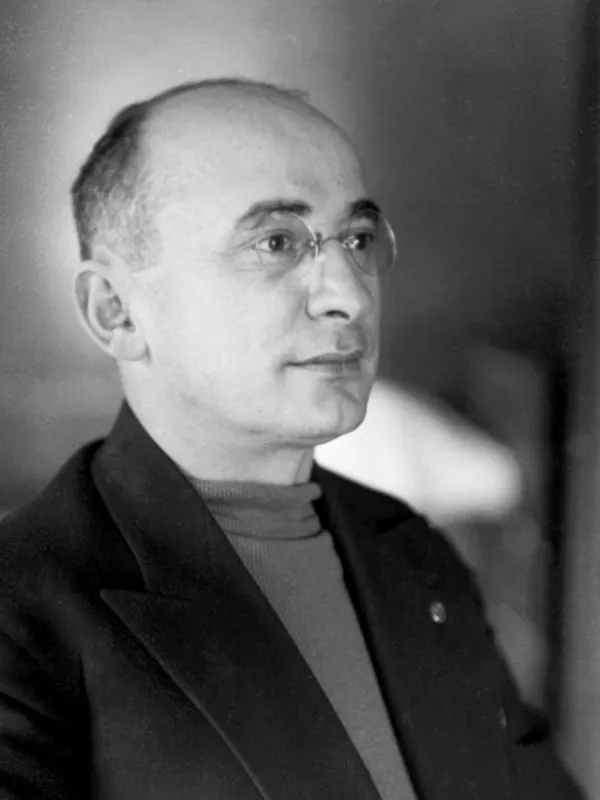
- Born:
- 29 March 1899, Merkheuli, Kutais Governorate (Russian Empire)
- Died:
- 23 December 1953, Moscow
- Author:
- Natalia
- Photo:
- TASS, domena publiczna, Wikimedia Commons

For fifteen years Lavrentiy Pavlovich Beria was one of the most powerful men in Joseph Stalin’s state and the longest-serving head of his political police. A Georgian from Abkhazia and a Chekist from 1921, he made his career in the Caucasus, where in 1937–1938 he carried out a bloody purge. At the end of 1938 he replaced Nikolai Yezhov at the head of the NKVD. He ended the mass terror but did not halt repression; he merely turned it in new directions. In 1939 his apparatus followed the Red Army into Polish territory, and later into the Baltic states. It was he who in March 1940 proposed to Stalin that Polish prisoners of war and detainees be shot, which led to the Katyn massacre. During the war he directed the deportation of entire nations, oversaw the armaments industry and, from 1945, the Soviet atomic programme. After Stalin’s death he became for three months one of the three most important leaders of the USSR and launched surprising reforms. His comrades in the party leadership, fearing his power, arrested him in June 1953, and in December he was shot.
Youth in the Caucasus
He was born on 29 March 1899 (17 March by the Julian calendar) in the village of Merkheuli near Sukhumi, into a poor peasant family of Mingrelians, a group within the Georgian nation. His parents sold half their house to pay for his schooling in Sukhumi. In 1915 he went to Baku, where he studied at a secondary technical school for building and earned extra money as a clerk in the office of the Nobel brothers’ oil company. He supported his mother and his deaf-mute sister. In 1919 he obtained a diploma as a building technician and architect.
In March 1917, by his own account, he joined the Bolshevik party. As a technician with a hydraulic engineering unit he went to the Romanian front, then returned to Baku and was active in the Bolshevik underground when the city became part of independent Azerbaijan. In 1919–1920 he worked for several months in the counter-intelligence service of the Azerbaijani government, which was dominated by the Musavat party. He claimed he had done so on the party’s instructions. This episode hung over him all his life as a possible charge, and in 1953 it was indeed brought against him. In 1920 he was sent to work underground in Menshevik Georgia, where he was arrested and imprisoned in Kutaisi, and then deported to Azerbaijan.
Chekist and boss of Georgia
In the spring of 1921, a year after the Red Army occupied Azerbaijan, Beria joined the Cheka in Baku and soon became its deputy chairman. From November 1922 he worked in Tiflis as one of the leaders of the Georgian Cheka, later renamed the GPU. In 1924 he took part in suppressing the anti-Bolshevik uprising in Georgia and in the repression that followed. According to various estimates, several thousand people were shot at the time. In December 1926 he became head of the Georgian GPU, and in 1931 of the GPU for the whole of Transcaucasia. He married Nina Gegechkori, a relative of a Georgian Menshevik politician. Their son Sergo was born in 1924.
In the summer of 1931 Beria personally took charge of the security of Stalin, who was on holiday in Georgia, and made a good impression on him. Despite protests from the local party leaders, in November 1931 Stalin made him First Secretary of the party in Georgia, and in October 1932 of the whole Transcaucasian Federation. In 1934 Beria joined the party’s Central Committee. In 1935 he published under his own name a book on the history of the Bolshevik organisations in Transcaucasia, written by others, which attributed to Stalin the decisive role in the region’s revolutionary past. Georgia developed rapidly under his rule, and in the process Beria built up a network of people devoted to him, later known as his clan.
He was ruthless towards rivals. The leader of Abkhazia, Nestor Lakoba, an old acquaintance of Stalin’s, died in Tbilisi in December 1936 after dining with Beria – poisoned, according to his family and many historians. Most of his relatives were then arrested and shot. In 1937–1938, during the Great Purge, Beria carried out Moscow’s instructions with zeal. According to his own report to Stalin, 12,000 people were arrested in Georgia alone in 1937. Old Bolsheviks, officials, officers and leading figures of Georgian culture perished. In September 1937, together with Georgy Malenkov and Anastas Mikoyan, he also purged the party leadership in Armenia.
At the head of the NKVD
On 22 August 1938 Stalin brought Beria to Moscow as Yezhov’s first deputy in the NKVD. The new deputy quickly took control of state security and began arresting his chief’s people. On 25 November 1938 he himself became People’s Commissar for Internal Affairs; Yezhov was arrested a few months later and shot in February 1940. In March 1939 Beria became a candidate member of the Politburo.
His arrival marked the end of the mass operations of 1937–1938. The number of death sentences fell sharply and some of those arrested were released: according to various estimates, between some 150,000 and more than 200,000 people were freed in 1939–1940, above all those whose cases had not yet been concluded. Some called this the “Beria thaw”. At the same time he continued the purge within the NKVD itself, replacing Yezhov’s men with his own, many of them brought from the Caucasus. The torture of detainees, with Stalin’s approval, remained everyday practice. Beria expanded the Gulag into an enterprise that used prisoners’ labour to build canals, roads, mines and industrial complexes. In August 1940 his foreign intelligence service organised the murder in Mexico of Leon Trotsky, carried out by the agent Ramón Mercader.
1939 and 1940: Poland and the Baltic states
After the Molotov–Ribbentrop Pact was concluded, the NKVD prepared to enter Polish territory. On 8 September 1939 Beria issued an order on the operational groups which, after the invasion of 17 September, followed the troops, took over offices, archives and prisons and arrested people from prepared lists. On 19 September he set up a directorate for prisoners of war within his commissariat. Polish soldiers were handed over to the NKVD in breach of international law, and in the autumn officers, police officers and members of other uniformed services were separated out and concentrated in the camps at Kozelsk, Starobilsk and Ostashkov. In the territories annexed by the USSR his apparatus arrested tens of thousands of people.
At the beginning of March 1940 Beria submitted a memorandum to Stalin in which he called the Polish prisoners of war and detainees “hardened, incorrigible enemies of Soviet power” and proposed that nearly 26,000 of them be shot without trial. On 5 March the Politburo approved his proposal. From 3 April to mid-May 1940 officers under his command murdered nearly 22,000 Polish citizens at Katyn, Kharkiv, Kalinin (Tver) and in prisons in Ukraine and Belarus. At the same time the NKVD deported their families into the interior of the USSR. On 26 October 1940 Beria rewarded 125 officers by secret order for the “successful completion of special tasks”. In the autumn of that year, during a conversation with Polish officers who had agreed to collaborate, among them Lieutenant Colonel Zygmunt Berling, when it was suggested that officers from Kozelsk and Starobilsk be taken into the Polish formation then being planned, Beria – or, according to other accounts, his deputy Vsevolod Merkulov – is said to have replied: “We made a great mistake with them.”
In June 1940 the occupation and annexation of Lithuania, Latvia and Estonia were carried out with the participation of the NKVD. In 1940–1941 Beria’s apparatus deported hundreds of thousands of people from the former Polish territories, and in June 1941 mass deportations were also carried out in the Baltic states. In January 1941 Beria received the rank of General Commissar of State Security, and in February, when a separate People’s Commissariat of State Security under Merkulov was split off from the NKVD, he became a deputy prime minister overseeing both commissariats and several branches of the economy.
The war
After the German attack on 22 June 1941 Beria became a member of the five-man State Defence Committee, which held all power in the state. He was responsible for the production of aircraft, tanks, weapons and ammunition, and from 1944, as the committee’s deputy chairman, for a large part of industry and transport. In 1943 he was made a Hero of Socialist Labour. In August and September 1942, as the committee’s plenipotentiary, he directed the organisation of the defence of the Caucasus. NKVD troops guarded the rear of the front, and blocking detachments stopped retreating soldiers. In October 1941, as the Germans approached Moscow, Beria ordered a group of senior commanders and officials who had been arrested earlier to be shot without trial, among them General Grigory Shtern.
On Stalin’s orders, and at Beria’s direction and under his supervision, entire nations deemed disloyal were deported during the war. In the autumn of 1941 hundreds of thousands of Volga Germans and other Soviet Germans were deported to Siberia and Kazakhstan. From November 1943 to the end of 1944 it was the turn of the Karachays, Kalmyks, Chechens and Ingush, Balkars, Crimean Tatars, Meskhetian Turks and other groups. Beria personally directed from Grozny the deportation of the Chechens and Ingush in February 1944, Operation Lentil (Chechevitsa), in which some half a million people were deported. In May 1944, within a few days, some 190,000 Tatars were expelled from the Crimea. Tens of thousands of deportees died on the way and in the first years of exile – among the Chechens and Ingush, according to some estimates, as many as one in four.
When the Red Army entered Polish territory in 1944, NKVD troops and operational groups again followed in its wake. They disarmed Home Army units that had cooperated with the Soviets in the fight against the Germans, arrested their soldiers and deported thousands of people to the labour camps. In March 1945, near Warsaw, Beria’s deputy Ivan Serov treacherously arrested the leaders of the Polish Underground State, who were tried in Moscow in June in the Trial of the Sixteen. In February 1945 Beria accompanied Stalin to the Yalta Conference.
The atomic bomb and Stalin’s last years
In July 1945 Beria was given the rank of Marshal of the Soviet Union. On 20 August 1945, after the American atomic attacks on Japan, he was put at the head of a special committee that directed the Soviet atomic programme. He combined in his hands the intelligence service, which stole American and British secrets, the resources of the Gulag, which built the plants and uranium mines, and authority over the ministries. The scientific director of the work was Igor Kurchatov. On 29 August 1949 the first Soviet atomic bomb, RDS-1, was detonated in Kazakhstan.
In December 1945 Beria gave up the commissariat of internal affairs, but as deputy prime minister he continued to oversee the security ministries, and in March 1946 he became a full member of the Politburo. Stalin, however, trusted him less and less. In 1951–1952 he unleashed in Georgia the so-called Mingrelian affair, aimed at Beria’s people and indirectly at Beria himself, and the Kremlin “doctors’ plot”, announced in January 1953, was seen as the harbinger of a new purge at the top of the regime.
During the investigation in 1953 Beria’s bodyguards testified that for years women and girls had been brought to him and that his adjutant kept a list of them. Historians such as Simon Sebag Montefiore regard this testimony as proof that he was a sexual predator who abused his power. His wife and son denied it to the end of their lives, and some researchers point out that the 1953 investigation was intended above all to discredit the accused.
A hundred days and the fall
Stalin died on 5 March 1953. That same day Beria became first deputy to the new prime minister, Malenkov, and head of the merged Ministry of Internal Affairs and State Security. Over the following months he surprised his comrades. On 27 March an amnesty was announced on his initiative, under which more than a million people left the camps and prisons, although most of them had been convicted of ordinary crimes. On 4 April the ministry admitted that the Kremlin doctors had been falsely accused and that their confessions had been extracted by torture. Beria banned the beating of detainees, halted the great construction projects carried out by prisoners, and wanted to transfer more power to the republics and to fill posts there with local cadres instead of Russians. He proposed a softer course in East Germany and, according to the accounts of other leaders, was prepared to discuss even the reunification of a neutral Germany.
To the other members of the leadership this programme was dangerous – and Beria himself, in control of the police, still more so. After the uprising in East Germany on 17 June 1953, Nikita Khrushchev persuaded Malenkov and the others to act. On 26 June 1953, at a meeting of the Presidium of the Central Committee, a group of generals led by Marshal Georgy Zhukov arrested Beria. He was charged with spying for Britain, serving in the Musavat counter-intelligence in 1919 and conspiring to seize power. The trial before a special bench of the Supreme Court of the USSR, presided over by Marshal Ivan Konev, was held behind closed doors. On 23 December 1953 Beria and six of his associates, among them Merkulov and Kobulov, were sentenced to death. Beria was shot the same day in the bunker of the Moscow Military District headquarters. The sentence was carried out by General Pavel Batitsky. His body was cremated. The circumstances of his arrest and death have become overgrown with legend, and some authors have claimed that he was killed as early as June, but no evidence for this has been produced.
Significance
Beria was the executor of Stalin’s crimes just as his predecessors had been, but unlike Yezhov he was an efficient organiser, capable of managing both terror and industry. His name is linked to the gravest Soviet crimes of the Second World War era: the murder of the Polish prisoners of war, the deportations of Poles, the Baltic peoples and the nations of the Caucasus and the Crimea, and the repression of Home Army soldiers. At the same time he ran the Soviet armaments industry in the war against Germany and brought about the building of the atomic bomb that made the USSR a superpower.
The 1953 trial did not concern his real crimes. He was tried for fictitious espionage, and Stalin’s successors laid on him much of the blame for a terror in which they themselves had been accomplices. In 1990, when the Soviet authorities admitted responsibility for the Katyn massacre, they named Beria and Merkulov as its direct perpetrators. In 2002 the Military Collegium of the Supreme Court of Russia ruled that Beria, as an organiser of mass repression, was not eligible for rehabilitation. For Poles he remains above all the author of the memorandum of March 1940 that became a death sentence for nearly 22,000 people.
Sources
Mentioned in battles
(03)Often appears with
People who appear in the same events.