United Kingdom
Stanley Baldwin
Chancellor of the Exchequer (1922–1923), Prime Minister of the United Kingdom (1923–1924, 1924–1929, 1935–1937), Lord President of the Council (1931–1935), Leader of the Conservative Party (1923–1937)
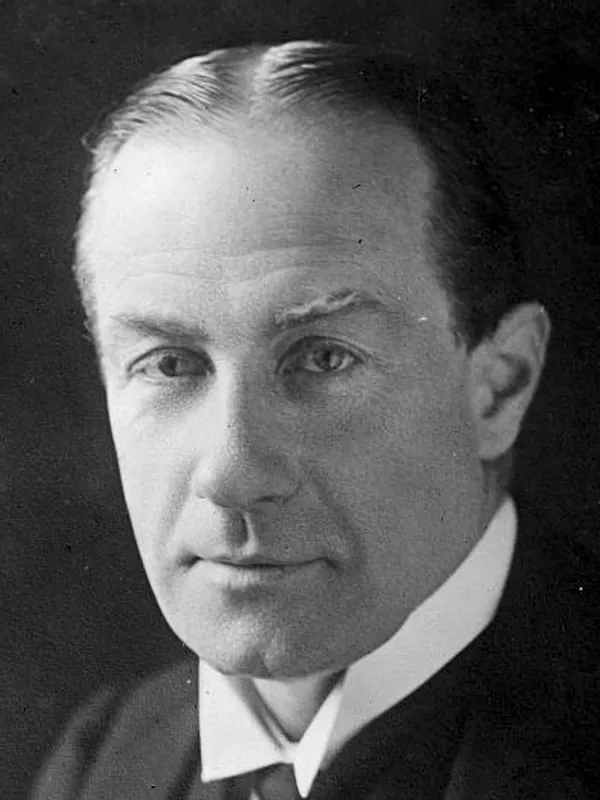
- Born:
- 3 August 1867, Bewdley (Worcestershire, England)
- Died:
- 14 December 1947, Astley Hall near Stourport-on-Severn (Worcestershire, England)
- Author:
- Natalia
- Photo:
- Walter Stoneman, domena publiczna, Wikimedia Commons

Stanley Baldwin, a Worcestershire industrialist who came to politics late, was three times Prime Minister of the United Kingdom and for nearly fifteen years, from 1923 to 1937, the most important politician of the British right. He presented himself as an ordinary, calm Englishman from the provinces, devoted to the countryside, his pipe and common sense, and in this way won the trust of millions of voters. He steered the country through the General Strike, the Great Depression and the abdication of a king. His third government, however, coincided with the years in which Hitler was rearming Germany, Mussolini was conquering Ethiopia and Britain was unable to prevent either. When the defeats came in 1940, Baldwin became one of those chiefly blamed for the country’s unpreparedness for war. Whether rightly so is still debated by historians.
The industrialist from Bewdley
He was born on 3 August 1867 in Bewdley in Worcestershire, the only child of Alfred Baldwin, the owner of an iron and steel business, and Louisa, née Macdonald. His mother’s sister was the mother of the writer Rudyard Kipling, who was thus his cousin. He was educated at Harrow School and then read history at Trinity College, Cambridge. After university he joined the family firm and proved a good, modern businessman who took care to maintain good relations with his workers. In 1892 he married Lucy Ridsdale. They had six children who survived to adulthood. The eldest son, Oliver, later became a Labour MP.
In 1906 Baldwin stood unsuccessfully for Parliament in Kidderminster. In 1908, on his father’s death, he inherited a considerable fortune and his father’s seat for Bewdley, which he represented for almost thirty years.
From the back benches to Downing Street
For his first years he was an inconspicuous backbencher. During the First World War he became parliamentary private secretary to the Conservative leader Andrew Bonar Law, and in 1917 Financial Secretary to the Treasury. At that time he urged wealthy Britons to help pay off the war debt, and he himself anonymously gave a fifth of his fortune to the state in war loan stock. In 1921 he entered David Lloyd George’s coalition cabinet as President of the Board of Trade.
The breakthrough came on 19 October 1922. At a meeting of Conservative MPs at the Carlton Club in London, Baldwin spoke against continuing the coalition with Lloyd George, whom he called a “dynamic force” that destroyed everything around it. The Conservatives broke up the coalition, Bonar Law became prime minister and Baldwin Chancellor of the Exchequer. When the mortally ill Bonar Law stepped down in May 1923, King George V chose the little-known Baldwin as prime minister rather than the experienced Lord Curzon. On 22 May 1923 Baldwin became prime minister.
His first government was short-lived. Baldwin decided that he needed a mandate from the voters to introduce protective tariffs, and in December 1923 he called an early election. The Conservatives remained the largest party but lost their majority, and in January 1924 the first Labour government, headed by Ramsay MacDonald, took office.
The second government: Locarno and the General Strike
After the election of October 1924 Baldwin returned to power with a large majority. He brought former supporters of the coalition into the government: Austen Chamberlain became Foreign Secretary, Winston Churchill Chancellor of the Exchequer and Neville Chamberlain Minister of Health. The government rejected MacDonald’s agreements with the USSR, and in 1925 Austen Chamberlain brought about the Locarno Treaties, which calmed Western Europe for several years and opened Germany’s way into the League of Nations.
The hardest test was the General Strike of May 1926, called by the trade unions in defence of the miners. The government was prepared for it: volunteers and the army kept supplies and transport running, and after nine days the unions gave way. Baldwin spoke on the radio like a calm father of the nation, but the 1927 Act restricting the right to strike left bitterness among the workers. In May 1927, after a raid on the premises of the Soviet trading company Arcos, the government broke off diplomatic relations with the USSR. Among the government’s lasting achievements were the Pensions Act of 1925 and, in 1928, the granting of the vote to women on the same terms as men. At the election of May 1929, fought under the slogan “Safety First”, the Conservatives were defeated.
In the National Government
In opposition Baldwin had to defend his position against the press barons, Lords Beaverbrook and Rothermere, who were trying to impose their own programme on the party. In March 1931 he accused them of seeking “power without responsibility – the prerogative of the harlot throughout the ages”, and he won. When the Labour government collapsed in the financial crisis of August 1931, Baldwin agreed to join a National Government under MacDonald. As Lord President of the Council and leader of the largest party in the coalition, he was for four years MacDonald’s de facto deputy and, increasingly, the real master of the government. In 1935, against Churchill’s opposition, he carried through Parliament the Government of India Act, which gave the Indian provinces broad self-government.
Rearmament proved the most difficult question. Baldwin shared the belief that great armaments lead to war, and for a long time he hoped for the success of the Disarmament Conference in Geneva. On 10 November 1932 he told the House of Commons that “the bomber will always get through” and that the only defence was offence – killing women and children more quickly than the enemy. After Hitler came to power and Germany left the League of Nations he changed his mind. In March 1934 he pledged that Britain would have no air force inferior to that of any country within striking distance of its shores, and on 30 July 1934 he said that England’s frontier no longer lay on the cliffs of Dover but on the Rhine. At the same time, by-elections lost by the Conservatives, above all East Fulham in 1933, convinced him that the public was deeply pacifist. Air rearmament therefore got under way slowly, and on 22 May 1935 Baldwin admitted in the House of Commons that he had been wrong in his estimate of the pace at which the Luftwaffe was expanding.
The third government
On 7 June 1935 the ailing MacDonald handed the premiership to him. Eleven days later Britain concluded the Anglo-German Naval Agreement. When Mussolini attacked Ethiopia, Baldwin’s government came forward as the champion of the League of Nations and supported sanctions against Italy, and on 14 November 1935 it won the general election. During the campaign Baldwin gave assurances that there would be “no great armaments”. A few weeks later his Foreign Secretary, Samuel Hoare, agreed with Pierre Laval on a plan to hand a large part of Ethiopia to Italy. A scandal erupted, Hoare had to go, and the sanctions proved too weak to stop Mussolini.
In March 1936 Hitler sent troops into the Rhineland. Baldwin explained to the French that Britain did not have the strength to support them, and public opinion saw no reason for a war because the Germans had walked “into their own back garden”. In the summer the government lifted the sanctions on Italy and, together with France, adopted a policy of non-intervention in the Spanish Civil War. At the same time a serious rearmament programme began: expansion of the fleet, new air squadrons, “shadow factories” built by the state and run by industry, and, in March 1936, the post of Minister for the Co-ordination of Defence. On 12 November 1936, replying to Churchill’s attacks, Baldwin admitted with “appalling frankness” that in 1933–1934 he could not have gone to the country with a rearmament programme, because he would have lost. For years these words were quoted as proof that he had put party before country.
Baldwin’s last great success was the resolution of the crisis surrounding Edward VIII, who wished to marry the twice-divorced American Wallis Simpson. The prime minister convinced the king that the cabinet, the Dominions and public opinion would not accept such a marriage, and when Edward chose love over the throne, Baldwin saw the abdication through calmly and without a constitutional crisis. After the coronation of George VI, on 28 May 1937, he resigned and was succeeded by Neville Chamberlain. He received the Order of the Garter and the title of Earl Baldwin of Bewdley.
In retirement
Baldwin supported the Munich Agreement and wrote to Chamberlain that if he managed to keep the peace, future generations would bless him. In December 1938, a few weeks after Kristallnacht, he made a radio appeal for help for refugees from Germany. The fund bearing his name raised more than half a million pounds and supported, among other things, the bringing of Jewish children to Britain in the Kindertransport.
After the defeats of 1940 he became one of the most hated men in the country. The pamphlet Guilty Men, published in July 1940, blamed him, together with MacDonald and Chamberlain, for leaving Britain without weapons. He received abusive letters, and in 1941 a press campaign forced him to give up the iron gates of his estate for scrap. Churchill, with whom he had clashed over rearmament and India in the 1930s, did not spare him harsh judgements afterwards. Baldwin’s wife died in 1945. He himself died in his sleep on 14 December 1947 at his home, Astley Hall, in Worcestershire. His ashes were buried in Worcester Cathedral.
Significance
Baldwin was one of the most adroit British politicians of the 20th century. He made the Conservative Party a moderate party capable of winning the votes of workers and women, steered the country without upheaval through the General Strike and the Great Depression, and, at a time when democracies were collapsing across Europe, strengthened the British attachment to parliamentary government. His weakness was foreign policy, which bored him and which he left to his ministers.
On the road to the Second World War the years 1933–1937 matter most. His critics accuse him of rearming the country too slowly while aware of the danger, of hiding the truth from the voters, and of showing the dictators, over Ethiopia and the Rhineland, that Britain would not fight. His defenders, especially historians writing after the archives were opened, stress that without the consent of a pacifist public it was impossible to rearm faster, and that the programmes begun under Baldwin, including the expansion of fighter aircraft and radar, allowed Britain to survive 1940. Both sides agree that Baldwin understood the mood of his own people well, and the intentions of the dictators far less well.
Sources
Mentioned in battles
(01)Often appears with
People who appear in the same events.