Soviet Union
Richard Sorge
Head of the Soviet military intelligence residency in Japan (1933–1941), Tokyo correspondent of the Frankfurter Zeitung, Hero of the Soviet Union (1964)
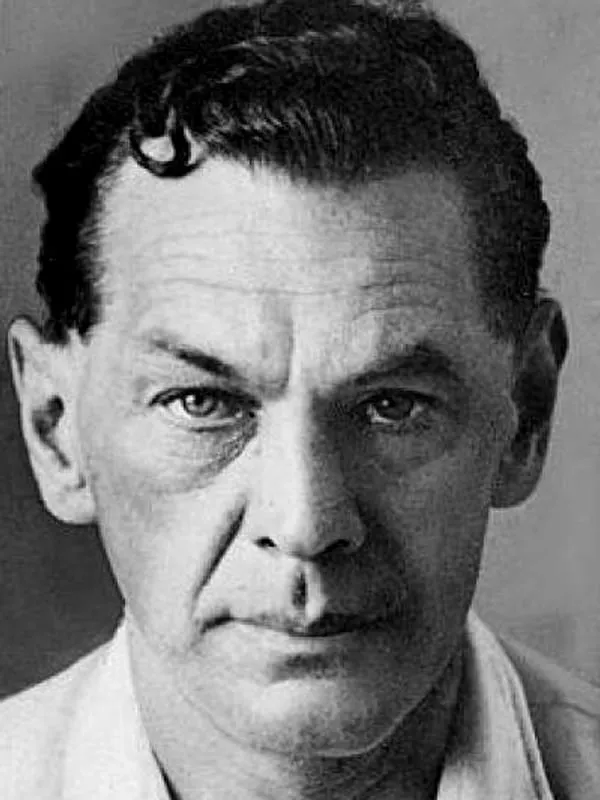
- Born:
- 4 October 1895, Sabunçu near Baku (Russian Empire)
- Died:
- 7 November 1944, Tokyo (Japan)
- Author:
- Łukasz
- Photo:
- autor nieznany, domena publiczna, Wikimedia Commons

Richard Sorge was the most famous spy of the Second World War and one of the few of whom it can be said that their work mattered to the outcome of great campaigns. A German born in the Caucasus and a wounded soldier of the First World War who became a communist in the trenches, he spent eight years in Tokyo as the correspondent of the Frankfurter Zeitung, a member of the NSDAP and a trusted figure at the German embassy – and in reality as the resident of Red Army intelligence, codenamed “Ramsay”. With the help of the Japanese journalist Hotsumi Ozaki, who had access to the circle around Prime Minister Fumimaro Konoe, he passed information on Japanese and German policy to Moscow. In the spring of 1941 he warned of a German attack on the USSR, and in late summer he reported that Japan would not strike at Siberia. Arrested on 18 October 1941, he was hanged in Tokyo in 1944. Moscow, which had disowned him, recognised him as a hero only twenty years after his death.
Childhood and war
He was born on 4 October 1895 in the settlement of Sabunçu near Baku, in the oilfields of the Russian Empire. He was the youngest of the nine children of Wilhelm Sorge, a German petroleum engineer who worked among others for the Nobel company, and his Russian wife, Nina Kobeleva. In 1898 the family returned to Germany and settled in Berlin. His father, as Sorge recalled, held nationalist and imperialist views, which his son long shared. Sorge himself liked to stress his kinship with Friedrich Adolf Sorge, a collaborator of Karl Marx in the First International, whom he called his grandfather; in fact he was his grandfather’s brother.
In October 1914, without finishing school, he volunteered for the army. He fought on the Western Front and in 1915 was wounded in the Second Battle of Ypres. After recovering he was sent to the Eastern Front, where he was wounded again. In April 1917 a shell broke both his legs and maimed his hand. After surgery one leg remained shorter than the other, and Sorge limped for the rest of his life. He was awarded the Iron Cross Second Class and at the beginning of 1918 was discharged as an invalid. He had gone into the war a nationalist; he came out of it convinced of its senselessness. In hospital he read Marx and Engels.
Communist
He spent the rest of the war studying economics and political science in Berlin, Kiel and Hamburg. In Kiel he was assistant to the sociologist Kurt Albert Gerlach, and in November 1918 he witnessed the sailors’ mutiny that began the German Revolution. At the time he belonged to the Independent Social Democratic Party of Germany, and in 1919 he moved to the Communist Party of Germany. In August 1919 he took a doctorate in political science in Hamburg. His party activities cost him one job after another: he was a teacher, worked in a coal mine near Aachen and wrote for the communist press in Solingen. In 1921 he married Christiane Gerlach, his professor’s former wife. Later, in Frankfurt am Main, he helped to organise the library of the newly founded Institute for Social Research.
In 1924, at an illegal congress of the KPD in Frankfurt, he was responsible for the security of the Soviet delegation. There he caught the eye of Osip Piatnitsky, one of the leaders of the Communist International, and that same year he left for Moscow. In 1925 he joined the Bolshevik party and received Soviet citizenship. He worked in the Comintern apparatus, including its secret international liaison department, and at the end of the 1920s travelled on confidential missions to Scandinavia and Britain. His first marriage broke up in Moscow. In 1929 he moved to military intelligence, the Fourth Directorate of the Red Army staff, headed by Jan Berzin. He remained in it for the rest of his life.
Shanghai
At the beginning of 1930 he arrived in Shanghai as a German journalist specialising in Chinese agriculture. He gathered information on the plans of Chiang Kai-shek’s government, on its German military advisers and on Japanese activities. He worked with the American journalist Agnes Smedley, who introduced him to Hotsumi Ozaki, correspondent of the newspaper Asahi Shimbun, and he recruited into intelligence the German Ursula Kuczynski, later known as Ruth Werner. In Shanghai he also met the radio operator Max Clausen, who later followed him to Japan. At the beginning of 1932 he observed the Sino-Japanese fighting in the city. In December 1932 he was recalled to Moscow. There he married Yekaterina Maximova, whom he had met earlier, and wrote a book on Chinese agriculture.
Ramsay in Tokyo
In 1933 military intelligence decided to send him to Japan, which after the seizure of Manchuria shared a border several thousand kilometres long with the USSR and was then regarded in Moscow as a more dangerous adversary than Germany. Sorge later described what was almost the sole purpose of his mission: to establish whether Japan intended to attack the Soviet Union. He went first to Berlin, where despite a police file recording him as a communist he obtained accreditation from several newspapers and journals, and applied to join the NSDAP; he became a party member on 1 October 1934. He reached Yokohama by way of the United States on 6 September 1933. In time his most important paper became the Frankfurter Zeitung, Germany’s most serious daily, which made him one of the most respected German journalists in Japan.
He built his network from scratch, without contact with the Soviet embassy or the Japanese communists. It comprised Clausen, who ran the transmitter and, as cover, a firm selling blueprint-copying equipment; his wife Anna as a courier; the Yugoslav journalist Branko Vukelić of the Havas agency; the Japanese painter Yotoku Miyagi, who had returned from California; and above all Ozaki. An expert on China, adviser to the first Konoe government, a member of the prince’s circle of advisers and from 1939 a contributor to the research department of the South Manchuria Railway, Ozaki gave Sorge access to the conversations and documents of the Japanese elite. Behind him stood further informants, a dozen or more people in all.
The second pillar was the German embassy. Sorge befriended the officer Eugen Ott, military attaché from 1934, wrote reports for him and had an affair with his wife, Helma. In 1936, after the young officers’ mutiny in Tokyo, it was Sorge’s analysis that Ambassador Herbert von Dirksen used as the basis of his report to Berlin. When Ott became ambassador in April 1938, Sorge was given his own desk at the embassy, breakfasted with him daily and read the cables from Berlin. From the outbreak of war in 1939 he edited the embassy’s press bulletin. He therefore knew of the negotiations that led to the Anti-Comintern Pact and the Tripartite Pact, and of everything Berlin wanted from Tokyo.
In private he lived the life of a rake: he drank heavily, raced around Tokyo on a motorcycle and had many lovers. In 1935 he met a waitress, Hanako Ishii, who became his companion for the rest of his years in Japan. On 13 May 1938, drunk, he crashed his motorcycle while carrying material from Ozaki; a member of the network managed to remove it from the hospital before the police arrived. In 1937, during the Great Purge, he ignored a summons to return to Moscow, where Berzin and several of his other superiors were shot in 1937–1938. Sorge never learned that Berzin was dead.
The reports
For years Sorge kept telling Moscow that Japan was not preparing a major war against the USSR: in the mid-1930s, that the Japanese army’s objective was China; in 1938, that the fighting at Lake Khasan had been started by over-zealous officers; in 1939, that Tokyo did not want to widen the conflict at Khalkhin Gol. Headquarters did not always believe him. On 1 September 1939 it reproached him for failing to supply information on Japanese preparations for war and for work that was “weakening”. Some in the intelligence leadership even suspected him of playing a double game.
In the spring of 1941, thanks to the cables reaching Ott and to conversations with officers arriving from Berlin, Sorge reported on German preparations for an attack on the USSR and gave successive dates. On 30 May he passed on that, according to Berlin, the attack would come in the second half of June, and on 20 June that Ott considered war inevitable. These warnings, like others, did not shake Joseph Stalin’s conviction that Germany would not strike yet. A report of 15 June, published in 1964, in which Sorge was supposed to have given the date of 22 June, is regarded by many historians as a later fabrication. Germany’s attack on the USSR came as a shock to Sorge himself.
From that moment the key question was once again whether Japan would seize the opportunity and strike at Siberia. Sorge and Ozaki followed the dispute in Tokyo, the mobilisation of the Kwantung Army in the summer of 1941 and the German pressure: Foreign Minister Joachim von Ribbentrop instructed Ott to push the Japanese to attack the USSR, but to no effect. On 25 August Sorge reported that the high command had decided not to start a war with the USSR that year; after the Imperial Conference of 6 September he confirmed that Japan was preparing for war in the south, and on 14 September he wrote that the possibility of a Japanese attack had vanished. These reports earned him his post-war fame as the man who saved Moscow. Historians today take a more modest view: the transfer of troops from the Far East had begun earlier, Moscow had other sources too, and Sorge’s reports were one of the elements that strengthened the Stavka in its decision to commit the last eastern reserves in the Battle of Moscow.
Arrest and death
The network was undone by an investigation by the Japanese political police, the Tokkō, into communists who had returned from the United States. It led from Tomo Kitabayashi, arrested at the end of September, to Miyagi, and from him to Ozaki and Sorge. The German embassy suspected nothing: the police attaché sent to Tokyo in 1941, the Gestapo officer Josef Meisinger, known earlier from occupied Warsaw, was supposed to check on Sorge but fell under his spell and reported to Berlin that the suspicions were groundless. Ozaki was arrested on 15 October (14 October according to some sources), and Sorge, Clausen and Vukelić on the morning of 18 October 1941, the day Hideki Tōjō became Prime Minister of Japan. Ott protested, regarding the arrest as a symptom of Japanese spy mania, but after several days of interrogation Sorge admitted working for Moscow. In return he reportedly secured a promise that the police would not pursue Hanako Ishii or the wives of his associates.
Japan announced the case in May 1942. The trial was held behind closed doors. On 29 September 1943 a Tokyo court sentenced Sorge and Ozaki to death, and in January 1944 the Supreme Court dismissed their appeals. Vukelić, sentenced to life imprisonment, died in prison in January 1945; Miyagi died in custody before sentence was passed; Clausen was freed after Japan’s surrender. According to several accounts the Japanese offered Moscow an exchange for Sorge, but the Soviet side replied that it did not know him. In the USSR his wife, Yekaterina Maximova, was arrested by the NKVD in 1942 as the wife of a German; she died in exile in 1943. Ott lost his post as ambassador at the end of 1942.
On 7 November 1944, the anniversary of the October Revolution, Sorge and Ozaki were hanged in Tokyo’s Sugamo prison. Sorge’s body was buried in a common prisoners’ grave. In 1949 Hanako Ishii found and identified his remains, and in 1950 she buried them in Tama Cemetery in Tokyo. She was later laid to rest beside him.
The legend
For twenty years the Soviet Union kept silent about Sorge, perhaps in part because his 1941 warnings were a reminder of Stalin’s mistakes. In the West the case was first described at length in 1952 by the American general Charles Willoughby, Douglas MacArthur’s intelligence chief, who presented the network as a threat to the United States in the spirit of Cold War witch-hunting. In 1950s West Germany some saw Sorge as a traitor responsible for the deaths of Wehrmacht soldiers before Moscow, others as an anti-Nazi patriot. Novels and films were made about him, and the 1961 French film Qui êtes-vous, Monsieur Sorge? (Who Are You, Mr Sorge?) is widely said to have caught the attention of Nikita Khrushchev. In September 1964 Pravda described him as a hero, and on 5 November 1964 he was posthumously made a Hero of the Soviet Union. From then on streets, postage stamps and monuments bore his name, from Baku to Moscow, and in communist Poland he was the subject of a comic, Wywiadowca XX wieku (Intelligence Agent of the 20th Century).
Historians who since the 1990s have drawn on Russian and Japanese archives paint a less monumental picture. Sorge was an outstanding analyst of Japanese politics and enjoyed access that no other agent had: to the Japanese prime minister’s circle and to the German ambassador’s office at the same time. Contrary to legend, however, he did not give the exact date of the German invasion, and his reports on Japanese intentions were neither Moscow’s only source nor always its most important. Tragic, too, was the fate of those connected with him: Ozaki, the only Japanese executed for treason during the war, and Sorge’s Moscow wife, whom his own state sent into exile for having been married to a German.
Sources
Mentioned in battles
(03)Often appears with
People who appear in the same events.
On the timeline
(06)1941
April
June
July
October
- 18
- The arrest of Richard SorgeOn 18 October 1941 Japanese police in Tokyo arrested Richard Sorge, the Soviet spy who for a month had been reporting that Japan would not attack the USSR.
- Key eventHideki Tōjō becomes Prime MinisterOn 18 October 1941 General Hideki Tōjō, the War Minister who had refused to withdraw troops from China, became Prime Minister of Japan after Konoe resigned.