China
Wang Jingwei
Chairman of the National Government in Canton (1925–1926), Premier of the Republic of China (1932–1935), head of the collaborationist government in Nanjing (1940–1944)
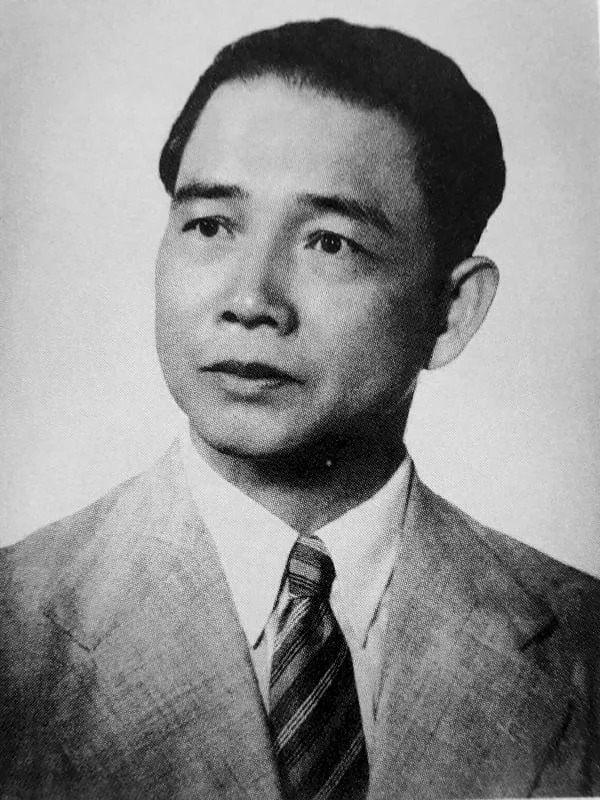
- Born:
- 4 May 1883, Sanshui (Guangdong, Qing Empire)
- Died:
- 10 November 1944, Nagoya (Japan)
- Author:
- Łukasz
- Photo:
- autor nieznany, domena publiczna, Wikimedia Commons

Wang Jingwei, whose real name was Wang Zhaoming, travelled a road that no other Chinese politician of his generation travelled. As a young man he was a hero of the revolution who tried to kill the imperial regent and awaited death in prison. As a mature politician he was the closest associate of Sun Yat-sen, the author of his testament, the first chairman of the Kuomintang government and for well over a decade the chief rival of Chiang Kai-shek. During the war with Japan he concluded that China could not win it; in December 1938 he fled Chongqing, and in March 1940 he became head of a collaborationist government in occupied Nanjing. For the Chinese on both sides of the Taiwan Strait his name became a byword for treason. For the history of the Second World War he exemplifies how Japan tried to end the war in China through the Chinese themselves, and why it failed.
Youth and the attempt on the regent
He was born on 4 May 1883 in Sanshui in Guangdong province, where his father, from a family originating in Zhejiang, worked as a secretary in the county office. He lost both parents early and was brought up by his elder brother. He passed the lowest grade of the imperial examinations, and in 1904, on a Qing government scholarship, went to study law at Hōsei University in Tokyo. In Japan he encountered the ideas of democracy, nationalism and anarchism, and Japan’s victory over Russia in 1905 showed him that an Asian nation could defeat a European power.
In 1905 he met Sun Yat-sen in Tokyo and joined his Revolutionary Alliance, the Tongmenghui. He wrote for its journal Minbao under the pen name Jingwei, taken from a mythical bird that tries to fill the sea pebble by pebble, and he quickly became one of the movement’s best speakers and writers. In 1910, embittered by the failure of the risings and by jibes that the leaders of the revolution sent others to their deaths while sitting safely abroad, he went to Beijing with several comrades, among them his fiancée Chen Bijun, to kill the regent, Prince Zaifeng, father of the child emperor Puyi. The bomb placed under a bridge over which the regent was to pass was discovered, and Wang was arrested in April. At his trial he did not deny his guilt. Instead of the death penalty he received life imprisonment, thanks in part to the intercession of Prince Su, who led the investigation and had been impressed by him. The poems he wrote in his cell made him famous, and after the Wuchang Uprising he was released in November 1911 as a national hero.
At Sun Yat-sen’s side
During the Xinhai Revolution Wang acted as an intermediary between the revolutionaries and Yuan Shikai, and supported his presidency in exchange for the dynasty’s abdication. He vowed never to accept public office, married Chen Bijun and in 1912 left for France, where he helped to found a movement that enabled young Chinese to work and study in Europe. He returned to China for good in 1917 and joined Sun Yat-sen in Canton. He was Sun’s secretary and speechwriter, and from 1921 minister of education in the Canton government. At the end of 1924 he accompanied Sun on his journey to Beijing, and it was he who wrote down the political testament that the dying leader signed in March 1925.
After Sun’s death Wang was regarded as his successor. On 1 July 1925 he became chairman of the National Government in Canton and leader of the left wing of the Kuomintang, which supported the alliance with the Soviet Union and cooperation with the communists within the First United Front. He was soon outmanoeuvred, however, by the army commander, Chiang Kai-shek. After the so-called Zhongshan Warship Incident in March 1926, when Chiang arrested communist officers and took control of Canton, Wang resigned and left for France.
Wuhan, the split and opposition
He returned in April 1927 by way of Moscow, where he met Stalin, and became head of the left-wing Kuomintang government in Wuhan after Chiang had turned on the communists in Shanghai and set up his own government in Nanjing. A few weeks later, when a Comintern representative showed him a telegram from Stalin ordering the creation of communist armed forces, Wang concluded that Moscow wanted to take over his party, and on 15 July 1927 he broke with the communists. The Wuhan and Nanjing governments merged, but Wang again found himself sidelined and left for Europe.
In 1929–1931 he led the opposition to Chiang. In 1930 he allied himself with Yan Xishan, Feng Yuxiang and Li Zongren and headed a rival government in Beijing, but the coalition lost the Central Plains War when Zhang Xueliang came out on Nanjing’s side. In 1931 Wang backed another anti-Nanjing government, this time in Canton.
Premier of concessions
Japanese aggression in Manchuria, which began with the Mukden Incident in September 1931, reconciled the two rivals. They agreed to divide power: Chiang commanded the army, while on 28 January 1932, the day fighting broke out in Shanghai, Wang became President of the Executive Yuan, that is, premier. Both believed that China was not ready for war with Japan and that the communists had to be defeated first. Wang also had serious objections to Zhang Xueliang’s passivity in northern China, and in August 1932 he stepped down for several months and went to Europe. After returning in March 1933 he put his name as premier to the settlements with Japan, above all the Tanggu Truce of May 1933, which handed the Japanese control of a strip of land south of the Great Wall. The defeat of the Chinese troops in the fighting for the Great Wall convinced him that the Chinese army was no match for the Japanese.
He paid a high price for these concessions. On 1 November 1935, during a group photograph of the participants in a Kuomintang plenum in Nanjing, an assassin disguised as a journalist, Sun Fengming, shot him three times, shouting “Down with the traitor”. Wang survived, but one of the bullets remained lodged in his body for the rest of his life. He resigned as premier and in February 1936 went to Europe, mainly Germany, for treatment. It was there that he learned of Chiang’s kidnapping in Xi’an in December 1936. Chiang’s family feared that Wang, who supported armed action against the mutineers, would use the situation to seize power. Moscow too, during the Xi’an Incident, regarded him as Chiang’s most likely successor and as ready to come to terms with Japan. Wang returned to China in January 1937, but by then it was Chiang who set the course towards the Second United Front with the communists and towards war.
From war to flight
After the Marco Polo Bridge Incident in July 1937 Wang publicly supported resistance, but privately he grew increasingly convinced that China would be destroyed. In March 1938 an extraordinary Kuomintang congress elected him deputy leader of the party, and in the summer he became head of the People’s Political Council, an advisory body bringing together various political forces. The fall of Wuhan and Canton in the autumn of 1938 and the scorched-earth policy convinced him that peace had to be sought before the country was ruined and the communists used the war to seize power.
With his knowledge, men from his circle made contact with Japanese officers. In November 1938 an agreement was drawn up in Shanghai providing for the withdrawal of Japanese troops within two years of the conclusion of peace in exchange for the recognition of Manchukuo and cooperation against communism. On 18 December 1938 Wang left Chongqing and made his way via Kunming to Hanoi. Prime Minister Fumimaro Konoe announced his principles for peace, but without any promise to withdraw troops, and none of the generals on whom Wang had counted followed him. The Kuomintang expelled him from the party, and in March 1939 Chongqing agents in Hanoi shot dead his secretary, Zeng Zhongming. Wang moved to Shanghai under Japanese protection and decided to form a government in the occupied territories.
Head of the government in Nanjing
On 30 March 1940 he became head of the government in Nanjing, which proclaimed itself the legitimate National Government of the Republic of China – the Reorganised National Government – and replaced the existing collaborationist governments in Beijing and Nanjing. Japan did not recognise it until 30 November 1940, when Wang signed a treaty with General Nobuyuki Abe giving Japan the right to station troops in northern China and Inner Mongolia. He then formally assumed the title of chairman of the government. In June 1941 he paid an official visit to Japan, where he was received by Emperor Hirohito, and on 1 July 1941 his government was recognised by Germany, Italy and their allies.
His power remained very limited. The Japanese army controlled every important decision, Japanese firms took over mines and factories, and the economy of the occupied territories was subordinated to the needs of the war. In the Yangtze delta the government conducted brutal “rural pacification” campaigns against communist guerrillas, and its secret police in Shanghai, known from its address as “No. 76”, murdered opponents. At the same time Wang tried to keep up an appearance of independence. He maintained Chinese schools and universities, asked the Japanese to limit requisitions and interference in the administration, and through his men kept up secret contacts with Chongqing and with the communists.
After Japan attacked the United States he tied himself to it even more closely. On 9 January 1943 his government declared war on the United States and Britain, in return for which Japan handed back its concessions in Chinese cities and renounced extraterritoriality. In November 1943 Wang attended the Greater East Asia Conference in Tokyo, at which Japan’s Asian allies issued a joint declaration. At the end of 1943 his health deteriorated sharply. In December he underwent an operation to remove the bullet from 1935, and in March 1944, partly paralysed, he went for treatment to the university hospital in Nagoya. He died there on 10 November 1944. Sources describe the illness that killed him in different ways, usually linking it to the after-effects of the wounds from the assassination attempt.
After his death
He was buried on Meihua Hill in Nanjing, near the Sun Yat-sen Mausoleum. His successor, Chen Gongbo, dissolved the government on 16 August 1945. In January 1946, after Chiang Kai-shek’s government had returned to Nanjing, army engineers blew up Wang’s tomb and his body was burned. Chen Gongbo and several other leaders of the Nanjing government were sentenced to death after the war and executed. His widow, Chen Bijun, who defended her husband in court and argued that he had protected the population of the occupied territories, was sentenced to life imprisonment and died in prison in 1959.
Significance
Wang Jingwei remains one of the most contested figures in Chinese history. The Kuomintang and the Chinese Communist Party, which agree on few things, both condemned him as a traitor, a hanjian. Kneeling statues of him, made during and after the war, were put on display to be jeered at. Some historians, particularly in recent decades, portray him as a tragic figure: a patriot who chose to collaborate with the enemy out of pessimism about China’s chances rather than greed, and who tried to protect the population of the occupied territories. Others stress that his government gave the Japanese occupation a Chinese face and legitimised plunder and terror, and that his decision could not bring peace, because Japan never intended to withdraw its troops on his terms.
For the history of the Second World War his path shows why the war in China could not end in compromise. Japan, victorious on the battlefield, was unable to create a Chinese authority that commanded respect in its own country, and so it sank ever deeper into a war that in 1941 drove it into conflict with the United States and Britain. Wang was also a poet, regarded as one of the last outstanding writers of classical Chinese verse. His late poems, full of sadness and a sense of defeat, are read today as a record of the inner conflict of a man who knew how history would judge him.
Sources
Mentioned in battles
(02)Often appears with
People who appear in the same events.