China
Zhou Enlai
Member of the CCP Politburo (from 1927), Communist representative to the Kuomintang government in Wuhan and Chongqing (1937–1946), Premier of the PRC (1949–1976)
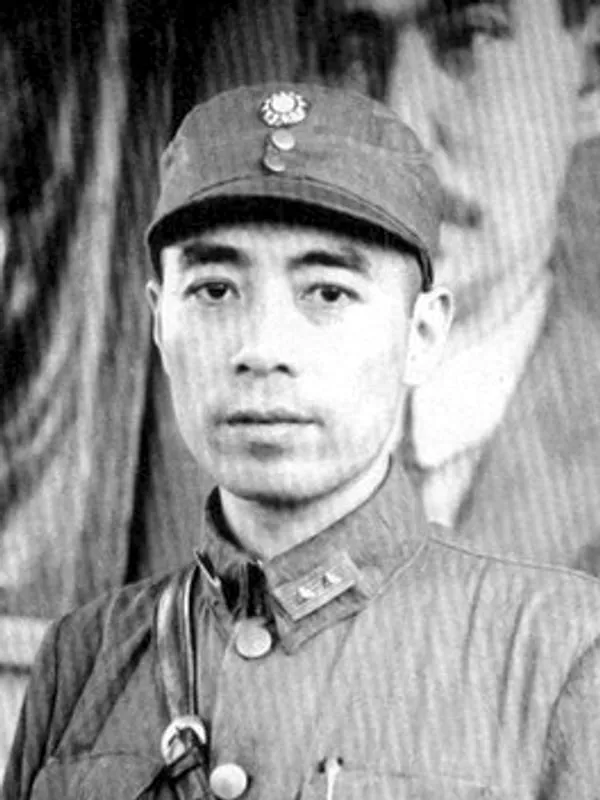
- Born:
- 5 March 1898, Huai’an, Jiangsu province (China)
- Died:
- 8 January 1976, Beijing (China)
- Author:
- Łukasz
- Photo:
- rząd Republiki Chińskiej, domena publiczna, Wikimedia Commons

In the Chinese Communist Party Zhou Enlai was the man for impossible tasks: an organiser of uprisings, an intelligence chief and above all a negotiator who could talk to the enemy without losing the trust of his own comrades. In December 1936 in Xi’an he helped turn the detention of Chiang Kai-shek into a common front against Japan, and for most of the war he represented the Communists at the Kuomintang government in Wuhan and Chongqing, where for diplomats and journalists from all over the world he was the face of Mao Zedong’s party. After the Communist victory he headed the government of the People’s Republic of China for more than a quarter of a century.
From Huai’an to Paris
He was born on 5 March 1898 in Huai’an (PL) in Jiangsu province, into an impoverished family of officials. As a baby he was given to be brought up by the widow of his uncle, who taught him to read and write. At twelve he went to relatives in Manchuria and then to Tianjin, where he graduated from the renowned Nankai middle school. In 1917–1919 he studied in Japan, but failed the university entrance examinations and returned home disillusioned with Japanese militarism and curious about the revolution in Russia.
In 1919 he joined the May Fourth Movement, although his role was smaller than his official biography claims. In the Awakening Society in Tianjin he met Deng Yingchao, his future wife. Early in 1920, after a demonstration against Japanese goods, he spent half a year in custody. In the autumn he left for France on a work-study programme. In Paris and Berlin he joined the Chinese Communists, was one of the founders of the party’s European youth organisation, and in Berlin brought Zhu De into it.
Whampoa, Shanghai and Nanchang
In the summer of 1924 he was summoned to Canton. The First United Front of the Communists and the Kuomintang was then in force, and Zhou took over the political department of the Whampoa military academy, whose commandant was Chiang Kai-shek and whose advisers were Soviet officers headed by Vasily Blyukher. Many of his charges of that time later became commanders on both sides of the civil war. In 1925 he took part as political commissar in the expeditions to eastern Guangdong and married Deng Yingchao. After the Zhongshan gunboat incident in March 1926 Chiang removed the Communists from the academy.
Zhou moved to Shanghai, where in March 1927 he helped prepare the workers’ uprising that opened the city to the Kuomintang armies. A few weeks later Chiang turned on the Communists; Zhou was briefly detained but managed to escape. In May he joined the party leadership, and on 1 August 1927 he headed the committee that directed the Nanchang uprising, regarded as the birth of the Red Army. The uprising collapsed, Ye Ting took Zhou, gravely ill with malaria, to Hong Kong, and the party blamed him for the defeat.
Underground and the Long March
At the party’s Sixth Congress in Moscow in 1928 Zhou entered the inner leadership, and in the following years he in practice ran its day-to-day work. From the Shanghai underground he built an intelligence network that planted agents in the Kuomintang political police. In April 1931 one of his closest associates, Gu Shunzhang, was arrested and went over to the government; Zhou managed to evacuate many people, but hundreds of Communists were arrested and the party’s general secretary Xiang Zhongfa was executed. At the end of 1931 Zhou reached the Communist base in Jiangxi and became political commissar of the Red Army. From 1933 formal military power there lay with Otto Braun, sent by the Comintern, and the party leader Bo Gu, with Zhou as the third member of their “triumvirate”.
When in October 1934 the Red Army was losing to the government blockades, Zhou organised the breakout from Jiangxi that began the Long March. His intelligence obtained information on the government’s plans, and his envoys negotiated passage through the lines of the Guangdong troops. Even so, the Long March turned into a bloody retreat that only part of the soldiers survived. At the Zunyi meeting in January 1935 Zhou backed the criticism of Braun and Bo Gu and took over military command together with Zhu De, with Mao as his assistant; by March he sat beside Mao in a new military triumvirate. From then on he consistently yielded first place to Mao, which allowed him to survive all the later purges.
Xi’an and the Second United Front
In 1936, following the Comintern’s new line, the party sought an agreement with the Kuomintang against Japan. In April Zhou met in secret in Yan’an the “Young Marshal” Zhang Xueliang, whose troops were supposed to be fighting the Communists in the north-west. When on 12 December 1936 Zhang detained Chiang Kai-shek, some Communists demanded that he be tried, but Moscow insisted on a peaceful solution. Zhou arrived in Xi’an in mid-December (sources give 16 or 17 December) and argued to his hosts that Chiang alive was worth more than Chiang dead. On 23 and 24 December he negotiated with Zhang, General Yang Hucheng, Chiang’s wife Soong Mei-ling and her brother T. V. Soong, and on the evening of 24 December he spoke to Chiang himself, his superior at Whampoa. The next day Chiang flew to Nanjing. This is described under the Xi’an Incident.
During the first half of 1937 Zhou conducted negotiations on the terms of cooperation, and after the Marco Polo Bridge Incident in July the Second United Front came into being. The Red Army was formally incorporated into the government army as the Eighth Route Army, and the units from the south as the New Fourth Army.
A Communist in Chiang Kai-shek’s government
After the fall of Nanjing in December 1937 Zhou moved with the government to Wuhan. In January 1938 he became deputy head of the Political Department of the Military Affairs Commission, the only Communist in a senior post in the Kuomintang apparatus. He published the party daily Xinhua Ribao, courted foreign journalists and, according to some accounts, encouraged joint action during the fighting at Taierzhuang, where the troops of Li Zongren won, in the Battle of Xuzhou, the most celebrated Chinese victory of the first year of the war.
In December 1938 he moved to Chongqing, the new seat of government, which from 1939 was being devastated by Japanese air raids. In July 1939 he fell from a horse in Yan’an and broke his right arm at the elbow; he was treated in Moscow, where he spent several months, but Joseph Stalin did not receive him. The arm remained partly disabled for the rest of his life. After his return Zhou headed the party’s Southern Bureau in Chongqing, which conducted open politics from the liaison offices and, from the underground, intelligence work inside the Kuomintang apparatus. According to Chinese sources, in June 1941 his people passed a warning to Moscow of the German attack on the USSR.
The united front was shaken in January 1941, when government troops destroyed the headquarters of the New Fourth Army in southern Anhui and took Ye Ting prisoner. During the New Fourth Army Incident Zhou protested to government representatives on Mao’s orders, and when the censors stopped an article in Xinhua Ribao, his handwritten inscription about fratricidal strife appeared in the blank space. Even so, there was no break. Zhou met ambassadors, soldiers and writers, among them Ernest Hemingway, and kept up contacts with Americans such as General Joseph Stilwell which in 1944 led to an American military mission, known as the “Dixie Mission”, being sent to Yan’an.
In 1943 Zhou returned to Yan’an, where Mao’s Rectification campaign was under way. Accused of past errors, he made a self-criticism and publicly acknowledged Mao’s leadership, which the party’s Seventh Congress confirmed in 1945.
Talks that failed
After Japan’s surrender Zhou accompanied Mao to Chongqing, where talks with the Kuomintang went on from 28 August to 10 October 1945, and it was he who worked out their details; meanwhile in northern China the two armies were clashing. In December President Truman sent General George Marshall to China. Zhou sat with him and a government representative on a committee that brought about a ceasefire in January 1946. The truce broke down in the fighting for Manchuria, and on 19 November 1946 Zhou left Nanjing and returned to Yan’an. In the civil war he was Mao’s closest collaborator and in effect his chief of staff. In April 1949 he led negotiations in Beijing with the delegation of Li Zongren’s government, which ended in an ultimatum and the crossing of the Yangtze by the People’s Liberation Army.
Premier
On 1 October 1949 Zhou became Premier of the People’s Republic of China and, until 1958, also foreign minister. He represented China at the Geneva Conference in 1954 and at the Bandung Conference in 1955. During the Cultural Revolution he supported Mao but tried to keep the state functioning and protected some of the persecuted, while failing to defend many others. In 1971–1972 he prepared the rapprochement with the USA and the normalisation of relations with Japan. He died of cancer on 8 January 1976 in Beijing, and in April mourning for him turned into demonstrations in Tiananmen Square.
In China Zhou is remembered as the most human face of party rule, and in the West as an elegant and exceptionally capable diplomat. Historians point out, however, that his talent always served Mao, even when Mao was leading the country towards catastrophe. In the history of 1936–1946 he remains the man who for longest and most skilfully kept alive the alliance of two hostile parties against a common invader.
Sources
Commanded in battles
(01)Often appears with
People who appear in the same events.