Germany
Ernst Thälmann
Chairman of the Communist Party of Germany (1925–1933), member of the Reichstag (1924–1933), candidate for Reich President (1925, 1932)
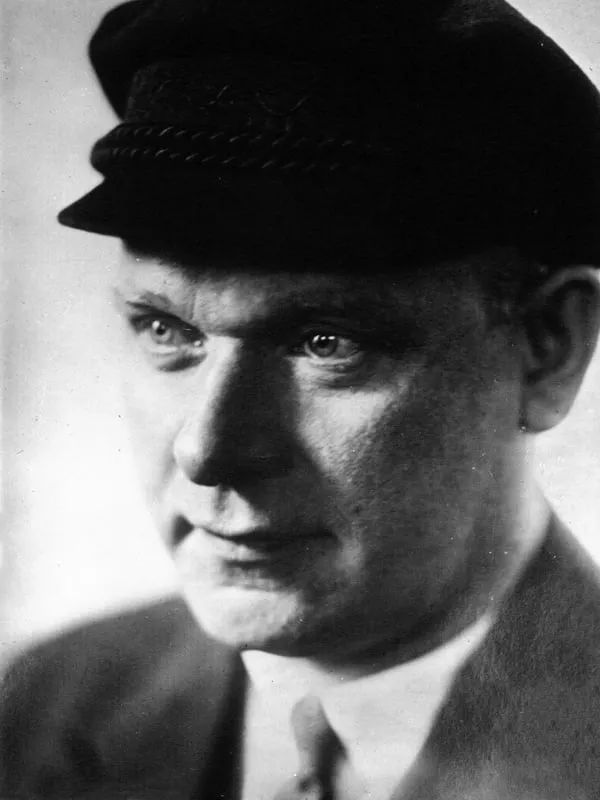
- Born:
- 16 April 1886, Hamburg (German Empire)
- Died:
- 18 August 1944, Buchenwald concentration camp near Weimar
- Author:
- Łukasz
- Photo:
- Agence de presse Meurisse, domena publiczna, Wikimedia Commons

Ernst Thälmann led the Communist Party of Germany (KPD), the largest communist party outside the Soviet Union, from 1925 to 1933. A Hamburg docker, a veteran of the Western Front and a plain-spoken orator who knew how to talk to workers, he was at the same time entirely obedient to Joseph Stalin. Under his leadership the KPD became a party wholly subordinate to Moscow, and right up to 1933 it regarded as its main enemy not the Nazis but the Social Democrats, whom it called “social fascists”. The divided left proved unable to stop Adolf Hitler. Thälmann was arrested a few weeks after the Nazis took power and held in solitary confinement for more than eleven years. In August 1944 he was murdered in Buchenwald on Hitler’s orders. In the German Democratic Republic he was made a hero and the object of a cult.
Youth in Hamburg
He was born on 16 April 1886 in Hamburg, the son of a carter who, with his wife, later ran a small beer bar and then a shop selling vegetables and coal. In 1892 his parents were convicted of receiving stolen goods, and the children were placed with other families for over a year. Ernst finished elementary school and had to help in the business of his father, who refused him the money for an apprenticeship. As a ten-year-old he watched the great Hamburg dock strike of 1896–1897. Years later he wrote that this strike had stayed in his heart for ever.
In 1902, after a quarrel, he left home and for a time lived in a hostel for the homeless. On 15 May 1903 he joined the Social Democratic Party of Germany, and soon afterwards the transport workers’ union, in which he rose to chair the carters’ section. He worked in the port as a warehouseman and docker, and for a time as a stoker on a ship sailing to America. Even before the war he belonged to the party’s left wing, which criticised the leadership for its compliance with the imperial state.
War and revolution
In January 1915, a few days after marrying Rosa Koch, he was called up into the artillery and served on the Western Front until the end of the war. He fought in Champagne, on the Somme, at Arras, on the Aisne and at Cambrai; in 1916 he was buried alive in a wrecked gun position, and for his service he received the Iron Cross 2nd Class. The war, which he saw as a slaughter of workers in the interests of capital, confirmed him in his radical views. In the last weeks of the war he failed to return to his unit from leave. The sources differ on the details: according to some he deserted as early as October 1918, according to others he left the front with a few comrades on 9 November.
In Hamburg, where the revolution had taken power, Thälmann joined the radical Independent Social Democratic Party of Germany (USPD). In January 1919, after the suppression of the Spartacist uprising in Berlin and the murder of Rosa Luxemburg and Karl Liebknecht, he took part in a failed attempt to obtain weapons for the Bremen Soviet Republic, which was threatened by the army. In March 1919 he was elected to Hamburg’s parliament, the Bürgerschaft, and remained a member until 1933. In May 1919 he became head of the Hamburg USPD, and at the end of 1920 he led almost the entire Hamburg organisation into union with the Communists, when the majority of the USPD joined the KPD and the Communist International. In 1921 he travelled to the Third Congress of the Comintern in Moscow, where he met Vladimir Lenin. In June 1922 members of the far-right Organisation Consul – the same group that had murdered Matthias Erzberger and Walther Rathenau – planted a grenade under the window of his flat. Thälmann was not at home, and his family survived.
The Hamburg Uprising and the road to the top
Thälmann belonged to the left wing of the KPD, which in the crisis year of 1923 demanded a revolution on the Russian model. When in the autumn the party leadership called off the “German October” prepared from Moscow, the Communists in Hamburg took up arms on 23 October. The Hamburg Uprising collapsed after two days, with around a hundred people killed. Thälmann was a member of the district leadership that pressed for the fight, but, contrary to later legend, he did not command on the barricades. After the defeat he went into hiding for several months. When Lenin died in January 1924, he travelled to Moscow and stood in the guard of honour at his coffin.
The defeat of 1923 brought down the existing KPD leadership, Heinrich Brandler and August Thalheimer, and carried the left – and Thälmann with it – to power. In February 1924 he became deputy chairman of the party, in May a member of the Reichstag, and in the summer a member of the Executive Committee of the Comintern. In February 1925 he took command of the Roter Frontkämpferbund, the Red Front Fighters’ League, the party’s paramilitary organisation, whose uniformed members marched with clenched fists and fought street battles with the police, with nationalists and later with the Nazi SA. In 1925, with the backing of the Comintern and Stalin’s evident approval, he took over the party leadership from Ruth Fischer, who had tried to pursue a policy more independent of Moscow. Fischer was soon expelled from the party.
In the presidential election of 1925 Thälmann was the KPD’s candidate. In the first round he won 7 per cent of the vote. Despite the Comintern’s advice to the contrary, the party also ran him in the second round, in which a simple plurality sufficed. He received 6.4 per cent, and Field Marshal Paul von Hindenburg defeated the candidate of the republican parties, Wilhelm Marx, by 3 percentage points. Many historians believe that had the Communists backed Marx, the monarchist Hindenburg would not have become president, although this cannot be proved.
Stalin’s man
Under Thälmann’s leadership the KPD underwent so-called Bolshevisation: it was rebuilt on the Russian model, based on factory cells and strict discipline, and every difference of opinion was treated as a “deviation”. The party loyally supported Stalin in his struggle against Trotsky and Zinoviev, and when they were expelled from the party in 1927, it removed their German supporters too. In the autumn of 1928 the Wittorf affair broke: it emerged that the secretary of the Hamburg organisation, Thälmann’s close associate John Wittorf, had embezzled party funds, and that Thälmann had known about it for months and kept silent. On 26 September the Central Committee condemned him, and Thälmann suspended himself from his duties. On 6 October, after Stalin intervened, the Executive Committee of the Comintern restored him to the leadership. His opponents – the “conciliators” and the leaders of the former party right, among them Hugo Eberlein, Brandler and Thalheimer – lost their posts or were expelled. From then on Thälmann owed everything to Stalin and never once opposed him.
From the Sixth Congress of the Comintern in 1928 the line was that of the so-called Third Period: capitalism was supposedly entering its final crisis, and social democracy, as “social fascism”, was the main enemy because it drew the workers away from revolution. Thälmann carried it out without reservation. It was reinforced by the events of 1 May 1929 in Berlin, when the police, under Social Democratic authorities, broke up banned May Day marches. In several days of rioting, which the Communists called “Bloody May”, more than thirty people were killed. The Red Front Fighters’ League was banned. At the party congress in June 1929 Thälmann declared that the fight against fascism meant fighting the SPD just as much as Hitler. In December 1931 he said that a few Nazi trees must not be allowed to obscure the forest of social democracy. In August 1931, on Moscow’s instructions, the KPD even supported a referendum initiated by the nationalists and Nazis to bring down the Social Democratic government of Prussia under Otto Braun.
The crisis years
The Great Depression brought the Communists more support, but it brought the Nazis far more. In September 1930 the KPD won over 13 per cent of the vote, and in November 1932 almost 17 per cent and a hundred seats. Its voters, however, were mainly the unemployed, and the party was unable to break into the SPD’s sphere of influence. In the presidential election of 1932 Thälmann stood again, this time against Hindenburg – backed by the Social Democrats and the Catholic Centre Party as the only barrier against Hitler – and against Hitler himself. The KPD’s slogan ran: “A vote for Hindenburg is a vote for Hitler; a vote for Hitler is a vote for war.” The first half of the slogan came true less than ten months later. Thälmann won 13.2 per cent of the vote in the first round and 10.2 per cent in the second.
A party that saw every compromise with the SPD as treason could not change course even at the last moment. In July 1932, after Chancellor Franz von Papen removed the Prussian government, the KPD called for a general strike, but the Social Democrats refused. In January 1933 the KPD leadership rejected an SPD proposal for a common front as a “manoeuvre”. On 30 January Hitler became chancellor. Only then did the Communists call on the Social Democrats and the trade unions to join a general strike, but by then it was too late. On 7 February 1933, at a sports club in Ziegenhals near Berlin, Thälmann addressed the party leadership for the last time.
Eleven years in prison
After the Reichstag fire of 27 February 1933 the Nazis declared that it had been the signal for a communist uprising and arrested thousands of Communists. Thälmann was hiding in the flat of a friendly married couple in Charlottenburg. On 3 March, two days before the election, the police arrested him there after a neighbour informed on him. The arrest of a deputy with parliamentary immunity was unlawful even under the regulations of the time. The Nazis prepared a treason trial against him, and at Gestapo headquarters on Prinz-Albrecht-Straße he was interrogated and beaten. In January 1934 one of his interrogators knocked out his teeth and beat him with a whip. After Georgi Dimitrov, a defendant in the Reichstag fire trial, made a laughing stock of the prosecution, the authorities abandoned the planned Thälmann trial in 1935. He remained in “protective custody” – that is, in prison without a sentence.
Around the world Thälmann became a symbol of the victims of Nazism. Signatures were collected in his defence, and on his fiftieth birthday in 1936 he received greetings from, among others, Maxim Gorky, Heinrich Mann and Romain Rolland. In Spain a battalion of German volunteers of the International Brigades bore his name. From 1937 he was held in Hanover, and from 1943 in the prison at Bautzen. In 1939, after the conclusion of the Molotov–Ribbentrop Pact, Moscow did not ask for his release. In the spring of 1941 Dimitrov noted in his diary that Vyacheslav Molotov did not want to do anything in the matter so as not to irritate the Germans, and in the autumn of 1941 he recorded Stalin’s remark that Thälmann, in his letters from prison, was no longer a “principled Marxist”.
After the failed attempt on Hitler’s life on 20 July 1944, the regime began murdering prisoners it considered dangerous in the event of defeat. On 14 August Heinrich Himmler noted after a conversation with Hitler: “Thälmann is to be executed.” On 17 August Gestapo officers took him from Bautzen to Buchenwald concentration camp. According to the findings of historians and the testimony of witnesses, SS men shot him beside the crematorium in the early morning of 18 August and burned his body immediately. The details of the crime have still not been fully established, and the SS man Wolfgang Otto, charged with taking part in it, was acquitted by a West German court in 1988. In September the Nazi news agency announced that Thälmann had been killed in an Allied air raid on the Weimar area. His wife and daughter were at the time prisoners in Ravensbrück camp and one of its subcamps.
Memory and assessment
In the GDR Thälmann became a national hero and the “leader of the German working class”. The pioneer organisation, schools, factories, streets and stadiums were named after him, and films and monumental statues were made. The cult passed over everything inconvenient: the Wittorf affair, his subordination to Stalin and the fact that Moscow made no attempt to save him in 1939–1941. Historians of German communism stress that he was an executor of the Comintern’s instructions rather than an independent leader.
On the road to the Second World War Thälmann is a tragic figure and at the same time one who shares responsibility. He opposed the Nazis bravely and consistently and paid for it with his life. But for years the party he led directed its fire above all at the Social Democrats and the Weimar Republic, weakening the only camp that could have stopped Hitler. The Comintern abandoned the theory of “social fascism” and adopted the policy of the popular front only in 1935, when the German left had already been crushed and Thälmann had been in prison for two years.
Sources
Often appears with
People who appear in the same events.