Japan
Nobutake Kondō
Vice Chief of the Navy General Staff (1939–1941), commander of the Second Fleet and the Southern Force (1941–1943), commander of the China Area Fleet (1943–1945)
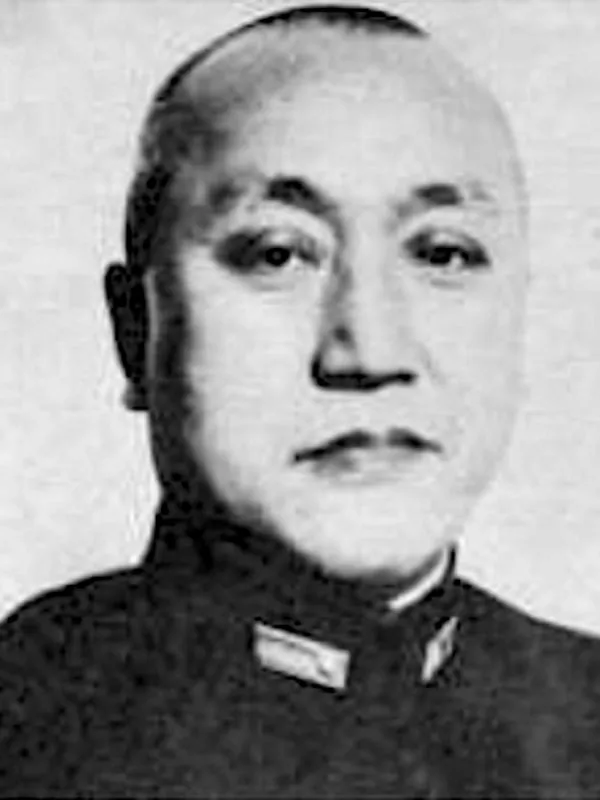
- Born:
- 25 September 1886, Osaka (Japan)
- Died:
- 19 February 1953, Tokyo (Japan)
- Author:
- Natalia
- Photo:
- autor nieznany, domena publiczna, Wikimedia Commons

In the first year of the Pacific War Nobutake Kondō was the second admiral of the Japanese fleet after Isoroku Yamamoto. As commander of the Second Fleet, the main force of heavy cruisers, and at the same time of the whole Southern Force, he covered the conquest of Malaya, the Philippines and the Dutch East Indies over a few winter months, and in the spring of 1942 he directed the expedition into the Indian Ocean. Later he led his ships at Midway, in the Eastern Solomons and off Santa Cruz. His reputation as a victor ended on the night of 14–15 November 1942 off Guadalcanal, when his force ran into two American battleships directed by radar and lost the Kirishima. A staff officer by training and temperament, an excellent organiser but regarded by many subordinates as an over-cautious commander, he ended the war far from the main fronts, in China.
Top of the class at Etajima
He was born on 25 September 1886 in Osaka, the second son of Kenzō Kondō. He entered the Naval Academy at Etajima far down the list, but within two years he was the best in his year, and in November 1907 he graduated first in the 35th class. He chose gunnery as his specialisation and also finished first on the advanced course at the naval gunnery school. In 1912 he went to Britain, where the battlecruiser Kongō was being built for Japan, and joined her first crew. During the First World War, in which the Japanese navy fought mainly in the Pacific and the Mediterranean, he served on the staffs of successive fleets and as gunnery officer of the cruiser Akitsushima, and from 1917 to 1919 he studied at the Naval War College.
Staff officer and courtier
Around the turn of 1920 and 1921 he went to Germany, where until 1923 he belonged to the Japanese part of the Allied commissions supervising the implementation of the Treaty of Versailles. According to Kent Budge, author of an online encyclopedia of the Pacific War, this stay made him pro-German and anti-British, although colleagues described him as an officer with the manners of a British gentleman. In February 1924 he became aide-de-camp to the Crown Prince, Hirohito. He then taught at the Naval War College, was promoted to captain in 1927, commanded the heavy cruiser Kako, headed the operations section of the Navy General Staff and, in 1932–1933, commanded the Kongō, in which he had sailed years before.
In November 1933 he became a rear admiral, in 1935 chief of staff of the Combined Fleet and in December of the same year head of the First (operations) Bureau of the Navy General Staff. He was in that post when the war with China broke out in 1937, and in December of that year he was promoted to vice admiral. From December 1938 he commanded the Fifth Fleet, whose ships and naval infantry took the Chinese island of Hainan in February 1939 and then the port of Shantou (PL). In October 1939 he returned to Tokyo as Vice Chief of the Navy General Staff.
The sources say different things about his views in those years. According to Japanese accounts, during the disputes over the Tripartite Pact in 1940 he argued that the navy would be ready for war with America in April 1941 and that, if war could not be avoided, no better moment would come, even though Japan could not win a long war. Budge, on the other hand, writes that Kondō shared Yamamoto’s conviction that Japan could not defeat the United States, and that in the summer of 1941 he opposed an attack on the USSR on Germany’s side.
The Southern Force
On 1 September 1941 Kondō took command of the Second Fleet, built around fast heavy cruisers with the flagship Atago at their head. In the war plan it was the second pillar of the Combined Fleet alongside Chūichi Nagumo’s carriers, and Kondō, the most senior officer at sea after Yamamoto, became commander of all naval forces in the drive south. His forces covered the convoys of the Twenty-Fifth Army sailing to Malaya (Malayan campaign), and when the British Force Z put to sea on 9 December, the battleships Kongō and Haruna set out to meet it. No clash of ships took place: the next day the British ships were sunk by aircraft. In the following weeks the fleets under Kondō covered the landings in the Philippines and the Dutch East Indies.
In March 1942 Yamamoto entrusted him with oversight of the expedition into the Indian Ocean. The strike was carried out by Nagumo’s carriers: on 5 April they attacked Colombo and on 9 April Trincomalee, sinking two heavy cruisers and the carrier Hermes (Indian Ocean raid). According to Budge, after his return Kondō led the pursuit of William Halsey’s task force, which on 18 April launched James Doolittle’s bombers against Japan. The Americans got away before the Japanese found them.
Midway
Kondō was one of the admirals who criticised Yamamoto’s plan to take Midway Atoll. According to Japanese sources, during the war games aboard the battleship Yamato he proposed cutting the lines linking the United States with Australia instead. Budge writes that Kondō at least wanted the invasion forces to assemble at Truk rather than at Saipan, where they were easier to detect. Yamamoto accepted neither objection, and Kondō dutifully took command of the invasion force: two battleships, the light carrier Zuihō, heavy cruisers and transports with some five thousand soldiers. On 4 June, when Nagumo’s four carriers had been destroyed, Yamamoto ordered him to seek out the Americans and give them a night battle, and ordered Rear Admiral Takeo Kurita’s cruisers to bombard the atoll. The American carriers kept their distance, however, and during the night Yamamoto called off the whole operation (Battle of Midway). Kondō never sighted the enemy.
Guadalcanal
In August 1942, after the American landing on Guadalcanal, the Second Fleet moved to Truk and became the main surface force in the struggle for the island. In the Battle of the Eastern Solomons on 24 August, Kondō’s advance force sailed ahead of Nagumo’s carriers; after dark the two admirals searched in vain for the Americans, hoping for a gunnery action. It was the same off Santa Cruz on 26 October. Kondō, the senior officer, was formally in command of the whole force, but according to Japanese accounts he did not interfere in Nagumo’s decisions, and his carrier Jun’yō joined in the attacks on the American fleet. In the evening his ships reached the burning Hornet, which was sunk by the torpedoes of Japanese destroyers.
In mid-November Yamamoto decided to carry the main body of the 38th Division to Guadalcanal, after first knocking out the American airfield, Henderson Field, by bombardment. On the night of 12–13 November Vice Admiral Hiroaki Abe’s force lost the battleship Hiei in a chaotic battle and failed to bombard the airfield, and on 14 November aircraft sank most of Rear Admiral Raizō Tanaka’s transports. Yamamoto entrusted the last attempt to Kondō. On the evening of 14 November he approached Savo Island with the battleship Kirishima, the heavy cruisers Atago and Takao, two light cruisers and nine destroyers.
His airmen had reported only American cruisers and destroyers. In fact two new battleships were waiting for him, Rear Admiral Willis Lee’s Washington and South Dakota. Kondō divided his forces, and his destroyers and the light cruiser Nagara sank or put out of action all four American destroyers within a quarter of an hour or so. Around midnight Japanese searchlights lit up the South Dakota, which an electrical failure had deprived of radar and communications, and the Kirishima and the cruisers hit her more than twenty times. Nobody paid attention to the Washington. From a range of about eight kilometres her radar-directed 406 mm guns turned the Kirishima into a burning wreck within a few minutes. The torpedoes the Japanese fired at the American battleships missed. At about one o’clock Kondō, believing that the way was clear for the transports, withdrew without bombarding the airfield. The Kirishima sank in the early hours of 15 November. It was one of only two battleship-against-battleship actions in the Pacific (Naval Battle of Guadalcanal).
The defeat sealed the island’s fate: in December the navy proposed abandoning it. Yamamoto, however, treated the two admirals differently. Abe, a destroyer specialist, lost his post, while Kondō, a member of the influential circle of battleship and staff officers, suffered no consequences and continued to command the Second Fleet. At the turn of January and February 1943 his force, with two carriers and two battleships, provided distant cover for the evacuation of the troops from Guadalcanal.
China and the end of the war
After the death of Yamamoto, shot down over Bougainville on 18 April 1943, Kondō, according to Japanese sources, temporarily directed the Combined Fleet until the arrival of Admiral Mineichi Koga. On 29 April 1943 he was promoted to full admiral, but in August he handed the Second Fleet over to Kurita and moved to the Supreme War Council, which meant removal from command at sea. From December 1943 to May 1945 he commanded the China Area Fleet, the naval forces along the Chinese coast and on the rivers, by then a secondary front. In May 1945, when according to Japanese accounts command of the Combined Fleet and of the whole navy went to Jisaburō Ozawa, his junior in seniority, Kondō returned to the Supreme War Council. On 5 September 1945, a few days after the surrender, he was transferred to the reserve.
After the war and verdicts
In 1947 the occupation authorities barred him from public office, like most senior officers. Budge writes that after the war he became a successful businessman. He died on 19 February 1953 in Tokyo, in the Setagaya district; some accounts give the date as 16 February.
Opinions of his leadership differ. According to Japanese accounts Admiral Shigeyoshi Inoue was highly critical of him, and several staff officers accused him of passivity and of lacking experience of command at sea. Others, such as the airman Masatake Okumiya, considered him a capable commander who hid a fighting spirit beneath a cool exterior. Budge sees him above all as an efficient organiser, an officer liked by his subordinates and always ready to hear them out. His career shows the strengths and weaknesses of the Japanese navy: a superbly prepared plan for the first months of the war, which Kondō carried out flawlessly, and an inability to adapt once the enemy had radar and night fighting, in which the Japanese considered themselves masters, no longer gave them the advantage.
Sources
Commanded in battles
(03)Mentioned in battles
(02)Often appears with
People who appear in the same events.