United Kingdom
Max Aitken, Lord Beaverbrook
Minister of Information (1918), Minister of Aircraft Production (1940–1941), Minister of Supply (1941–1942), Lord Privy Seal (1943–1945), proprietor of the Daily Express
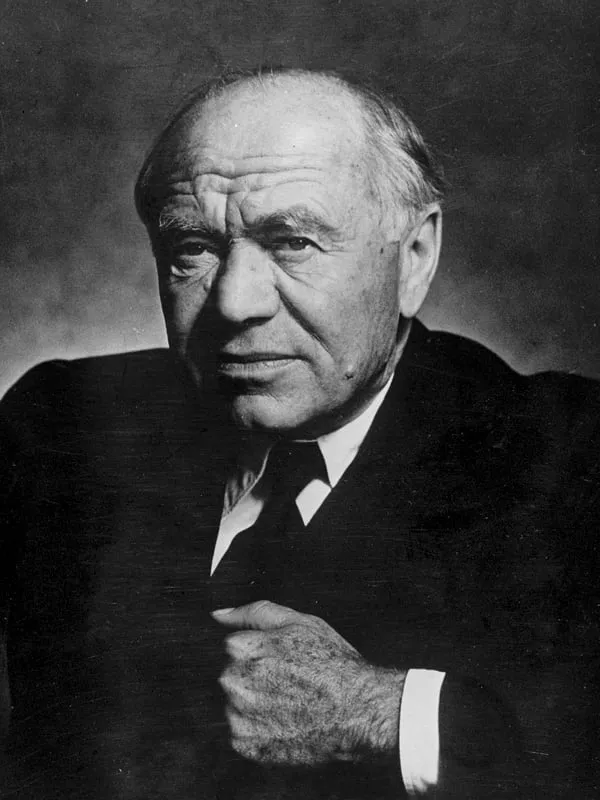
- Born:
- 25 May 1879, Maple (Ontario, Canada)
- Died:
- 9 June 1964, Cherkley Court near Leatherhead (England)
- Author:
- Łukasz
- Photo:
- Yousuf Karsh, CC BY-SA 3.0 NL, Wikimedia Commons

Max Aitken, Lord Beaverbrook from 1917, was one of the most colourful and most controversial figures in British public life in the first half of the twentieth century. The son of a Presbyterian minister from provincial Canada, he was a millionaire before he was thirty, and in London he built a press empire whose flagship, the Daily Express, was the most widely read daily newspaper in the world. For twenty years he used it to wage political campaigns: for tariffs to protect the British Empire, against the League of Nations, for the appeasement of Hitler. The paper that as late as August 1939 was assuring its readers there would be no war had an owner who a year later became one of the architects of Britain’s victory in the Battle of Britain. As Minister of Aircraft Production in the government of his friend Winston Churchill, Beaverbrook forced industry to deliver fighters at a rate that allowed the RAF to survive the summer of 1940.
From New Brunswick to London
William Maxwell Aitken was born on 25 May 1879 in Maple, Ontario, one of the ten children of William Cuthbert Aitken, a Scottish-born Presbyterian minister. When he was a year old the family moved to Newcastle (today Miramichi) in the province of New Brunswick, which Aitken always regarded as his home town. Already as a teenager he produced a school newspaper, delivered papers and wrote reports for the local press. He failed to get into university, briefly studied law, worked in the law office of Richard Bedford Bennett, later Prime Minister of Canada, sold insurance and collected debts.
His real talent emerged in finance. From 1900 he worked in Halifax for the banker John Stairs, and after Stairs’s death in 1904 he took control of the firm Stairs had founded, Royal Securities, and moved to Montreal. He bought and merged companies, and his biggest operation was the amalgamation in 1910–1911 of a dozen or so cement works into the Canada Cement company, which controlled most of Canada’s cement production. The merger was accompanied by allegations of irregularities in share dealing and of inflated prices, but Aitken made a fortune from it. In 1906 he married Gladys Drury, the daughter of a Canadian general. They had three children.
In 1910 Aitken settled in England. He became a friend of Andrew Bonar Law, a Conservative politician who, like him, had been born in New Brunswick into a minister’s family. With his backing, in December 1910 he won a seat in Parliament for Ashton-under-Lyne. He rarely spoke in the House of Commons but gave generously to the party, and in 1911 King George V knighted him. The great cause of his political life was the idea of the Empire as a single trading area surrounded by a common tariff wall. In January 1911 he secretly invested in the ailing Daily Express, and in November 1916 he took control of it.
The First World War
During the First World War Aitken ran the Canadian War Records Office in London, which chronicled the fighting of the Canadians in France and Flanders. He employed painters, photographers and film-makers, and on his initiative a fund was set up that commissioned hundreds of war paintings from the best artists. As an honorary colonel in the Canadian army he visited the front himself and described it in his book Canada in Flanders. In December 1916 he acted as go-between in the talks that led to the fall of the Prime Minister, H. H. Asquith, and the formation of David Lloyd George’s government, although he later greatly exaggerated his own role. In return, in January 1917 he was made Baron Beaverbrook, after the name of a settlement near his childhood home, and took his seat in the House of Lords.
In February 1918 Lloyd George entrusted him with the newly created Ministry of Information, responsible for propaganda in Allied and neutral countries, and with the office of Chancellor of the Duchy of Lancaster. Beaverbrook quarrelled over responsibilities with the Foreign Secretary, Arthur Balfour, and many MPs criticised the handing of government propaganda to a newspaper proprietor. In October 1918, seriously ill, he resigned.
Press baron
After the war Beaverbrook devoted himself to his newspapers. In his hands the Daily Express became a lively, optimistic paper full of photographs and big headlines, written for a broad conservative readership. In 1919 it sold a few tens of thousands of copies; in 1937 it sold more than 2.3 million and was the most widely read daily in the world. Beaverbrook also founded the Sunday Express, and in 1923 he acquired London’s Evening Standard. Together with Lord Rothermere, owner of the Daily Mail, and Lords Camrose and Kemsley, he was one of the four “press lords” whose papers in the 1930s accounted for roughly every other daily newspaper bought in Britain.
He used his titles unscrupulously for political campaigns, attacking his opponents and supporting his friends. He was known for his inexhaustible energy, his charm and his taste for intrigue. Friends and enemies alike agreed that he liked to exaggerate and that his judgements were hard to trust. In 1929 he launched the “Empire Crusade” for free trade within the Empire and tariffs against the rest of the world, and in 1930, with Rothermere, he founded the United Empire Party, which took votes from the Conservatives at by-elections. Its aim was to take control of the Conservative Party, or at least to remove Stanley Baldwin from its leadership. Baldwin replied in March 1931 with his famous charge that the press lords were aiming at “power without responsibility – the prerogative of the harlot throughout the ages”, and he won. Beaverbrook’s movement lost its importance.
Imperial isolationism and appeasement
In foreign policy Beaverbrook preached “imperial isolationism”: Britain should look after the Empire and the Dominions and keep out of European affairs. His papers opposed the Locarno treaties, membership of the League of Nations and the principle of collective security; in 1935 they urged readers to boycott the League of Nations Union’s Peace Ballot, and during the Italo-Abyssinian War to reject sanctions against Italy. In March 1936 they argued that the remilitarisation of the Rhineland was no concern of the British. Beaverbrook changed his mind about Hitler many times. After a visit to Germany in 1933 he wrote that the stories of the persecution of the Jews were exaggerated. In the same year his paper carried the sensational headline “Judea Declares War on Germany”, which antisemitic propaganda later exploited. In 1936, at the invitation of Joachim von Ribbentrop, he was in Berlin for the opening of the Olympic Games.
In the abdication crisis of 1936 Beaverbrook’s papers took the side of Edward VIII, although he himself tried to persuade the king to break with Wallis Simpson. The king abdicated, and Beaverbrook remained an opponent of Baldwin. He gave full support to the government of Neville Chamberlain. The Daily Express greeted the Munich Agreement with relief and kept repeating that there would be no war. Beaverbrook was strongly opposed to the British guarantee to Poland of 31 March 1939. He told the Soviet ambassador, Ivan Maisky, that he could not understand why Britain should go to war over Poland or Czechoslovakia. As late as 7 August 1939 the Daily Express came out with the banner headline “No War This Year”. Years later Beaverbrook wrote that the prophecy had been wrong, but that the policy, pursued more vigorously, could have made it come true.
Minister of Aircraft Production
When Britain declared war on Germany, Beaverbrook’s papers at once adopted a patriotic tone, though they still criticised particular government decisions, such as food rationing. On 10 May 1940 Churchill became Prime Minister; he and Beaverbrook had shared a friendship, full of quarrels and reconciliations, since the First World War. The new Prime Minister separated aircraft production from the Air Ministry and on 14 May handed the new department to Beaverbrook. The minister began work in his own house, Stornoway House, with a handful of people from outside the civil service, and was given almost unlimited powers.
His methods horrified officials. He made the factories concentrate on a few types of aircraft, above all the Hurricane and Spitfire fighters; he took raw materials, machine tools and factories from other departments, sacked incompetent managers, set production targets deliberately ten to twenty per cent above what industry could achieve and demanded daily lists of “bottlenecks”, which he then cleared personally. He took over from the RAF the storage units and repair workshops, where hundreds of aircraft accepted from the factories but not yet issued to squadrons were standing, and expanded the civilian repair organisation, which put thousands of damaged machines back into service. In the summer of 1940 he appealed to housewives to give up their aluminium pots and pans “for Spitfires”, and throughout the Empire money was collected for funds that bought fighters. His son admitted years later that the collection of pots was mainly of propaganda value.
The results were impressive. In the first four months of 1940 the factories delivered 638 fighters; in the next four, from May to August, 1,875 – roughly twice as many as German industry was building in the same period. In June Beaverbrook accompanied Churchill on his last journey to France, for the talks at Tours. On 2 August he joined the War Cabinet. During the Battle of Britain Fighter Command never ran short of aircraft, although it was short of pilots; in the hardest days of August the squadrons had more fighters than at the beginning of July. The head of Fighter Command, Hugh Dowding, to whom Beaverbrook was well disposed, later wrote that the RAF had had the organisation, the men and the spirit, but not the machines to withstand a continuous battle, and that Beaverbrook had given them to it, as no one else in England could have done. Churchill wrote of this as Beaverbrook’s “finest hour”. Historians debate how far this was the minister’s personal achievement and how far the fruit of the expansion of industry planned before the war by the Air Ministry. Critics also point out that his methods, geared to immediate results, disrupted the war economy, delayed the production of training aircraft and new types and poisoned relations with the RAF. His son, also named Max Aitken, was fighting at the time as a fighter pilot with No. 601 Squadron.
Supply, Moscow and the second front
Worn out by conflicts with the Air Ministry and with the Minister of Labour, Ernest Bevin, Beaverbrook left the ministry on 30 April 1941. He became Minister of State and, on 29 June, a week after the German attack on the USSR, Minister of Supply. In the autumn of 1941 he talked with Rudolf Hess, who was held captive in England, and at the end of September he flew to Moscow with the American Averell Harriman, where they agreed with Stalin the first deliveries of British and American arms to the Red Army. Stalin made a great impression on him. He accompanied Churchill to his meetings with Franklin Delano Roosevelt, with whom he became friendly enough at times to irritate the Prime Minister, and he urged the Americans to adopt bolder armaments production plans.
In February 1942 Beaverbrook took up the new office of Minister of War Production, but after two weeks, again at odds with Bevin, he left the government. He then put himself at the head of the “Second Front Now” campaign, demanding an immediate invasion of France to relieve the USSR, which set him at odds with Churchill. He nevertheless remained Churchill’s closest confidant. The Labour leader Clement Attlee observed that Churchill often listened to Beaverbrook’s advice but was too sensible to follow it. In September 1943 Beaverbrook returned to the government as Lord Privy Seal, outside the War Cabinet, and held the post until the end of the war. In 1942–1945 he also headed an Anglo-American commission on raw materials. In the election campaign of 1945 the Daily Express, picking up a phrase from Churchill’s radio broadcast of 4 June, warned in a headline that a Labour government would mean a “Gestapo in Britain”. The voters rejected the Conservatives by a crushing majority.
Last years
After the war Beaverbrook held no further office. The Daily Express reached a circulation of nearly four million copies, and its owner stayed true to his old ideas: he fought against independence for India and to the end of his life hated the last Viceroy, Lord Louis Mountbatten, whom he also blamed for the bloody Dieppe Raid of 1942, in which many Canadians were killed. He supported the intervention in Egypt during the Suez Crisis of 1956 and opposed Britain’s entry into the European Economic Community. He also wrote works of history, above all Politicians and the War, Men and Power and The Decline and Fall of Lloyd George, which the historian A. J. P. Taylor, his friend and biographer, rated very highly as the testimony of a participant in the events. Evelyn Waugh, who had worked on his papers, caricatured him maliciously as Lord Copper in the novel Scoop.
He was a generous benefactor of New Brunswick. He was Chancellor of the University of New Brunswick and endowed a library, scholarships and an art gallery in Fredericton. His first wife died in 1927. In 1963 he married Marcia Christoforides, the widow of his friend the Canadian financier James Dunn. He died of cancer on 9 June 1964 at his estate, Cherkley Court, near Leatherhead in Surrey. His ashes were placed in the plinth of a bust of him in Newcastle, New Brunswick, where as a boy he had delivered newspapers.
Significance
Beaverbrook was the very model of a press magnate who wanted to govern without taking responsibility for governing. For two decades his papers told the British that the affairs of Europe were no concern of theirs and supported the policy of appeasement that led to war on the worst possible terms for Britain. Yet the same man proved in the critical year of 1940 to be one of Churchill’s most effective ministers. His improvisation and ruthlessness had their price, but in the months when the country’s fate depended on whether Fighter Command had aircraft to fly, he delivered more fighters than anyone had expected. In the history of the Battle of Britain his name stands beside those of Dowding and Keith Park.
Sources
Mentioned in battles
(01)Often appears with
People who appear in the same events.