- Category:
- Military operations
- Front:
- Mediterranean
- Date:
- 21 June 1942
- Author:
- Łukasz
- Battle:
- Battle of Gazala
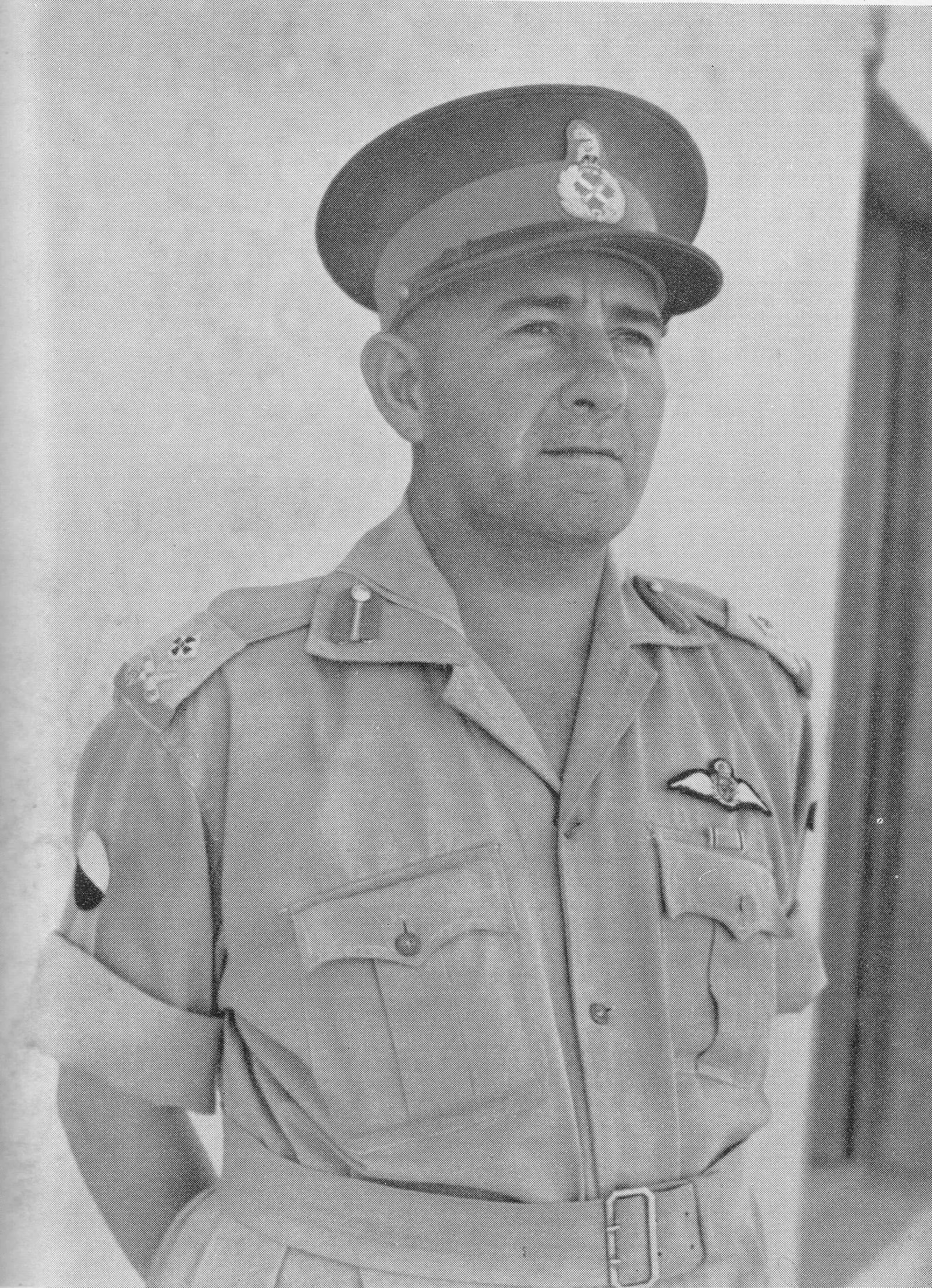
On the morning of 21 June 1942 the commander of the fortress of Tobruk, the South African Major General Hendrik Klopper, surrendered to Colonel General Erwin Rommel. The port which in 1941 had held out against a siege for eight months and had become a symbol of British tenacity now fell after less than a day’s assault. Some 33,000 British, South African and Indian soldiers went into captivity. It was the largest surrender of British Empire forces in the war after the capitulation of Singapore, and the greatest defeat in the history of the armed forces of the Union of South Africa. Rommel also captured huge stocks of fuel, food and vehicles, and the next day Adolf Hitler made him a field marshal.
Popular chronologies record under 17 June that Tobruk was encircled; under 18 June that the siege tightened and part of the defenders were withdrawn to Egypt; and under 21 June that the Afrika Korps retook Tobruk and captured 35,000 prisoners. The figure of 35,000 is too high: according to some sources that was the strength of the entire garrison. The British official history estimates the number of prisoners at about 32,000, and most studies give a round 33,000. The exact figure cannot be established, because the Eighth Army’s records for those days were lost.
A fortress that was not to be defended
After Operation Crusader the British did not intend to defend Tobruk under siege a second time. On 4 February 1942 the commanders-in-chief of the three services in the Middle East agreed in Cairo that if Rommel advanced eastwards again, the port would not be prepared for a siege. General Claude Auchinleck did not want to tie down a whole division in the fortress when it might be needed in Persia or Iraq. Admiral Andrew Cunningham remembered how many warships and merchant ships supplying the garrison had cost in 1941. The air force warned that it might be unable to give the port fighter cover. Auchinleck therefore instructed the commander of the Eighth Army, Lieutenant General Neil Ritchie, to defend Tobruk but not to allow himself to be shut up in it. If its fall was imminent, the port was to be evacuated and the depots destroyed. The withdrawal plan was named Operation Freeborn.
This decision had consequences. Some of the mines and barbed wire from the fortress perimeter were taken away for the Gazala Line. In many places the anti-tank ditches had silted up with sand, and one stretch had been filled in deliberately in December 1941 to let tanks break out of the siege. At the same time enormous stocks had been accumulated around the port for the planned offensive westwards: fuel, ammunition, food and thousands of lorries. Neither Auchinleck nor Ritchie wanted to lose them.
14–17 June: ambiguous orders
When the Eighth Army began abandoning the Gazala Line on 14 June, Plan Freeborn came into effect: the 1st South African Division and the British 50th Division withdrew eastwards towards the Egyptian frontier. At that point, however, the Prime Minister, Winston Churchill, stepped in. To him Tobruk was a symbol, and on 14 and 15 June he cabled Cairo that he presumed there was no question of giving up the fortress. Auchinleck replied that he did not intend to give it up and that Ritchie had enough troops to hold it. To Ritchie he sent orders that were mutually contradictory: the fortress must not be “invested”, but it might be “isolated for short periods”. Ritchie understood that he was to defend Tobruk for as long as the rest of the army covered it from outside.
That cover quickly fell apart. On 15 June the Germans took the box on Point 650, north of El Adem, and the 29th Indian Brigade, which had beaten off the 90th Light Division three times, had to abandon El Adem on the night of 16–17 June. On 17 June the British 4th Armoured Brigade, hastily re-formed after Black Saturday, fought an afternoon action near Sidi Rezegh against the German panzer divisions, lost more than 30 tanks and withdrew towards Egypt. During the night the tanks of the Afrika Korps reached the sea near Gambut, captured two battalions of the newly formed 20th Indian Brigade and took the abandoned airfield with a dozen or so aircraft and stocks of fuel. On the morning of 18 June Rommel reported that Tobruk was surrounded.
Ritchie no longer tried to relieve the fortress. He pulled the rest of the army, including the armoured brigades and the anti-aircraft artillery, back towards the Egyptian frontier at Sollum, from where – as in 1941 – Tobruk was to threaten Rommel’s rear until the Eighth Army could gather itself for a counter-offensive. It was assumed that the fortress, with its stocks, would hold out for at least two months. The tactical air force (the Desert Air Force) fell back to airfields in Egypt, beyond the range of most fighters. That is how the mention, found under 18 June, of part of the forces being withdrawn to Egypt should be understood: it was not part of the garrison that left but the whole field army, and Tobruk was left on its own.
The garrison
From 15 June the defence was commanded by Major General Klopper. Until recently he had been chief of staff of the 2nd South African Division, and had taken command of it only on 14 May; he had no experience of commanding a large formation in battle. The commander of XIII Corps, Lieutenant General William Gott, whose headquarters was still in Tobruk, offered to take command himself, but Ritchie refused, and on 16 June Gott left, leaving Klopper three staff officers and instructions to prepare three plans at once: for co-operation with the army outside, for the recapture of the Belhamed ridge, and for evacuation.
The garrison numbered some 33,000–35,000 men, but about 10,000 of them were rear services and labourers. Its core was formed by two brigades of the 2nd South African Division (the 4th and 6th), which held the western and south-western sectors of the perimeter. The east and south-east were held by the 11th Indian Brigade, with the experienced 2nd Battalion of the Cameron Highlanders, the 2nd/5th Mahratta Light Infantry, made up largely of young replacements, and the inexperienced 2nd/7th Gurkha battalion. In reserve stood the 201st Guards Brigade and the 32nd Army Tank Brigade with several dozen Valentine and Matilda infantry tanks. The perimeter of the fortress was more than 50 km long, and there were too few anti-tank guns, especially the new six-pounders, to man it densely.
20 June: the assault
Rommel did not use the plan agreed on 10 June by Field Marshal Albert Kesselring and Marshal Ugo Cavallero. He turned instead to his own plan of the autumn of 1941: an attack from the south-east, where the ground was flat and the defences weakest. On the night of 19–20 June the panzer divisions changed places with the 90th Light Division and took up position opposite the Mahrattas’ sector. The Italian XXI Corps was to feign an attack in the west in order to pin down the South African brigades.
The assault began at 5.20 a.m. on 20 June with an air raid. According to British tallies, Junkers Ju 87 dive-bombers and other German aircraft flew 588 sorties that day, the most in the history of the war in the Mediterranean, and Italian aircraft 177. More than 350 tonnes of bombs fell on a narrow sector of the perimeter. At about 7 a.m. the infantry moved off, and within three-quarters of an hour there was a gap in the line. German engineers laid ready-made bridges across the anti-tank ditch, and by 8.30 a.m. the first tanks were across. The Mahrattas counter-attacked with their reserves while waiting for the promised tanks, which never came. Klopper’s order for a counter-attack was misunderstood at the tank brigade’s headquarters, and only one regiment went into action, too late, when the 15th and 21st Panzer Divisions, with the Italian Ariete Division alongside them, were already pouring through the breach. The British tanks were destroyed one after another.
At about 1.30 p.m. the Germans reached the crossroads known as King’s Cross on the Pilastrino ridge, from which the town and the harbour could be seen. The 21st Panzer Division drove down towards the port. The last obstacle was the artillery batteries, which fired at the tanks at close range, including with heavy anti-aircraft guns; Rommel later praised their exceptional tenacity. In the afternoon Klopper’s headquarters came under fire. At about 4 p.m., on sighting German tanks, the staff moved in haste, destroying most of its signals equipment in the process. From then on Klopper had little idea of what was happening in the fortress. In the evening the 15th Panzer Division smashed the 201st Guards Brigade on the Pilastrino ridge, and at about 7 p.m. the 21st Panzer Division entered the town. British engineers blew up and set fire to fuel, water and ammunition dumps and the harbour installations. A dozen or so small vessels left the harbour under fire; about 25 sank in the harbour or on the way to Alexandria.
A night of decision and the surrender
By the evening of 20 June the eastern part of the fortress was in enemy hands, while the two South African brigades in the west had hardly fought at all. Klopper reported to Eighth Army headquarters that he was holding out but did not know for how long. Ritchie’s staff suggested breaking out of the encirclement the following night. Klopper conferred with his commanders until morning. Against an attempt to break out was the fact that his division was not motorised and that many of its lorries were in the town, already occupied by the Germans. Against defending the western sector was the fact that the main ammunition dumps had also been lost. At 2 a.m. Klopper still announced that he would try to break out in the evening and would fight until then “to the last man and the last round”.
Towards morning he changed his mind: he concluded that further fighting would only bring needless casualties. At about 6 a.m. Ritchie replied that he did not know the tactical situation and left the decision on surrender to Klopper’s judgement. Rommel drove into the town at dawn and set up his headquarters in a hotel. At 9.40 a.m. on 21 June Klopper surrendered to him on the Via Balbia a few kilometres west of Tobruk.
In many units the surrender order was received with astonishment, since they had not yet fought. Nor did it reach everyone. The Gurkhas on the eastern perimeter held out until the evening of 21 June, and the Cameron Highlanders until the morning of 22 June. About 200 guardsmen of the Coldstream battalion broke out in lorries through the south-western perimeter and reached their own lines. A group of 188 South Africans, mainly of the Kaffrarian Rifles, made their way east along the coast and after 38 days reached El Alamein.
Prisoners and booty
According to the British official history, some 32,000 men went into captivity, among them, according to South African sources, 10,722 soldiers of the 2nd South African Division; about 1,200 of these were Black soldiers of the unarmed auxiliary Native Military Corps. German propaganda initially gave 25,000 prisoners, and figures of up to 35,000 also circulate in the literature. The Germans handed the prisoners over to the Italians, who were not prepared to receive such a mass of men. For the first few days the prisoners were crowded into open cages in the desert with very little water and food; conditions improved only after they had been shipped to camps in Italy. There the South Africans often faced reproaches from other prisoners that Tobruk had been surrendered too easily.
The booty was enormous, even though some of the stocks had been destroyed. According to figures cited in the literature, the Germans and Italians took some 1,400 tonnes of fuel, about 5,000 tonnes of food, thousands of tonnes of water and ammunition, and about 2,000 vehicles, including more than a thousand serviceable lorries and about 30 tanks. By the end of June captured British lorries made up a large part of the transport of Panzer Army Africa. Axis soldiers, who had been on starvation rations for weeks, fell upon British chocolate, tinned milk and tinned vegetables.
Field marshal
On 22 June Hitler promoted Rommel to field marshal (Generalfeldmarschall); he was 50 at the time and the youngest field marshal of the German Army. Joseph Goebbels’s propaganda turned Tobruk into a great celebration. Rommel later reportedly wrote to his wife that he would rather have been given one more division. Benito Mussolini was euphoric and, according to an often-repeated account, had a white horse sought out for a triumphal entry into Cairo.
The victory, however, confronted the Axis with a choice. The April arrangements provided that once Tobruk had been taken Rommel would halt on the Egyptian frontier and the air force would return to Sicily to support a landing on Malta. Kesselring reminded Rommel of this on 21 June, and the next day an order to halt came from General Ettore Bastico. Rommel, now a field marshal, refused and, through the German attaché in Rome, appealed directly to Mussolini for permission to pursue into Egypt. He cited the captured stocks and the pessimistic reports of the American attaché in Cairo, Colonel Bonner Fellers, whose cipher the Italians were reading. Hitler, who had not believed in a landing on Malta since May, backed Rommel and on 23 June wrote to Mussolini that the goddess of the fortunes of war passes by commanders only once. Mussolini agreed.
The news at the White House
Churchill was then in Washington for talks with President Franklin Delano Roosevelt. On the morning of 21 June, in the President’s study in the White House, an aide handed Roosevelt the telegram announcing the surrender, and he passed it to Churchill without a word. The Prime Minister’s chief of staff, General Hastings Ismay, had the news confirmed in London. Churchill recalled years later that he did not try to hide from the President the shock he had suffered; it was “a bitter moment”. “Defeat is one thing; disgrace is another.” Roosevelt asked only: “What can we do to help?” Churchill asked for as many of the new Sherman tanks as possible, to be sent to the Middle East as quickly as possible.
The US Army Chief of Staff, General George Marshall, at first thought of sending the whole 2nd Armored Division to Egypt. As it would not be ready before the autumn, he decided instead to give the British some 300 Shermans, taken from newly equipped American units, and 100 M7 self-propelled howitzers, which sailed in a fast convoy in July. The Chief of the British Imperial General Staff, General Alan Brooke, later considered that this scene in the President’s study laid the foundations of the friendship and understanding between the President and Marshall on the one hand and Churchill and himself on the other.
The inquiry
Klopper and his staff were prisoners, so in 1942 a South African court of inquiry sat in their absence. It found Klopper largely blameless and placed the causes of the defeat in the mistakes of the British command: in the decision not to prepare the fortress for a siege yet nevertheless to defend it, in ambiguous orders, and in overestimating the strength of the Eighth Army after Gazala. The findings were circulated in only seven copies, among others to Prime Minister Jan Smuts, and kept secret until the end of the war, which did nothing for the reputation of Klopper and his soldiers. The British official historian later wrote that the causes of the defeat were fairly obvious: no one had intended to withstand a second siege, and neither Auchinleck nor Ritchie had appreciated how badly the Eighth Army had been beaten. Klopper escaped from captivity after the Italian armistice in 1943, and after the war rose to become Commandant General of the Union Defence Force, the head of the South African armed forces (1956–1958).
Place in the war
The fall of Tobruk ended the Battle of Gazala and opened the road to Egypt for Rommel. The Eighth Army did not hold the frontier: Ritchie pulled it back to Mersa Matruh, and on 25 June Auchinleck relieved him and took command himself. At Mersa Matruh the British lost thousands more prisoners, and only at the beginning of July, in the First Battle of El Alamein, did they halt Rommel’s exhausted army less than 110 km from Alexandria. For the Axis, Tobruk was the high point of its fortunes in Africa, but also its undoing: abandoning the landing on Malta allowed the island to recover, and its aircraft and submarines again began sinking the convoys carrying fuel for Rommel. In November 1942, after the Second Battle of El Alamein, the British entered Tobruk without a fight.
In London the defeat caused the greatest political crisis of Churchill’s government. On 25 June, in the by-election at Maldon, the Conservative candidate lost to an independent left-wing journalist, Tom Driberg, which Churchill himself attributed to the impression made by Tobruk. The Conservative MP Sir John Wardlaw-Milne tabled a motion of no confidence in the government in the House of Commons. In the debate of 1–2 July the Labour member Aneurin Bevan accused the Prime Minister of fighting debates like a war and the war like a debate, but the motion was defeated by 475 votes to 25. The defeat also hastened American aid: the Shermans, sent from Washington in answer to Roosevelt’s question, fought in the Second Battle of El Alamein in the autumn. In August Churchill replaced Auchinleck with General Harold Alexander, and Lieutenant General Bernard Montgomery took over the Eighth Army.
Sources
Meanwhile
(04)Elsewhere, within a week.
- 18 June 1942 · MilitaryThe Manhattan Project beginsOn 18 June 1942 Colonel James C. Marshall was ordered to organise the military side of the American atomic programme. So the Manhattan Project was born.
- 25 June 1942 · Western FrontThe thousand-bomber raid on BremenOn the night of 25–26 June 1942 the RAF sent 1,067 aircraft to Bremen. Cloud limited the damage and 48 bombers were lost. It was the last 1942 “thousand” raid.
- 27 June 1942 · AtlanticConvoy PQ 17 sails from IcelandOn 27 June 1942 convoy PQ 17 sailed from Iceland for the USSR – 35 ships carrying equipment for the Red Army, covered by British and American warships.
- 28 June 1942 · Eastern FrontCase Blue beginsOn 28 June 1942 Army Group Weichs struck from Kursk at Voronezh, opening the Wehrmacht’s great summer offensive in the southern USSR, aimed at Caucasus oil.
Related events
(04)The same battle, people or subject.
- 28 June 1942 · MediterraneanThe Battle of Mersa MatruhOn 26–29 June 1942 Rommel routed the badly co-ordinated Eighth Army at Mersa Matruh. The New Zealanders broke out, and the port fell on the morning of 29 June.
- 14 June 1942 · MediterraneanThe retreat from the Gazala LineOn 14 June 1942 the Eighth Army began to abandon the Gazala Line. Churchill presumed Tobruk would not be given up; Auchinleck said he had no such intention.
- 1 July 1942 · MediterraneanThe First Battle of El Alamein beginsOn 1 July 1942 Rommel attacked the El Alamein position. An Indian brigade at Deir el Shein fell but bought time, and by 4 July the Axis attack had stalled.
- 30 August 1942 · MediterraneanThe Battle of Alam el Halfa beginsOn the night of 30–31 August 1942 Rommel struck the southern flank of the El Alamein front. His panzer divisions were halted before Alam el Halfa ridge.