United Kingdom
Claude Auchinleck
Commander-in-Chief India (1941, 1943–1947), Commander-in-Chief Middle East (1941–1942), field marshal
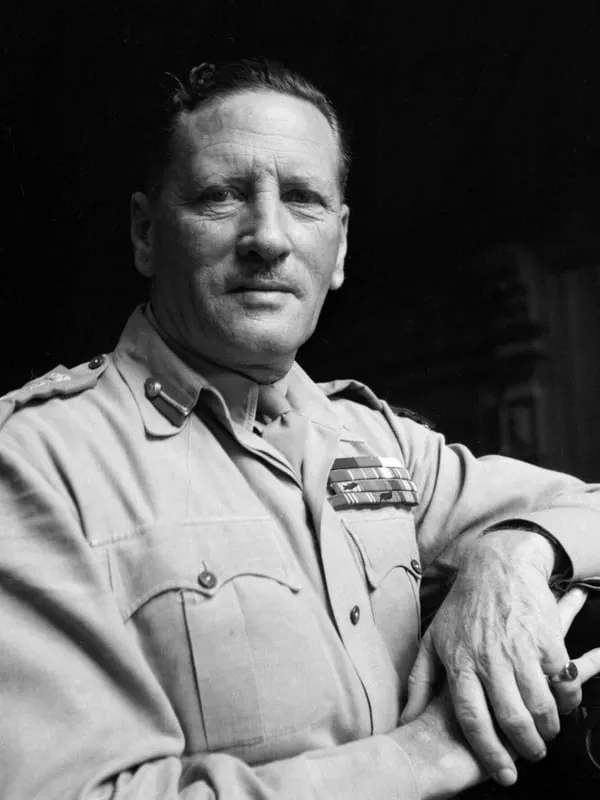
- Born:
- 21 June 1884, Aldershot (England)
- Died:
- 23 March 1981, Marrakesh (Morocco)
- Author:
- Łukasz
- Photo:
- Cecil Beaton, domena publiczna, Wikimedia Commons

Claude Auchinleck, known throughout the army simply as “the Auk”, was an Indian Army soldier who commanded British forces in the Middle East during the hardest period of the war in North Africa. In June 1941 Winston Churchill had him swap posts with General Archibald Wavell. In November 1941 Auchinleck launched the offensive that relieved Tobruk, and in the summer of 1942, after the defeat at Gazala, he took personal command of the Eighth Army and stopped Erwin Rommel at El Alamein, some hundred kilometres from Alexandria. Even so, Churchill removed him in August 1942, and the laurels for victory in Africa went to his successor. Auchinleck returned to India, where as Commander-in-Chief he built the base for the victorious campaign in Burma, and then had to divide the army to which he had devoted his whole life between India and Pakistan.
Early years and the Indian Army
Claude John Eyre Auchinleck was born on 21 June 1884 in Aldershot into a Protestant family of Ulster origin. His father, a colonel in the Royal Horse Artillery, served in India, and the family accompanied him to Bangalore. He died in 1892, leaving the family in modest circumstances. The boy was educated on scholarships, first at Wellington College and then at the Royal Military College, Sandhurst. In January 1903 he was commissioned as a second lieutenant in the Indian Army, and in 1904 he joined the 62nd Punjabis. He quickly learned several Indian languages and could talk to his soldiers without an interpreter. He was bound to the Indian Army for the rest of his life and regarded it as his home to the end. He spent two years in Tibet and Sikkim.
The First World War
On the outbreak of war the 62nd Punjabis were sent to the Middle East. In February 1915 Auchinleck fought the Turks in the defence of the Suez Canal at Ismailia; in July that year the regiment was moved to Aden, and at the end of 1915 to Mesopotamia. In the Mesopotamian campaign he took part in the failed attacks of 1916 to relieve General Townshend’s force, besieged in Kut, and was one of the few British officers of the regiment to survive them. By 1917 he was commanding a battalion in the second battle of Kut and at the capture of Baghdad. He was awarded the Distinguished Service Order, promoted to major in 1918 and, after fighting in Kurdistan, to lieutenant colonel in 1919. He came out of the war with the experience of a campaign in which British troops had suffered above all from poor supply and medical care. It was a lesson he never forgot.
Between the wars
In 1920–1921 Auchinleck attended the Staff College at Quetta, criticising its curriculum as too theoretical. In 1921 he married Jessie Stewart, a shipowner’s daughter sixteen years his junior, born in the United States. In 1927 he completed the course at the Imperial Defence College in London; in 1929 he took command of a battalion of his regiment, and from 1930 to 1933 he taught at Quetta. In 1933 he commanded a brigade at Peshawar and conducted operations against the Mohmand tribes on the North-West Frontier, followed in 1935 by the second Mohmand campaign, after which he was promoted to major general. In 1936 he became Deputy Chief of the General Staff in Delhi, and in 1938 he chaired a committee that drew up a plan to modernise the Indian Army. Its recommendations formed the basis of the reforms that allowed this army, fewer than two hundred thousand strong in 1939, to grow during the war to more than two million – the largest volunteer army in history.
Narvik and England (1940)
After the outbreak of the Second World War Auchinleck took command of the 3rd Indian Division, but in January 1940 he was summoned to Britain to command IV Corps. In May 1940 he was sent to northern Norway. On 13 May he assumed command of the Allied land forces at Narvik, but only a few days later London began to lean towards evacuation, and on 24 May the decision was taken to abandon Norway. Auchinleck carried out the evacuation in early June, after the town had been taken. Churchill came away from this period with the impression that the general was too cautious and too attached to “minimum requirements”.
In the summer of 1940, when a German invasion of England was expected, Auchinleck briefly commanded V Corps and then the whole of Southern Command, responsible for the defence of the south coast. One of his subordinates was General Bernard Montgomery, who could not abide Indian Army officers. “I cannot recall that we ever agreed on anything,” Montgomery later wrote. In December 1940 Auchinleck was promoted to full general and appointed Commander-in-Chief India, a post he took up in January 1941.
India and Iraq (1941)
In his new post Auchinleck quickly showed initiative. When on 1 April 1941 pro-German officers seized power in Baghdad with Rashid Ali al-Gaylani, Wavell, absorbed by Libya and Greece, had no troops to spare for Iraq. Auchinleck at once offered to send a brigade that was just about to sail from Karachi for Malaya, and to fly in infantry. On 18 April an Indian brigade landed at Basra, and throughout the Anglo-Iraqi War Auchinleck consistently argued for decisive action. Churchill remembered this readiness, and after the failure of Operation Battleaxe in June 1941 he decided that Auchinleck would replace Wavell in the Middle East.
Commander-in-Chief Middle East
On 5 July 1941 Auchinleck assumed command in Cairo of a theatre stretching from Libya to Iraq and from Syria to East Africa. A few days later the campaign in Syria and Lebanon came to an end. From the outset he was under pressure from Churchill, who demanded a swift offensive in the desert while the Germans were fighting in Russia. Auchinleck believed that his rear had to be secured and new divisions trained first, and in July he flew to London to persuade the Prime Minister and the Chiefs of Staff. He got his way: the offensive would not begin until the autumn. In August, at the demand of the Australian government, the exhausted garrison of Tobruk began to be relieved. The first unit to arrive in the fortress was the Polish Independent Carpathian Rifle Brigade under Brigadier General Stanisław Kopański. The Polish government-in-exile later awarded Auchinleck the Silver Cross of the Virtuti Militari.
On 18 November 1941 the newly formed Eighth Army under General Alan Cunningham launched Operation Crusader. Within a few days the British armoured brigades had been shattered at Sidi Rezegh, and Cunningham began to consider breaking off the offensive. On 23 November Auchinleck flew to his headquarters and ordered him to fight on, and when Rommel launched his dash towards the Egyptian frontier, he refused to be thrown off balance. On 26 November he replaced Cunningham with his own Deputy Chief of the General Staff, Major General Neil Ritchie. The British historian Basil Liddell Hart judged that it was “Auchinleck’s intervention and resolution that snatched victory from defeat”. Tobruk was relieved, and by early January 1942 Rommel had fallen back to El Agheila, on the border of Tripolitania.
Gazala and El Alamein
The success proved short-lived. Auchinleck overestimated the enemy’s exhaustion, and as late as 12 January 1942 he was writing that the Axis forces were “hard pressed”. A few days later Rommel, reinforced by fresh supplies, struck at the scattered British forces and by early February had driven them back, retaking Benghazi on the way, to the Gazala line west of Tobruk. There the front froze for four months. On 26 May 1942 Rommel opened the Battle of Gazala. From Cairo Auchinleck offered Ritchie advice but did not take over command, and the Eighth Army, badly deployed and badly led, suffered a heavy defeat. On 21 June 1942, Auchinleck’s 58th birthday, the Germans took Tobruk, capturing more than 30,000 prisoners.
On the evening of 25 June Auchinleck took personal command of the Eighth Army. He abandoned the plan to make a stand at Mersa Matruh, judging that the army had to be kept mobile, and withdrew it to the position at El Alamein, between the sea and the Qattara Depression. In the First Battle of El Alamein in July he halted Rommel’s exhausted forces. Rommel himself wrote that Auchinleck handled his forces “with very considerable skill”, better than Ritchie had, and that he kept his nerve and refused to be pushed into half-measures. The further British counter-attacks in July, poorly prepared and poorly coordinated, brought nothing but heavy losses, however. His choice of advisers was also criticised, especially his trust in the controversial Major General Eric Dorman-Smith. Dominion commanders such as the Australian Leslie Morshead objected to their divisions being broken up into loose battle groups.
Dismissal
In early August 1942 Churchill and the Chief of the Imperial General Staff, General Alan Brooke, flew to Cairo. They concluded that Auchinleck had lost the confidence of his subordinates and was unable to resume the offensive quickly. On 8 August Churchill informed him of his removal and offered him a new Persia and Iraq Command. Auchinleck declined, believing it strategically wrong to separate that area. On 15 August General Harold Alexander took over Middle East Command and Montgomery the Eighth Army. Brooke, who had many reservations about Auchinleck, noted in his diary that he could have been “one of the finest commanders” but was no judge of men. Montgomery later took the credit for saving Egypt and claimed that Auchinleck had been preparing a further retreat – a charge that many historians consider unjust: the defence on which Montgomery won his battles in August and October 1942 rested on the positions and experience of July.
India again (1943–1947)
For almost a year Auchinleck was left without a post. In June 1943, when Wavell became Viceroy, Auchinleck once again became Commander-in-Chief India. Conduct of the war against Japan soon passed to Lord Louis Mountbatten’s South East Asia Command, but Auchinleck remained responsible for training, supply and communications for the troops fighting in Burma. General William Slim, commander of the Fourteenth Army, wrote that without him and the Indian Army his forces “could not have existed, let alone conquered”. In 1944 Auchinleck’s wife left him for Air Chief Marshal Richard Peirse, and the marriage was dissolved in 1946.
After the war Auchinleck had to live through the break-up of the army he had built. At the end of 1945 the trials of officers of the Indian National Army, who had fought on the Japanese side, provoked a wave of protest in India, and the unrest spread to the soldiers too. Fearing for the army’s loyalty, Auchinleck commuted the sentences that had been passed. On 1 June 1946 he was made a field marshal. In 1947, although he opposed partition, he nevertheless prepared the division of the army between India and Pakistan. From 15 August 1947 he was Supreme Commander of all British forces in the two new states, during bloody riots in which hundreds of thousands of people were killed. His headquarters was wound up at the end of November 1947, and on 1 December he left India. He declined a peerage so as not to be associated with a partition policy he considered dishonourable.
Final years
In retirement Auchinleck lived in London, devoted himself to charitable work and painted watercolours. From 1960 he lived in Beccles in Suffolk, and at the age of 84 he moved to Marrakesh, where he died on 23 March 1981, aged 96. He was buried in the Commonwealth War Graves cemetery in Casablanca.
Significance
Auchinleck belonged to the generation of British generals who shouldered the burden of the war in the years when Britain had too few troops, tanks and aircraft and the Prime Minister was demanding quick victories. His record is mixed. He was courageous in moments of crisis – at Sidi Rezegh in November 1941 and at El Alamein in July 1942 his decisions saved the Eighth Army – but he chose his subordinates badly, left Ritchie too long in a post that was beyond him, and overestimated the enemy’s weakness. Many historians now believe that it was he who halted Rommel’s march on the Suez Canal, and that Montgomery reaped the fruits of his work. For India he was a special figure: a British officer who loved the soldiers of the Indian Army and was the last to command it before it was divided.
Sources
Commanded in battles
(06)- 9 April – 8 June 1940Battles of NarvikScandinavia
- 9 April – 10 June 1940Norwegian CampaignScandinavia
- 18 November – 30 December 1941Operation CrusaderMediterranean
- 21 January – 6 February 1942Rommel's second offensive (1942)Mediterranean
- 26 May – 21 June 1942Battle of GazalaMediterranean
- 1–27 July 1942First Battle of El AlameinMediterranean
Mentioned in battles
(09)Often appears with
People who appear in the same events.
On the timeline
(43)The 40 most important of 43 events. All tagged “Claude Auchinleck” (20) →