United Kingdom
Harold Alexander
Commander-in-Chief, Middle East (1942–1943), commander of the 18th and 15th Army Groups (1943–1944), Supreme Allied Commander, Mediterranean (1944–1945), Governor General of Canada (1946–1952), Minister of Defence (1952–1954)
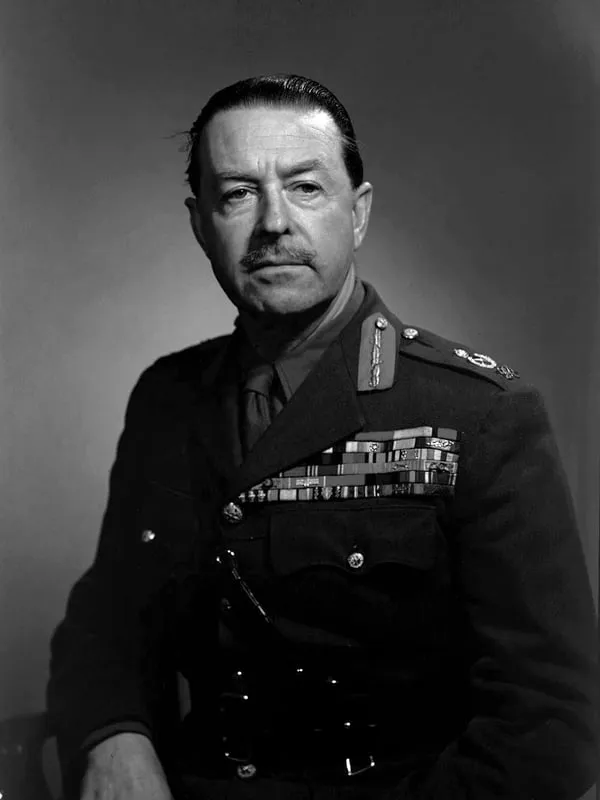
- Born:
- 10 December 1891, London (United Kingdom)
- Died:
- 16 June 1969, Slough (United Kingdom)
- Author:
- Łukasz
- Photo:
- Department of National Defence of Canada, domena publiczna, Wikimedia Commons

Harold Alexander was one of the best-known British commanders of the Second World War and also one of the hardest to judge. The last British general to leave the beaches of Dunkirk in June 1940, he led the retreat from Burma in 1942 and then, as Bernard Montgomery’s superior, commanded the victorious campaign in North Africa. From July 1943 he directed the Allied armies in Sicily and Italy – including the offensive in which the Polish II Corps took Monte Cassino. An elegant aristocrat, calm and courteous, he was superb at reconciling British, Americans, Poles, Frenchmen and soldiers of the Empire, but his critics charged that he could not impose his will on ambitious subordinates. After the war he was Governor General of Canada and Minister of Defence in Winston Churchill’s government.
An aristocrat of the Irish Guards
Harold Rupert Leofric George Alexander was born in London on 10 December 1891, the third son of James Alexander, 4th Earl of Caledon, of an Anglo-Irish family settled in County Tyrone in Ulster. He was educated at Harrow School and briefly considered becoming a painter – he painted throughout his life – but in 1910 he entered the Royal Military College, Sandhurst. In September 1911 he was commissioned as a second lieutenant in the Irish Guards, the regiment to which he remained attached for the rest of his life.
He spent almost the whole of the First World War on the Western Front. As a platoon commander he went through the retreat from Mons in 1914 and was wounded at Ypres. He returned to the front in 1915 and fought at the Battle of Loos, for which he received the Military Cross, and for his part in the Battle of the Somme in September 1916 he was awarded the Distinguished Service Order; the citation called him “the life and soul of the attack”. In the autumn of 1917, as acting lieutenant colonel, he commanded the 2nd Battalion of the Guards at Passchendaele, where he was again lightly wounded, and at the Battle of Cambrai, in which the battalion lost some 320 of its 400 men. In March 1918, during the German Spring Offensive, he commanded the 4th Guards Brigade for a week. Rudyard Kipling, the historian of the Irish Guards, wrote that his men loved him “even when he cursed them sharply for their lapses”.
Latvia, India and the youngest general in the army
After the war, in 1919, Alexander was posted to the Allied military mission in Poland and from there to Latvia, where the War of Independence was being fought. As a temporary lieutenant colonel he commanded the Baltic German Landeswehr, which by then was fighting on the side of the government in Riga, and took part in driving the Bolsheviks out of Latgale. He returned home in May 1920. From 1922 to 1926 he commanded the 1st Battalion of the Irish Guards in Constantinople during the Chanak crisis, in Gibraltar and in London, and in 1926–1927 he passed through the Staff College at Camberley. He was older than many of his fellow students and some of the instructors; among the latter was Bernard Montgomery, who – like Alan Brooke – did not come away with the highest opinion of him.
In 1931 he married Lady Margaret Bingham, daughter of the Earl of Lucan; they had three children and adopted a fourth. After the course at the Imperial Defence College and a series of staff appointments, in 1934 he took command of a brigade at Nowshera on the North-West Frontier of India. In 1935 he fought the Pashtun tribes in Malakand and in the campaign against the Mohmands, in which he served under Claude Auchinleck; he earned a reputation as a commander who climbed the mountain ridges alongside his soldiers, or even ahead of them. In 1937 he was an aide-de-camp to George VI at the coronation, and in October that year, at the age of 45, he was promoted to major general – the youngest general in the British Army. From February 1938 he commanded the 1st Infantry Division at Aldershot.
Dunkirk and the defence of England
In September 1939 Alexander took the 1st Division to France as part of Lord Gort’s British Expeditionary Force. Through eight months of the Phoney War he trained it with exceptional rigour. When the Germans struck in the west on 10 May 1940, the division advanced into Belgium and then, with the rest of the force, fell back towards the sea. During the Dunkirk evacuation Gort returned to England and Alexander took over I Corps, which covered the final hours of the operation. Late in the evening of 2 June, having made sure that no British soldier remained on the beaches – by one account he toured them in a motor launch, calling out through a loudhailer – he left from the mole aboard the destroyer HMS Venomous; the defence of the bridgehead until the end of the evacuation was conducted by the French.
In England he commanded I Corps on the Yorkshire and Lincolnshire coast, and in December 1940 he succeeded Auchinleck at the head of Southern Command. Montgomery served under him there as commander of V Corps; Alexander let him get on with things and the two worked well together, which would matter later. He attracted the notice of Brooke and of Churchill, who visited him often and in 1941 named him commander of a planned expeditionary force (Force 110) that was never sent.
The retreat from Burma
In February 1942, as the Japanese were breaking into Burma, Churchill sent Alexander, now a full general, to take command there with orders to hold Rangoon. He arrived on 5 March, when the city could no longer be defended. On 7 March the British abandoned Rangoon, and the columns carrying the entire staff of Burma Army, with Alexander at their head, ran into a Japanese roadblock near the village of Taukkyan; they escaped encirclement only because the Japanese, pressing on towards the city, lifted it themselves. Alexander then took command of all land forces in Burma and divided the work: the fighting was conducted by the corps commander, William Slim, while he himself handled the politics of the alliance – relations with Chiang Kai-shek and with Joseph Stilwell, who commanded the Chinese armies in Burma. After the defeat at Yenangyaung and the loss of Mandalay he ordered the retreat to India. In May the remnants of the British forces, without most of their equipment, crossed the mountains into Manipur just ahead of the monsoon, bringing the Burma campaign to a close.
The Middle East and victory in Africa
On his return to England Alexander was to command the British First Army in the planned Operation Torch. In August 1942, however, Churchill and Brooke, after a visit to Cairo, decided to remove Auchinleck. Alexander flew into Cairo on 8 August and on 15 August formally became Commander-in-Chief, Middle East, while Montgomery took over the Eighth Army. Churchill gave him a simple directive: to destroy the German-Italian army of Erwin Rommel. Alexander secured reinforcements, equipment and freedom of action for Montgomery, shielded him from the Prime Minister’s impatience and did not meddle in the conduct of his battles. Under his overall command the Eighth Army threw Rommel back at Alam Halfa, won the Second Battle of El Alamein and in January 1943 reached Tripoli.
At the Casablanca Conference it was decided to join the Eighth Army with the Torch forces in Tunisia. In February 1943 Alexander became deputy to Dwight Eisenhower and commander of the new 18th Army Group, comprising the British First Army, the Eighth Army, the American II Corps and the French XIX Corps. He took it over at a moment of crisis, after the American defeat at the Kasserine Pass, put the scattered front in order and over three months carried the Tunisian campaign through to its end. Omar Bradley credited his patience and experience with the fact that American field command “came of age”. After the surrender of the Axis forces on 13 May 1943, when some 250,000 soldiers went into captivity, Alexander signalled Churchill: “Sir, it is my duty to report that the Tunisian campaign is over.” All enemy resistance had ceased, he went on, and the Allies were masters of the North African shores.
Sicily, Salerno and the winter before Cassino
Alexander’s command was renamed the 15th Army Group, which under Eisenhower’s overall command carried out the landing in Sicily in July 1943. He had two armies under him, led by difficult personalities: Montgomery’s British Eighth Army and George Patton’s American Seventh Army. Alexander’s plan gave the Americans the role of covering the British left flank; Patton extracted his consent to a drive westwards and the capture of Palermo, while Montgomery became bogged down on the Catania plain and below Etna. The island was clear by the middle of August, but some 100,000 German and Italian soldiers managed to cross the Strait of Messina; critics, Montgomery foremost among them, accused Alexander of failing to direct the campaign coherently.
On 3 September 1943 the Eighth Army landed in Calabria, and on 9 September Mark Clark’s American Fifth Army came ashore at Salerno, where a German counter-attack very nearly drove it into the sea. Alexander backed the commander of the British X Corps, who rejected any thought of evacuation, and induced Clark to remove the commander of VI Corps, General Ernest Dawley. Through the autumn both armies advanced northwards ever more slowly, and in December they came to a halt before the German Winter Line and the Gustav Line, held by the troops of Albert Kesselring.
When Eisenhower was appointed to command the invasion of France in December 1943, he wanted to take Alexander with him as land forces commander; Bradley would have preferred him to Montgomery. Brooke, however, pushed through the decision to keep him in Italy, and it was Montgomery who went to Normandy. Alexander helped to devise the plan for the landing at Anzio (Operation Shingle), strongly backed by Churchill; but General John Lucas’s VI Corps, too weak for its task, was pinned down in the beachhead, and the attacks on Cassino in January and February broke down. Alexander took responsibility for the decision to bomb the abbey on 15 February 1944, which had been requested by the commander of the New Zealand Corps, General Bernard Freyberg; the ruins became an even better fortress for the Germans, and the third battle in March also ended in failure.
Diadem, Monte Cassino and the quarrel over Rome
In the spring of 1944 Alexander and his chief of staff, General John Harding, prepared Operation Diadem – an offensive by the whole 15th Army Group, for which the main body of General Oliver Leese’s Eighth Army was secretly shifted from the Adriatic to Cassino. The attack opened at 11 p.m. on 11 May with a hurricane bombardment; General Władysław Anders’s Polish II Corps was given the task of taking the monastery massif, the British and Indians crossed the Gari, and General Alphonse Juin’s French broke through in the Aurunci Mountains. On 18 May a Polish patrol raised a pennant over the ruins of the abbey.
Alexander’s design was for VI Corps to break out of the Anzio beachhead towards Valmontone, cut Route 6 and close the line of retreat of the German Tenth Army. After the link-up with the beachhead on 25 May, however, Clark turned the main strength of Lucian Truscott’s corps north-west towards the Alban Hills and Rome, leaving too weak a force at Valmontone. Alexander was told only after the event; he did not countermand the order, judging that an open conflict with the American would harm the alliance. The Tenth Army slipped away northwards, and on 4 June Clark entered Rome. Most historians regard this decision as the greatest mistake of the Italian campaign, and Alexander himself as a commander too accommodating towards his subordinates.
Supreme commander in the Mediterranean
In the summer of 1944 Alexander had to give up seven divisions, including VI Corps and the French, for the landing in Provence, and the autumn offensive against the Gothic Line bogged down in the Apennines. On 12 December 1944 he succeeded Henry Maitland Wilson as Supreme Allied Commander, Mediterranean; Clark took over the 15th Army Group. He also received his field marshal’s baton, backdated to 4 June 1944 so that he would once again be senior to Montgomery. In April 1945 the spring offensive smashed the German forces in the Po valley; the Poles entered Bologna on 21 April. After secret talks with SS General Karl Wolff, the surrender of the German forces in Italy was signed at Caserta on 29 April and came into effect on 2 May – the first surrender of an entire army group in the west. In May and June Alexander also faced a dispute with Josip Broz Tito over Trieste, which ended with the region being divided.
Canada, the ministry and an assessment
After the war Alexander was in the running to become Chief of the Imperial General Staff, but he accepted an offer from Prime Minister William Lyon Mackenzie King and on 12 April 1946 was sworn in as Governor General of Canada, by then as Viscount Alexander of Tunis. He was the last governor general to have been born in Britain. He travelled widely, in 1949 visiting Newfoundland, newly joined to Canada, in 1950 bade farewell to soldiers leaving for the Korean War, and became very popular. Early in 1952 Churchill brought him back to London as Minister of Defence; Alexander, who was no politician, held the post until October 1954 in the shadow of a Prime Minister who took the most important decisions himself. He was created Earl Alexander of Tunis in 1952, received the Order of Merit in 1959 and in 1960–1965 was Constable of the Tower. When a British military court sentenced Kesselring to death in 1947, Alexander, his former opponent, spoke in favour of commuting the sentence. He died of a ruptured aorta in Slough on 16 June 1969 and was buried at Ridge in Hertfordshire.
Opinions of Alexander are divided to this day. Harold Macmillan valued his calm and his skill at reconciling allies; Brooke thought he needed a chief of staff “who will think for him”; Montgomery called him incompetent; and Basil Liddell Hart wrote that he would have been a greater commander “if he had not been so nice a man and so great a gentleman”. For Poles he remains above all the commander under whose orders the II Corps fought from Monte Cassino to Bologna.
Sources
Commanded in battles
(11)- 26 May – 4 June 1940Battle of DunkirkWestern Front
- 20 January – 20 May 1942Burma campaign (1942)Pacific
- 30 August – 5 September 1942Battle of Alam el HalfaMediterranean
- 23 October – 11 November 1942Second Battle of El AlameinMediterranean
- 17 November 1942 – 13 May 1943Tunisian campaignMediterranean
- 14–24 February 1943Battle of the Kasserine PassMediterranean
- 10 July – 17 August 1943Allied invasion of SicilyMediterranean
- 9–16 September 1943Battle of SalernoMediterranean
- 17 January – 18 May 1944Battle of Monte CassinoMediterranean
- 22 January – 5 June 1944Battle of AnzioMediterranean
- 5 April – 2 May 1945The spring 1945 offensive in ItalyMediterranean
Mentioned in battles
(04)Often appears with
People who appear in the same events.
On the timeline
(85)1940
1942
1943
January
February
March
April
May
July
August
September
- 03
- The Armistice of CassibileOn 3 September 1943 Castellano and Bedell Smith signed a secret “short armistice” in Sicily. Italy surrendered, but this was announced only on 8 September.
- Operation BaytownOn 3 September 1943 the British Eighth Army's XIII Corps crossed the Strait of Messina to Calabria. The Allies were back on the mainland almost unopposed.
October
November
December
1944
January
February
March
May
June
July
August
- 15
- Key eventOperation DragoonOn 15 August 1944 the US VI Corps landed in Provence between Cavalaire and Saint-Raphaël. Resistance was weak, and losses on the first day were light.
- The Allies before the Gothic LineIn mid-August 1944 the Allies stood on the Arno and Metauro, before the Gothic Line's outworks. Eighth Army was secretly regrouping on the Adriatic to attack.