Japan
Hitoshi Imamura
Commander of the 5th Division (1938–1940), the 16th Army on Java (1941–1942) and the 8th Area Army at Rabaul (1942–1945), general
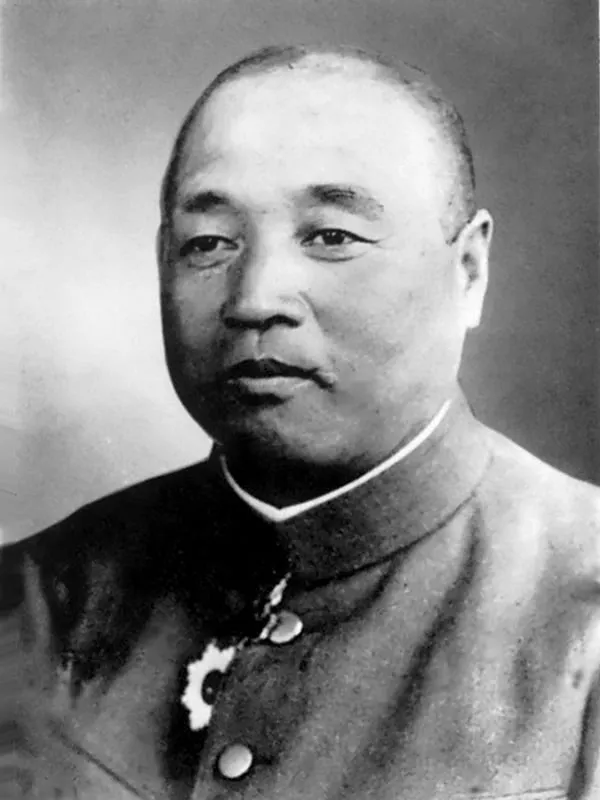
- Born:
- 28 June 1886, Sendai (Japan)
- Died:
- 4 October 1968, Tokyo (Japan)
- Author:
- Łukasz
- Photo:
- autor nieznany, domena publiczna, Wikimedia Commons

Hitoshi Imamura was one of the few Japanese generals respected by his subordinates and his enemies alike. In March 1942 he conquered Java, the most valuable island of the Dutch East Indies, in nine days, and then governed it more mildly than his superiors wished. From the end of 1942 he commanded the forces in the Solomon Islands and New Guinea from Rabaul: it was he who ordered the evacuation of Guadalcanal and he who turned Rabaul into an underground fortress the Allies preferred not to storm. After the war an Australian court sentenced him to ten years in prison for crimes committed by his soldiers. Imamura considered the sentence too light and kept himself in isolation for the rest of his life.
A judge’s son from Sendai
He was born on 28 June 1886 in Sendai (PL) in northern Japan, the second son of the judge Torao Imamura. His father died in the spring of 1904, and Hitoshi entered the Military Academy. He graduated in 1907 in the same, nineteenth, class as Masaharu Homma, who remained his friend for life. In 1915 he finished top of his class at the Army Staff College and received an honorary sword from the emperor; Hideki Tōjō came eleventh.
He spent much of his early career on staffs and in posts abroad. From 1918 he was assistant military attaché in London, and in 1927 attaché in British India. He therefore knew the Western armies and their capabilities well, which later set him apart from many of his colleagues.
Manchuria and China
In August 1931 Imamura became head of the operations section of the General Staff. A month later officers of the Kwantung Army staged the Mukden Incident and began occupying Manchuria without Tokyo’s consent. Imamura was among the officers who opposed such unauthorised action by troops in the field, seeing in it a breakdown of discipline and a risk of conflict with the rest of the world. He also dealt with the aftermath of a failed officers’ plot of October 1931. He then commanded the 57th Infantry Regiment, taught at the chemical warfare school at Narashino and, in March 1935, as a major general, took over the 40th Infantry Brigade. In 1936 he returned to Manchuria as deputy chief of staff of the Kwantung Army.
In March 1938 he became a lieutenant general, and in November commander of the 5th Division fighting in China. In November 1939 his division landed on the Gulf of Tonkin and on 24 November took Nanning, cutting one of China’s supply routes from French Indochina. A few weeks later, during the Chinese Winter Offensive, his troops lost heavy fighting for the Kunlun Pass, one of the greatest Chinese successes of that winter.
In 1940 Imamura moved to the Inspectorate General of Military Training. There he directed the work on the soldiers’ code Senjinkun, issued in January 1941 in the name of the army minister Tōjō. The code was meant to restore discipline after the looting and rape in China, but it is remembered mainly for its ban on surrender. Imamura later admitted that the text had come out too long and that it should have forbidden harming civilians simply and briefly.
The conquest of Java
In November 1941, after a few months in command of the 23rd Army in southern China, Imamura took over the 16th Army, designated for the conquest of the Dutch East Indies. He was subordinate to Hisaichi Terauchi, commander of the Southern Army. In February 1942 his soldiers seized the oilfields near Palembang on Sumatra, and on 1 March nearly a hundred transports landed troops on Java.
For Imamura himself the landing began in the water. On the night of 28 February to 1 March, in the Battle of Sunda Strait, torpedoes fired by Japanese cruisers at Allied warships hit their own transports. Among those sunk was the ship carrying the 16th Army staff. The general spent about three hours in oil-covered water before he was picked up. He lost his radio sets and codes, so for several days he could not command the groups landing in central and eastern Java. When the navy apologised, he agreed to keep the matter quiet.
The campaign moved fast. After the Allied naval defeat in the Java Sea the defenders could expect no reinforcements. On 8 March at Kalidjati Imamura demanded the unconditional surrender of the whole Dutch army on Java and threatened to bomb Bandung; the next day General Hein ter Poorten accepted the terms. According to Japanese figures about 93,000 Dutch soldiers and several thousand British, American and Australian troops were taken prisoner. The nine-day fall of Java was one of Japan’s fastest victories of the war.
Governor of Java
As head of the military administration Imamura set out to win over the local population. He freed the leaders of the independence movement, Sukarno and Mohammad Hatta, from Dutch exile and admitted Indonesians to official posts. He had the refineries restarted and lowered the price of oil, opened schools and forbade his soldiers to loot. When Japan began to run short of cloth, he refused to ship large quantities of white cotton out of Java, because the Javanese needed it in daily life and for burials. He also allowed the independence song, banned by the Dutch, to be sung.
This policy aroused resentment at Southern Army headquarters and in Tokyo. The Chief of the General Staff, Hajime Sugiyama, admonished him in person, and Tōjō sent two senior ministry officers to Java who demanded a firmer hand, as in Singapore. Imamura replied that he was following the official guidelines for occupied territories, and in the end Tokyo accepted his results. His leniency was, however, relative. The occupation of Indonesia as a whole, with its forced labour and requisitions, is remembered by Indonesians as a hard time, and claims that Indonesian textbooks praise Imamura’s rule have no basis.
Rabaul
In November 1942 Imamura took command of the newly formed 8th Area Army and in the second half of the month arrived at Rabaul on New Britain. Under him were the 17th Army of Harukichi Hyakutake in the Solomons and the 18th Army of Hatazō Adachi in New Guinea. He came with orders to retake Guadalcanal, but within a few weeks it became clear that the starving army on the island could not be supplied. At the end of December the decision to withdraw was taken, and at the beginning of February 1943 destroyers in Operation Ke took about 10,000 soldiers off the island.
Imamura had known Admiral Isoroku Yamamoto for years and worked well with him. According to some accounts, in April 1943 he advised him against the inspection flight during which the Americans shot down the admiral’s aircraft. Earlier, in March, Allied aircraft had sunk a convoy carrying reinforcements to Lae in the Battle of the Bismarck Sea, cutting the Japanese sea route to New Guinea. On 1 May 1943 Imamura was promoted to general. In the autumn Tokyo drew a new defence line far to the west, and his forces were from then on only to delay the Allies.
Guadalcanal had taught Imamura that an island cut off from supplies starves. He had rice and vegetable fields laid out around Rabaul and worked in the garden himself as an example, while the garrison dug kilometres of tunnels to hide hospitals, stores and workshops. When the great raids on Rabaul began in the autumn of 1943 and the Allies took western New Britain, Bougainville and the Admiralty Islands, the fortress was cut off. In January 1944 Imamura flew to Bougainville and ordered Hyakutake to attack the American beachhead at Torokina; in March the attack collapsed with heavy losses. Rabaul itself, with a garrison estimated at almost 100,000 soldiers and sailors, held out to the end of the war. The Allies, aware of its defences, bypassed it and left it isolated.
Trial and voluntary imprisonment
On 6 September 1945 Imamura and Vice Admiral Jin’ichi Kusaka signed, aboard the British aircraft carrier HMS Glory (PL), the surrender of all Japanese forces in New Guinea, New Britain, Bougainville and the surrounding islands to the Australian general Vernon Sturdee. According to later accounts he then tried to take his own life with poison that turned out to have lost its potency.
In April 1946 he was sent to the camp for war crimes suspects at Rabaul. Soldiers of his army had murdered Allied prisoners, and Imamura was charged with failing in his duty to control his subordinates, thereby allowing them to commit brutal atrocities. He himself asked the Australians to speed up his trial, because the cases of his subordinates depended on its outcome. In May 1947 an Australian military court at Rabaul sentenced him to ten years in prison. Imamura was then taken to Java, where, before a Dutch court in Batavia, the prosecutor demanded the death penalty, but in December 1949 the general was acquitted for lack of evidence.
In 1950 he returned to Japan and was to serve his sentence in Sugamo Prison in Tokyo. He asked, however, to be allowed to serve it alongside his former subordinates in the Australian prison on Manus, and he was held there from March 1950. He was moved to Sugamo in 1953, after the Manus prison closed, and was released in November 1954.
Last years and assessment
After leaving prison Imamura built a small hut in the garden of his Tokyo house and shut himself away in it, believing that he had been punished too lightly for his soldiers’ suffering and his subordinates’ crimes. He lived modestly on his military pension. He wrote extensive memoirs and gave the income from them to the families of the fallen and the executed. He helped former subordinates even when he suspected that someone was only posing as one. He died in Tokyo on 4 October 1968, aged 82, and was buried in his native Sendai.
In Japan Imamura is held up as a model commander who took responsibility for his men. Military historians praise his sober judgement: he carried out one of the most efficient amphibious operations of the war, and at Rabaul he built defences that made an assault not worth the cost. The occupation of Java under his rule was milder than in other territories conquered by Japan, though it remained an occupation. The Australian court’s verdict is a reminder that crimes against prisoners were committed under his command too, and that as their commander he bore responsibility for them.
Sources
Commanded in battles
(02)Mentioned in battles
(06)Often appears with
People who appear in the same events.