Japan
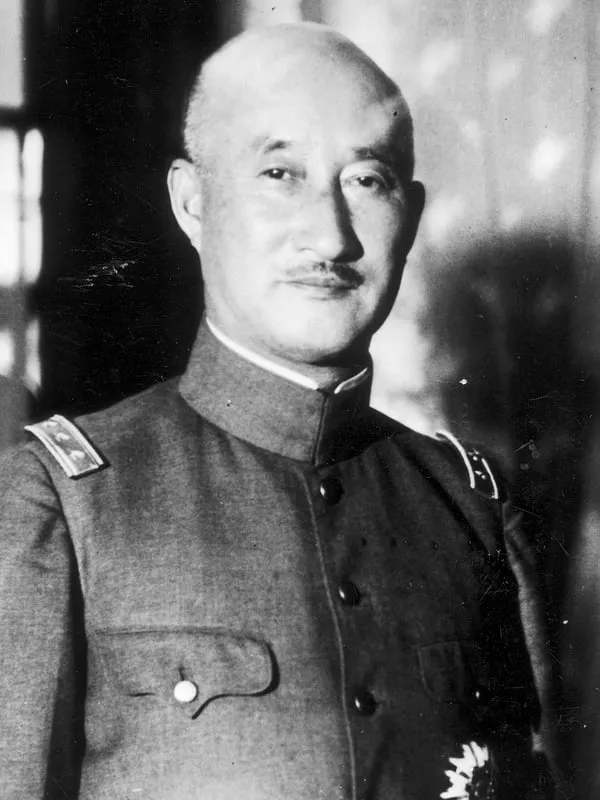
Hisaichi Terauchi
Army minister (1936–1937), commander of the North China Area Army (1937–1938) and the Southern Army (1941–1945), field marshal
- Born:
- 8 August 1879, Tokyo (Japan)
- Died:
- 12 June 1946, Rengam, Johor (Malaysia)
- Author:
- Łukasz
- Photo:
- autor nieznany, domena publiczna, Wikimedia Commons

Hisaichi Terauchi was an aristocrat in uniform: the son of a field marshal and prime minister, a count and a wealthy man. As army minister after the mutiny of February 1936 he purged the army and restored a rule that allowed it to bring down governments, and in January 1937 he brought down a cabinet himself. In the war with China he commanded an army in northern China, and in 1941–1945 the Southern Army, which within a few months conquered the Philippines, Malaya, the Dutch East Indies and Burma. Towards the end of the war he was responsible for the failed defence of the Philippines. He died in British captivity before anyone could bring him to trial.
A prime minister’s son
He was born on 8 August 1879 in Tokyo, the eldest son of Masatake Terauchi, an officer from the former domain of Chōshū and later the first governor-general of Korea and prime minister. When his father went to France, four-year-old Hisaichi was sent to live with an aunt in Yamaguchi Prefecture, the Terauchi family’s home region, which is why it is sometimes given as his birthplace. He graduated from the Military Academy in 1899, in the 11th class, and as a young Guards officer fought in the Russo-Japanese War. In 1909 he graduated from the Army Staff College.
Before the First World War he was assistant military attaché in Austria-Hungary (PL), and in 1914 he was transferred to Germany. In November 1919, on his father’s death, he inherited the title of count. The same year he became a colonel and commander of a Guards regiment.
General and minister
His promotion was swift: in 1924 he became a major general, in 1927 chief of staff of the Japanese army in Korea, and in 1929 a lieutenant general. He commanded in turn the 5th Division in Hiroshima and the 4th Division in Osaka. In Osaka in 1933 a quarrel between a soldier who had crossed against a red light and a policeman grew into a conflict between the army and the Home Ministry. Terauchi demanded an apology from the police, and it ended in an agreement that in practice placed soldiers beyond the reach of the civilian police. In 1934 he took command of the forces on Taiwan, and in October 1935 he was promoted to general.
After the young officers’ mutiny of 26 February 1936 Terauchi, who was not entangled in either faction, seemed the right man to restore order. On 9 March he became army minister in the government of Kōki Hirota. While the cabinet was still being formed he objected to several candidates for ministerial posts, among them Shigeru Yoshida, who was considered too liberal. Together with General Staff officers he carried out a purge: by the end of April nine of the army’s twelve full generals had been retired, among them the leaders of the Kōdō-ha faction. The rule that only an officer on the active list could be army or navy minister was also restored. From then on it was enough for the army to refuse to name a minister, and no government could be formed or survive.
On 21 January 1937 the deputy Kunimatsu Hamada accused the army in parliament of aiming at dictatorship. Terauchi replied that Hamada had insulted the army. Hamada then offered to commit suicide if a single insulting word could be found in the record, and said that if none could, the minister should commit suicide. The angry Terauchi demanded that the house be dissolved, and when the prime minister refused, he resigned. The Hirota government fell. When the moderate general Kazushige Ugaki was named prime minister, the army refused him a minister and Ugaki failed to form a cabinet.
War in China
In February 1937 Terauchi became Inspector General of Military Training, the third most important post in the army. After the Marco Polo Bridge Incident, in August 1937, he took command of the new North China Area Army. His forces advanced south along the railways, pushed into Shanxi and in December, after crossing the Yellow River, took Jinan. Terauchi was an aggressive commander who pressed forward against Tokyo’s caution. When the General Staff wanted to halt operations, he told its envoy that Xuzhou had to be taken. After the defeat at Taierzhuang Tokyo agreed, and on 25 May 1938 Terauchi and General Shunroku Hata made a ceremonial entry into Xuzhou. The Chinese armies, however, slipped out of the encirclement. In December 1938 Terauchi returned to Japan as a member of the Supreme War Council.
The Southern Army
On 6 November 1941 Terauchi became commander of the newly created Southern Army, responsible for the whole offensive to the south. Under him were Masaharu Homma’s 14th Army in the Philippines, Tomoyuki Yamashita’s 25th Army in Malaya, Hitoshi Imamura’s 16th Army in the Dutch East Indies and the 15th Army, which conquered Burma. By May 1942 his forces had taken the whole area. Terauchi criticised Homma for treating the Filipinos too softly and Imamura for concessions to the Indonesian nationalists. His unflattering reports probably contributed to Homma’s removal.
Terauchi had his headquarters first in Saigon, then in Singapore. Under his command the Burma Railway was built, on which thousands of Allied prisoners of war and tens of thousands of Asian forced labourers died of exhaustion, hunger and disease. In June 1943 he was made field marshal (gensui; according to some sources on 6 June, according to others on 21 June). In 1944 he approved the offensive against Imphal, which ended in the heaviest defeat of the Japanese army in Burma. In July that year, after the fall of the Tōjō government, he was considered as the next prime minister, but it was decided that he could not be recalled from the front.
In May 1944 Terauchi moved his headquarters to Manila. When the Americans landed on Leyte in October, it was he who, in line with the wishes of Imperial General Headquarters, ordered Yamashita on 22 October, against his judgement, to fight a decisive land battle on the island. The reinforcements thrown into Leyte were destroyed, and the defence of Luzon was weakened. When the Philippines were in danger of being lost, Terauchi moved back to Saigon. Yamashita wrote bitterly in his diary that the field marshal was living there in luxury and playing shogi.
Stroke, surrender and death
In the spring of 1945, as the British closed on Rangoon, Terauchi suffered a stroke; sources give the date as 10 April or 10 May. According to some sources his staff concealed it from Tokyo. On 12 August at Đà Lạt he received the Indonesian leaders Sukarno and Mohammad Hatta and announced that Indonesia would soon be granted independence. After the emperor’s broadcast Prince Haruhito Kan’in flew to Saigon to convey Hirohito’s will, and Terauchi submitted to it. On the night of 27–28 August his chief of staff signed the preliminary surrender agreement in Rangoon.
Lord Louis Mountbatten sent his own doctor to Saigon, who confirmed that the field marshal was unfit to travel. On 12 September 1945 in Singapore the surrender of some 680,000 soldiers of the Southern Army was signed on his behalf by General Seishirō Itagaki. On 30 November in Saigon Terauchi personally handed his swords to Mountbatten, among them a family short sword from the fifteenth century, now kept in the Royal Collection at Windsor. Moved to Malaya, he died after another stroke at Rengam in Johor on 12 June 1946. He was buried in the Japanese cemetery in Singapore.
Assessment
Terauchi never stood trial. As commander of the Southern Army he was responsible for an area that saw mass crimes, from the building of the Burma Railway to the murder of prisoners and civilians. Some historians also attribute to him an order to kill Allied prisoners in the event of an invasion, but this was never established in court. Neither the Americans nor his Japanese colleagues thought highly of his talents as a commander; his staff admired his frugal way of life, while Yamashita considered him a sybarite. He mattered more in Tokyo than on the battlefield: as army minister in 1936–1937 he did more than anyone else to subordinate governments to the army. It was he, a prime minister’s son, who closed the way to the civilian politicians who might still have halted Japan’s march to war.
Sources
Commanded in battles
(01)Mentioned in battles
(04)Often appears with
People who appear in the same events.