Italy
Rodolfo Graziani
Vice-Governor of Cyrenaica (1930–1934), commander of the southern front in Ethiopia (1935–1936), Viceroy of Ethiopia (1936–1937), Minister of National Defence of the Italian Social Republic (1943–1945)
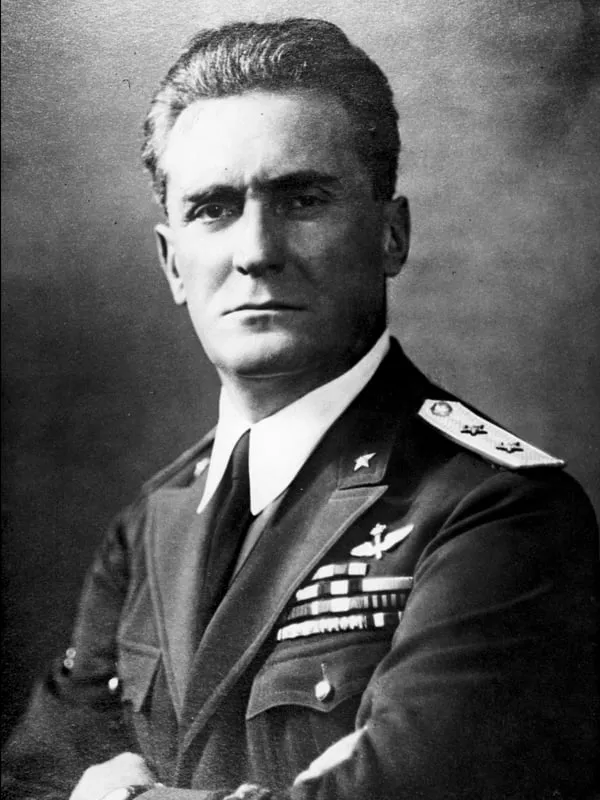
- Born:
- 11 August 1882, Filettino (Kingdom of Italy)
- Died:
- 11 January 1955, Rome
- Author:
- Natalia
- Photo:
- autor nieznany, domena publiczna, Wikimedia Commons

Rodolfo Graziani was the most ruthless of Italy’s colonial generals and one of the most hated men in the history of Africa. Fascist propaganda called him the “pacifier of Libya”; Libyans called him the “butcher of Fezzan”, and Ethiopians the “butcher of Ethiopia”. In Libya he confined tens of thousands of nomads in concentration camps; in the war with Ethiopia he commanded the southern front and was among the first to use poison gas; and as viceroy he was responsible for the massacre in Addis Ababa in February 1937 and the slaughter of the monks of Debre Libanos. In the Second World War he suffered a defeat in North Africa that forced Hitler to send the Afrika Korps there, and after Mussolini’s fall he was the only Marshal of Italy to stand by the dictator. He never answered for his crimes in Africa, and in Italy he is still revered by neo-fascists.
Early life and the Great War
He was born on 11 August 1882 in Filettino, a mountain village in Lazio, the son of the local doctor. He was educated at the seminary in Subiaco and at a grammar school (liceo) in Rome, and because his family could not afford the military academy at Modena, he began to study law. In 1903 he joined the army as a reserve officer cadet, and in 1906 he passed the examination for a regular commission and was posted as a second lieutenant to the 1st Grenadier Regiment in Rome. His first overseas posting was to Eritrea, where he learned Arabic and Tigrinya. In 1911 he was bitten by a venomous snake and, after lengthy treatment, returned to Italy, and so missed the war with Turkey over Libya.
During the First World War he fought on the Italian front, was wounded and was decorated many times. In 1918, at the age of 36, he became the youngest colonel in the Italian army. After the war, in the years of revolutionary strikes known as the Biennio Rosso (the “two red years”), he was stationed in Parma, where left-wing radicals are said to have sentenced him to death. For a time he tried, without success, to make a living in business, and in 1921 he returned to the army.
The pacifier of Libya
In 1921 he was sent to Libya, which Italy had taken from Turkey in 1912 but had lost almost entirely during the First World War. Graziani made his name as a commander of fast columns made up of lorry-borne infantry, native cavalry and camel troops, supported by aircraft. He took part in the reconquest of Tripolitania, for which he was given honorary membership of the Fascist Party, in 1929–1930 he conquered the Fezzan, and in January 1931 he captured the Kufra oases, the last stronghold of the Senussi brotherhood in the Sahara.
In 1930 he became Vice-Governor of Cyrenaica, where an uprising led by an elderly teacher of the Koran, Omar al-Mukhtar, had been going on for almost twenty years. His superior was the Governor of Libya, Marshal Pietro Badoglio. Both men concluded that the uprising could not be crushed as long as the guerrillas had the support of the population. In the summer of 1930 the nomadic tribes of the Jebel Akhdar uplands – some 100,000 people in all, roughly half the population of Cyrenaica – were driven with their herds across the desert to camps surrounded by barbed wire on the coast, at Marsa el Brega, Soluch, Agedabia and elsewhere. The livestock perished, and people died of hunger, disease and exhaustion. Historians estimate that several tens of thousands died in the camps and during the deportations. Along the border with Egypt the Italians built a barbed-wire fence some 270 kilometres long, which cut the rebels off from their supplies. On 11 September 1931 al-Mukhtar was captured, and on 16 September, after a summary trial, he was hanged in the camp at Soluch in front of thousands of prisoners. At the beginning of 1932 Badoglio declared the fighting over. In May 1934 Graziani handed Cyrenaica over to his successor.
The southern front in Ethiopia
In 1935 Mussolini appointed him Governor of Italian Somaliland and commander of the southern front in the coming war with Ethiopia. The main thrust was to be delivered from Eritrea by Marshal Emilio De Bono, while Graziani was to stay on the defensive and tie down Ethiopian forces. From the first days of the war, which began on 3 October 1935, he ignored these instructions: he attacked Ethiopian outposts in the Ogaden and, after heavy fighting, took the fort of Gorahei in November. On 27 October Mussolini authorised him to use poison gas “as a last resort”, and in mid-December, at the express request of Graziani, who demanded “freedom to use asphyxiating gases” against the “barbarian hordes”, he renewed the authorisation. The aircraft of the southern front dropped mustard-gas bombs on the columns of Ras Desta Damtew, son-in-law of Emperor Haile Selassie I, and on the town of Negele, and on 30 December they bombed a Swedish Red Cross field hospital near Dolo.
In January 1936 Graziani routed Desta’s army in the valley of the Genale Doria river and on 20 January took Negele Boran. It was the first great Italian victory of the war. In April he broke through the fortifications of Dejazmach Nasibu Zeamanuel in the Ogaden, and on 8 May, three days after Badoglio had entered Addis Ababa, he captured Harar. In May 1936 he received the baton of a Marshal of Italy, and soon afterwards the title of Marquis of Neghelli. The jealousy and dislike between him and Badoglio, who claimed all the credit for the victory, lasted from then on until the end of both men’s lives.
Viceroy of Ethiopia
On 11 June 1936 Graziani succeeded Badoglio as Viceroy and Governor-General of Italian East Africa. The country had been conquered only on paper: the Italians held the towns and roads, while the remnants of the Ethiopian army and guerrilla bands operated even near the capital. Mussolini ordered him to shoot all captured rebels and to pursue a “policy of terror and extermination”. Graziani carried out these orders zealously. Prisoners and people suspected of helping the guerrillas were shot, public gallows went up in Addis Ababa, and thousands of people were held in camps on the Somali coast. In February 1937 Ras Desta, who had been captured, was shot.
On 19 February 1937, during a ceremony to mark the birth of a son to the heir to the throne, two young Eritreans, Abraham Deboch and Mogos Asgedom, threw several grenades into the crowd of dignitaries. Graziani was seriously wounded by shrapnel. That same day the secretary of the local Fascist Party organisation, Guido Cortese, gave the Blackshirts and Italian civilians a free hand. For three days houses were burnt and the inhabitants of the capital were killed, after which educated Ethiopians, including members of the resistance and aristocrats, were shot. The number of victims is disputed: the Italian authorities at the time spoke of several hundred, Ethiopia after the war of 30,000, while modern historians give figures ranging from several thousand to almost 20,000 dead. Graziani, convinced that the clergy had helped the assassins, ordered in May 1937 the shooting of the monks of the country’s most important monastery, Debre Libanos, and of the pilgrims staying there. According to Italian reports more than 300 people were killed; according to later research, possibly several times as many. Terror did not break the resistance but fanned the uprising. At the end of 1937 Mussolini recalled Graziani and replaced him with the Duke of Aosta, Prince Amedeo of Savoy, who was to pursue a milder policy. Graziani returned to Italy at the beginning of 1938.
Defeat in North Africa
On 3 November 1939, when war was already raging in Europe and Italy was still Germany’s “non-belligerent” ally, he became Chief of the General Staff of the Army. After Italy entered the war in June 1940 and Marshal Italo Balbo was killed, shot down in error by his own anti-aircraft guns over Tobruk, Graziani became Governor of Libya and commander of the forces in North Africa. Mussolini demanded an immediate offensive against Egypt, but Graziani, aware of his shortages of weapons and transport, delayed. Under threat of dismissal, on 13 September 1940 he set off eastwards with the Tenth Army and after a few days halted at Sidi Barrani, well over 100 kilometres short of the main British positions, where he built fortified camps. On 9 December 1940 much smaller but motorised British forces launched Operation Compass. Within two months they destroyed the Tenth Army at Sidi Barrani, Bardia, Tobruk and Beda Fomm and occupied the whole of Cyrenaica. Some 130,000 Italian soldiers were taken prisoner. Graziani, in despair, himself asked for the help of the German armoured troops he had previously turned down. In February 1941 he was recalled, and the Afrika Korps arrived in Libya. A commission of inquiry examined his conduct but in 1942 ended its work without reaching any conclusions, and the marshal remained without a post for more than two years.
Mussolini’s minister at Salò
After Mussolini was overthrown in July 1943 and Italy capitulated in September, Graziani – unlike Badoglio, who had become head of the royal government – accepted an offer to join the government of the puppet Italian Social Republic, set up by the Germans in the north of the country. As Minister of National Defence, and from 1944 Minister of the Armed Forces, he built up the republic’s army, called up successive age groups and threatened draft evaders with death. Conscription, however, drove thousands of young men into the partisan movement. The Salò forces fought mainly against the partisans and within German armies, and Graziani, formally commander of the Liguria Army Group, had no full authority over them. At the end of April 1945, as Mussolini fled Milan, Graziani stayed near Como and gave himself up to the Americans.
Trial and final years
The Allies held him until 1946, partly in Algeria, to protect him from lynching. Ethiopia demanded his extradition and trial for war crimes, and in 1948 the United Nations War Crimes Commission found that there were grounds for charging him and several other Italians. Britain and the United States, however, had no intention of pressing Italy, and Rome handed no one over. Graziani was tried by an Italian court solely for collaboration with the Germans. The trial began in October 1948, and on 2 May 1950 a military court sentenced him to 19 years’ imprisonment. Thanks to amnesties and credit for time served on remand, he was released after a few months. He wrote a memoir, Ho difeso la patria (“I Defended the Fatherland”), in which he presented himself as a soldier carrying out orders. In 1953 he became honorary president of the neo-fascist Italian Social Movement, although he soon came into conflict with its leaders. He died in Rome on 11 January 1955. Crowds giving the fascist salute attended his funeral.
Significance
Graziani embodied that face of fascist imperialism which Europe long preferred to pass over in silence. In Libya and Ethiopia he employed methods that a few years later the Germans would apply on a vast scale in occupied Europe: concentration camps for civilians, collective responsibility, the extermination of elites and mass executions as reprisals for assassinations. The gas he used in Ethiopia violated the Geneva Protocol, and the world, which knew about it from the accounts of Red Cross doctors and from the emperor’s speech in Geneva, accepted it without consequences. After the war, unlike German and Japanese commanders, he never answered for these crimes before any tribunal. His memory still divides Italy: in 2012 the town of Affile, where he had lived, built him a mausoleum with public money, which provoked protests from Ethiopia and from Italian anti-fascists; the mayor was convicted at first instance of glorifying fascism, although the Court of Cassation later quashed the verdict.
Sources
Commanded in battles
(04)Mentioned in battles
(04)Often appears with
People who appear in the same events.