Germany
Hermann Balck
Commander of the 1st Rifle Regiment (1939–1940), 11th Panzer Division (1942–1943), XLVIII Panzer Corps (1943–1944), 4th Panzer Army (August–September 1944), Army Group G (September–December 1944) and 6th Army (1944–1945)
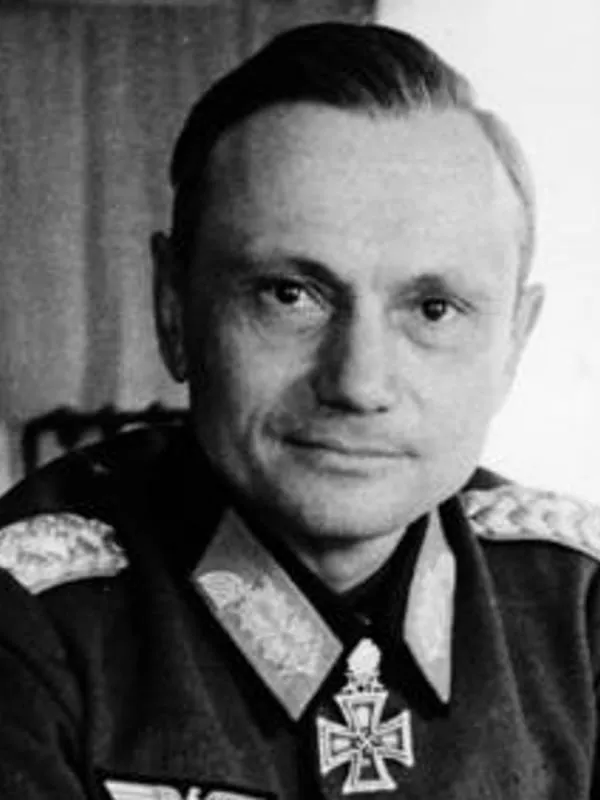
- Born:
- 7 December 1893, Gdańsk-Wrzeszcz (Danzig-Langfuhr), West Prussia (German Empire)
- Died:
- 29 November 1982, Asperg (West Germany)
- Author:
- Natalia
- Photo:
- Bauer, CC BY-SA 3.0 DE, Wikimedia Commons

Hermann Balck was one of the ablest German armoured commanders of the Second World War and at the same time one of the least known outside specialist circles. In May 1940 his rifle regiment was the first to cross the Meuse at Sedan; in December 1942 his 11th Panzer Division smashed one Soviet tank corps after another on the Chir; and in 1944 he commanded in turn a corps and an army in Ukraine and Poland, an army group in Lorraine and an army in Hungary. American officers who studied his battles after the war regarded him as a master of tactics. Yet the same general in 1944 had a subordinate officer shot without trial and ordered the destruction of several small French towns in the Vosges, for which he was convicted after the war.
A general’s son
Georg Otto Hermann Balck was born on 7 December 1893 in Langfuhr, today Wrzeszcz, a district of Gdańsk. He came from a family with a long military tradition; his father, William Balck, was the author of a tactics manual read in many armies, and in the First World War he commanded a division and received the Pour le Mérite. The son joined the army in April 1913 as an officer cadet in the Hanoverian 10th Jäger Battalion at Goslar, and from February 1914 attended the war school in Hanover.
The war cut his studies short. Balck fought as an officer of mountain riflemen on the Western, Eastern, Italian and Balkan fronts, commanded a company for nearly three years and ended the war at the head of a machine-gun company. He was wounded seven times. In the autumn of 1918 he was recommended for the Pour le Mérite, but the war ended before the recommendation had passed through every level.
A cavalryman who did not want the staff
After the war Balck commanded a company in a volunteer Jäger battalion, and in 1919 he entered the Reichswehr. From 1923 he served for more than ten years in the 18th Cavalry Regiment. Twice he turned down a move to the General Staff, although it was the usual road to the highest posts; he preferred to command soldiers in the field. He drew close to Heinz Guderian and the advocates of motorising the army, and in 1938, as a lieutenant colonel, he joined the inspectorate of mobile troops in the army high command. That is where the war found him, working on plans to expand the armoured arm.
Sedan, Greece and the Chir
In October 1939 Balck took over the 1st Rifle Regiment of the 1st Panzer Division, which in May 1940 advanced through the Ardennes in Guderian’s corps. On 13 May his men crossed the Meuse near Glaire and seized a bridgehead on the far bank; it was the decisive moment of the breakthrough at Sedan. Two days later at Bouvellemont his exhausted riflemen went in against the village only when their commander walked forward alone. For this fighting Balck received the Knight’s Cross.
In the spring of 1941, by then a colonel, he led the 3rd Panzer Regiment of the 2nd Panzer Division in the German invasion of Greece: his tanks outflanked the Greek fortifications on the border and on 9 April entered Salonika. He then returned to staff work for less than a year, and in May 1942 he asked for a front-line command and was given the 11th Panzer Division in the south of the Eastern Front.
He fought his most famous battles in December 1942, after the 6th Army had been trapped at Stalingrad in Operation Uranus. His division was originally meant to take part in the relief, but on the river Chir it had to beat off Soviet attacks that threatened to bring down the whole front. Between 7 and 22 December Balck, striking at the scattered Soviet groupings one after another, destroyed among others the 1st Tank Corps and parts of the 5th Tank Army; in the second half of the month his division fought for the airfields near Tatsinskaya from which Stalingrad was supplied. This fighting, which hampered Operation Winter Storm, is also described in the memoirs of the chief of staff of XLVIII Panzer Corps, Friedrich von Mellenthin, who judged Balck to be the finest German field commander. In March 1943 Balck received the Swords to the Knight’s Cross with Oak Leaves and handed over the division.
From the Dnieper to the Vistula
In the spring of 1943 he commanded the Großdeutschland Division for two months, and in September, as a stand-in, XIV Panzer Corps in the battle of Salerno, where his divisions tried to drive the Allied landing back into the sea; their tanks had no answer to the fire of the warships. Soon afterwards he was badly injured in an air crash and had to go into the reserve for a time.
In mid-November 1943, by then a General of Panzer Troops, he took over XLVIII Panzer Corps in Ukraine, shortly after Nikolai Vatutin’s troops had liberated Kiev. In the counterstroke prepared by Field Marshal Erich von Manstein, Balck’s corps retook Zhytomyr and Brusyliv, but it could not throw the Russians back across the Dnieper. Throughout the winter and spring of 1944 his corps put out one breakthrough after another in western Ukraine, and in July, in the first days of the Lvov–Sandomierz operation, it tried without success to come to the aid of XIII Army Corps, which was destroyed in the pocket at Brody. In August Balck took over the 4th Panzer Army on the Vistula and by counter-attacks reduced the Soviet bridgehead at Baranów and Sandomierz. On 31 August he received the Diamonds to the Knight’s Cross; only 27 soldiers were awarded them in the whole war.
Lorraine: Army Group G
In September 1944 Hitler moved Balck to the west and gave him Army Group G in place of Johannes Blaskowitz. He was to stop George Patton’s Third Army in Lorraine and Jacob Devers’s American-French 6th Army Group in the Vosges. Autumn rain, the fortifications of Metz and the Allies’ supply shortages allowed him to hold the front for two months, but in November the Americans moved again: in Metz organised resistance ended on 22 November, and on 23 November the French entered Strasbourg.
Two matters from this period later brought Balck before the courts. In November 1944 he ordered the systematic destruction of the small towns being given up in the Vosges, among them Gérardmer, Saint-Dié and La Bresse, and the deportation of men fit for work to the far bank of the Rhine. At the end of November, when the artillery failed to support an attack near Saarbrücken, he had its commander, Lieutenant Colonel Johann Schottke, who had been found drunk in his bunker, shot without trial. In December Balck fell out of favour, according to some authors partly because of the hostility of Heinrich Himmler, and at the end of the month he lost his command, with Blaskowitz returning to his old post.
Hungary and surrender
Thanks to Guderian’s intervention Balck was given, still in December, the re-formed 6th Army in Hungary, to which Hungarian troops were also subordinated; the whole was called Army Group Balck. In January 1945 his forces tried in several attacks to break through to besieged Budapest, but did not reach the city. In March his army attacked in Operation Spring Awakening alongside Sepp Dietrich’s 6th SS Panzer Army, and after its defeat it fell back through western Hungary into Austria during the Vienna offensive. On 8 May Balck surrendered with the rest of his troops to the Americans in Styria, unwilling to hand his soldiers over to the Soviets.
Verdict, memoirs and reputation
He came out of American captivity in 1947 and worked as a labourer in a depot. In 1948 he was arrested for the execution of Schottke; a jury court in Stuttgart found him guilty and sentenced him to three years in prison, of which he served eighteen months. In 1950 a French military court sentenced him in absentia to twenty years’ hard labour for the destruction of the towns in the Vosges, but France never secured his extradition. Balck refused to take part in the US Army’s historical programme in which German generals wrote up their experiences, but at the end of the 1970s, together with Mellenthin, he took part in seminars at the US Army War College, where his battles were analysed with an eye to defending Europe against the Warsaw Pact. In 1981 he published his memoirs, Ordnung im Chaos. He died at the end of November 1982 in Baden-Württemberg; sources give different dates (28 or 29 November) and places (Asperg or Rockenau near Eberbach).
Judgements of Balck have changed over time. For American officers of the 1970s, looking for a way to defend against a more numerous enemy, he was a model: General William DePuy called him perhaps the best division commander in the German army, and the battles on the Chir became a classic case study in American military schools. More recent work, especially the biography by the British historian Philip Bujak, is far more critical: it recalls the crimes in the Vosges and accuses him of passing over or whitewashing his own decisions in his memoirs, including those in Hungary. Balck was an outstanding tactician, but he fought to the end for Hitler’s regime and did not hesitate to use methods for which he was rightly tried after the war.
Sources
Commanded in battles
(01)Mentioned in battles
(06)Often appears with
People who appear in the same events.