Germany
Georg-Hans Reinhardt
Commander of the 4th Panzer Division (1938–1940), XXXXI Panzer Corps (1940–1941), 3rd Panzer Group and 3rd Panzer Army (1941–1944) and Army Group Centre (1944–1945)
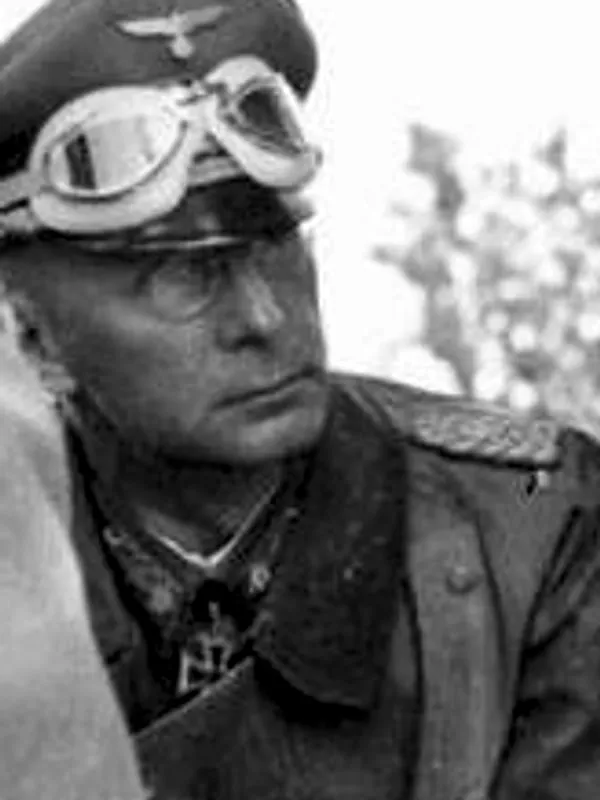
- Born:
- 1 March 1887, Bautzen, Saxony (German Empire)
- Died:
- 23 November 1963, Tegernsee (West Germany)
- Author:
- Natalia
- Photo:
- Tannenberg, CC BY-SA 3.0 DE, Wikimedia Commons

Georg-Hans Reinhardt was a German colonel general and one of the commanders who turned German armoured warfare into practice. His 4th Panzer Division was the first to reach Warsaw in September 1939, his corps crossed the Meuse at Monthermé in May 1940 and drove to the English Channel, and in 1941 the tanks under his command reached first the approaches to Leningrad and then the Moscow–Volga Canal. For three years he commanded the 3rd Panzer Army on the central sector of the Eastern Front, in whose area a brutal anti-partisan war was waged, and from August 1944 to January 1945 the whole of Army Group Centre in the defence of East Prussia. After the war an American tribunal at Nuremberg convicted him of war crimes and crimes against humanity.
A Saxon from Bautzen
Georg-Hans Reinhardt was born on 1 March 1887 in Bautzen in Saxony, into a banker’s family. In March 1907 he joined the Saxon 8th Infantry Regiment in Leipzig as an officer cadet, and in 1908 he was commissioned as a second lieutenant. In the First World War he fought first in France and then on the Eastern Front; he received both classes of the Iron Cross and the Saxon Military Order of St Henry. He ended the war as a captain and the senior staff officer of the 192nd Infantry Division.
In 1920 he was taken into the Reichswehr. He was above all a training specialist: in 1928 he joined the training department of the Reichswehr ministry, and in the autumn of 1933 he became its head. He was promoted to colonel in February 1934 and to major general in April 1937. In the autumn of 1937 he took over the rifle brigade of the 1st Panzer Division, and on 10 November 1938 the 4th Panzer Division.
Before Warsaw and on the Meuse
In the September campaign the 4th Panzer Division fought in Erich Hoepner’s XVI Corps, part of General Walther von Reichenau’s 10th Army. On the first day of the war, at Mokra, it clashed with the Volhynian Cavalry Brigade, and on 8 September, as the most advanced German unit, it took Okęcie and Raszyn. That day and the next morning Reinhardt tried to take Warsaw on the march, attacking along Grójecka Street into Ochota and into Wola. The attack broke down at the barricades and under the fire of anti-tank guns, and the division suffered heavy tank losses. It then fought the Polish forces that were trying to break through to the capital on the Bzura. On 1 October Reinhardt became a lieutenant general, and on 27 October he received the Knight’s Cross.
On 15 February 1940 he took over XXXXI Army Corps (Motorised), with the 6th and 8th Panzer Divisions, which in the campaign in France advanced through the Ardennes in Ewald von Kleist’s panzer group, north of Heinz Guderian’s corps. On 13 May his infantry crossed the Meuse at Monthermé, but for two days it could not get out of its cramped bridgehead in the deep river valley. When the front at Sedan broke, Reinhardt’s corps also got moving on 15 May, and his tanks raced west. At the end of May they came close to the Channel, where Hitler’s halt order before Dunkirk soon stopped them. On 1 June Reinhardt was promoted to general of panzer troops.
In April 1941 his corps took part in the attack on Yugoslavia: it struck from the Banat, from the Romanian side, and entered Belgrade together with the SS division “Reich”.
Towards Leningrad
In Operation Barbarossa Reinhardt’s XXXXI Panzer Corps fought in Hoepner’s 4th Panzer Group, part of Army Group North. In the very first days, at Raseiniai in Lithuania, it ran into Soviet mechanised corps with heavy KV tanks that German anti-tank guns could not penetrate; after several days of fighting the Germans encircled and destroyed the enemy. At the beginning of July the corps crossed the Daugava at Krustpils and advanced through Latvia towards Ostrov and Pskov. When the drive on Luga stalled, in mid-July Reinhardt seized bridgeheads on the lower Luga near Kingisepp, from which on 8 August he struck towards Leningrad. In the first days his divisions met stubborn resistance from people’s militia divisions, but they broke through and at the beginning of September reached the approaches to the city, near Krasnogvardeysk.
Like every German corps in the east, Reinhardt’s corps carried out the Commissar Order, which required captured Red Army political commissars to be shot. According to historians, reports of executions from his formations were numerous.
The 3rd Panzer Group before Moscow
In mid-September 1941 Hitler took the panzer divisions away from Leningrad to throw them against Moscow. On 5 October Reinhardt took over the 3rd Panzer Group from General Hermann Hoth, in the middle of Operation Typhoon. His tanks closed the Vyazma pocket from the north, and on 14 October they burst into Kalinin on the Volga, where, however, they were pinned down by Ivan Konev’s troops. In the November offensive against Moscow the 3rd Panzer Group split the Soviet 30th and 16th Armies, took Klin on 23 November, and on 27 November its 7th Panzer Division crossed the Moscow–Volga Canal at Yakhroma, north of the capital. The next day a Soviet counter-attack threw it back.
When the Soviet counter-offensive began in early December, Dmitry Lelyushenko’s 30th Army and the 1st Shock Army struck Reinhardt’s exposed divisions. The panzer group fell back in the frost, abandoning frozen tanks and guns; on 15 December the Red Army retook Klin, and on 16 December Kalinin. Despite the defeat in the battle of Moscow Reinhardt kept his command: in February 1942 he received the Oak Leaves to the Knight’s Cross, and promotion to colonel general backdated to 1 January 1942.
Vitebsk: the years of the anti-partisan war
From 1942 the 3rd Panzer Army, as the group was renamed, held the northern wing of Army Group Centre in the Smolensk and Vitebsk area. For a long time the front here was relatively quiet, but in the rear an unceasing war against the partisans went on. The “pacification” operations of his army, described in documents and in the Nuremberg judgment, struck the civilian population: whole villages were burned, their inhabitants, children among them, were killed, and people fit for work were deported for forced labour. According to historians’ findings, in the autumn of 1943 several thousand civilians were deported from Vitebsk and its surroundings in cooperation with the SD, and some of the women and children ended up in Auschwitz. In the same period Reinhardt’s army repelled successive Soviet attacks on Vitebsk in the winter of 1943/1944, and on 26 May 1944 he received the Swords to the Knight’s Cross.
Bagration
In the summer of 1944 Vitebsk, declared a “fortress” by Hitler, lay in the path of one of the main thrusts of Operation Bagration. Ivan Bagramyan and Ivan Chernyakhovsky attacked on 23 June on both sides of the city and on 25 June trapped General Friedrich Gollwitzer’s LIII Army Corps inside it. Hitler’s permission to break out came too late; the corps ceased to exist, and by the end of June the 3rd Panzer Army had only one of its three corps left. According to the American historian Earl Ziemke, the army lost ten divisions in the battle for Belorussia.
In July Reinhardt fell back through Lithuania with the remnants of his troops. When Field Marshal Walther Model forbade him to give up Kaunas, Reinhardt is said to have replied, “Very well, if that is how things stand, I will save my troops”, and in the night before 31 July he pulled his corps back from the city on his own authority; the Red Army took it on 1 August.
Army Group Centre and East Prussia
On 16 August 1944, when Model was sent west, Reinhardt, as the senior army commander, took over the whole of Army Group Centre and handed the 3rd Panzer Army to General Erhard Raus. At the same time the Red Army reached the borders of East Prussia, and in the sector of his 9th Army, in Warsaw, the Warsaw Uprising was under way. In August and September his troops tried to restore the link with Army Group North, cut off in Latvia; Reinhardt advised withdrawing it from the Baltic states, but Hitler refused. In October 1944 his armies repulsed the first Soviet attack on East Prussia at Gumbinnen and Goldap.
On 13 January 1945 the East Prussian operation began. For weeks Reinhardt and the chief of the army general staff, Guderian, had asked for the front to be shortened, but Hitler not only refused but on 14 January even took the “Großdeutschland” panzer corps away from East Prussia. When Konstantin Rokossovsky’s troops reached the Vistula Lagoon and cut East Prussia off from the Reich, Reinhardt decided to break out to the west. On 26 January he reported his intention to Hitler, who called it treason. That evening Reinhardt issued the withdrawal order anyway, and two hours later a telegram relieved him together with his chief of staff. His successor was General Lothar Rendulic, and the remnants of the army group were renamed Army Group North.
Trial and final years
In June 1945 Reinhardt was detained by the Americans. He was one of the fourteen defendants in the so-called High Command Trial, one of the Nuremberg trials held before American military tribunals. On 27–28 October 1948 the court found him guilty of war crimes and crimes against humanity: carrying out the Commissar Order, the mistreatment and killing of prisoners of war, and the killing, deportation and hostage-taking of civilians. He was sentenced to 15 years’ imprisonment, which he served at Landsberg. A review in 1951 left the sentence unchanged, but in 1952 Reinhardt was released on compassionate grounds.
Later in 1952 he was among the former generals received by Chancellor Konrad Adenauer who pressed for the release of their convicted colleagues. From 1954 he chaired the Society for Defence Studies (Gesellschaft für Wehrkunde), and in 1962 he received the Great Cross of Merit of the Federal Republic. He died in November 1963 at Tegernsee; the date most often given is 23 November, although some sources give 22 or 24 November.
Reinhardt was a first-class armoured commander who in 1939–1941 led his formations in the Wehrmacht’s most spectacular offensives, and who in the last months of the war tried to save his soldiers from Hitler’s orders. The Nuremberg judgment is a reminder, however, that for years his army waged a war in Belorussia that struck above all at the civilian population.
Sources
Commanded in battles
(01)Mentioned in battles
(06)Often appears with
People who appear in the same events.